In the unforgiving expanses of the polar regions, we rely on icebreaker ships to turn frozen wilderness into passable waterways. These vessels are engineered with an intensity rarely matched in the maritime world, built to carve channels through thick sea ice that would stop conventional ships in their tracks. By mastering physics, power, and durability, they keep fragile supply lines open, scientific missions alive, and commercial ambitions moving across territories once considered unreachable.
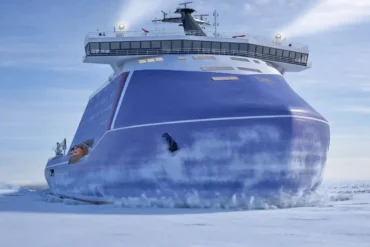
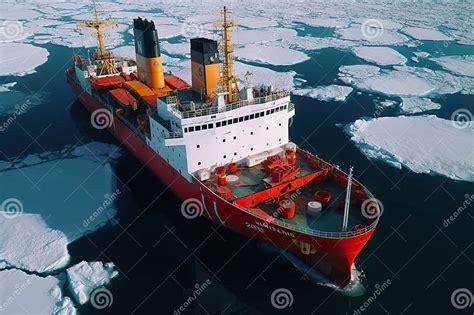
Their purpose stretches far beyond brute force. Every contour of an icebreaker reflects exacting design logic, from the sweeping slopes of its bow to the reinforced spine of its hull. Together these features create a vessel capable of climbing onto ice sheets and fracturing them under immense weight, a technique far more efficient than slicing through ice head-on. This lift-and-crush strategy has become the backbone of modern polar navigation and continues to evolve as nations invest in next-generation ships.
The mechanics of this process reveal how advanced these vessels truly are. The rounded bow elevates as propulsion pushes the ship forward, distributing force to crack ice outward and downward. Beneath the waterline, strengthened plating absorbs shocks that would cripple ordinary hulls. Once the ice breaks, powerful propellers sweep fragments aside, keeping the channel wide enough for following vessels.
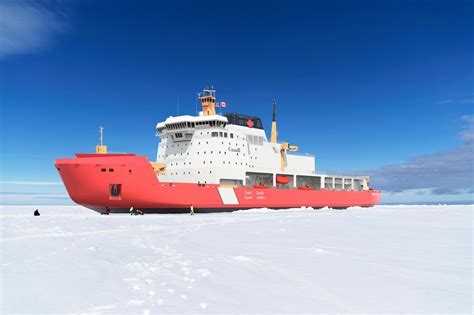
The ferocity of sea ice demands propulsion systems far beyond conventional maritime norms. We see diesel-electric systems used in versatile, mid-range icebreakers, where large diesel generators feed electricity to propulsion motors capable of delivering instant torque. In contrast, the most formidable ships rely on nuclear reactors, unlocking virtually limitless range and consistent power even during months-long missions. These reactors allow vessels to maintain intense output without the fuel constraints that plague other designs.
Hull integrity remains the soul of an icebreaker. Structurally reinforced steel, sometimes with thicknesses double that of standard vessels, forms a continuous belt around the hull known as the ice belt. This hardened band withstands crushing, grinding, and repeated impacts from blocks of ice that can weigh several tons. The hull shape itself continues to evolve as naval architects experiment with curvatures and angles that reduce ice resistance while improving maneuverability in the tight, unpredictable channels of polar landscapes.
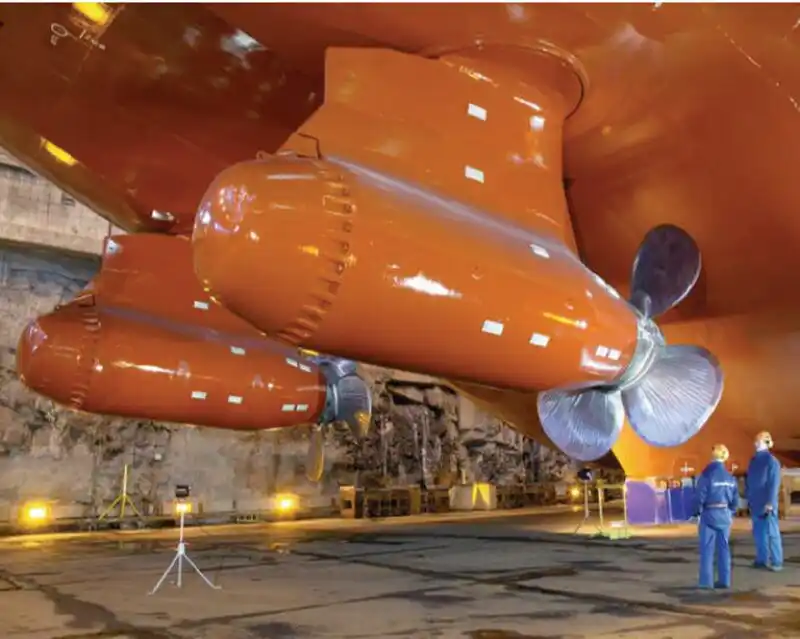
Air-bubbling systems further refine performance by releasing compressed air along the hull, lifting and reducing friction between steel and ice. This hydrodynamic lubrication allows ships to maintain momentum in areas where unassisted vessels would stall. Combined with azimuthing thrusters—propulsors that rotate 360 degrees—icebreakers can pivot, push sideways, or even spin to widen their own channels.
Global Stakes and Geopolitical Power in Frozen Waters
Control of the Arctic increasingly hinges on icebreaking capability. Even as climate change reduces seasonal ice cover, the remaining multiyear ice grows more unpredictable and treacherous, necessitating powerful fleets. Nations with mature icebreaker programs gain advantages in trade routes, resource access, scientific operations, and military presence.
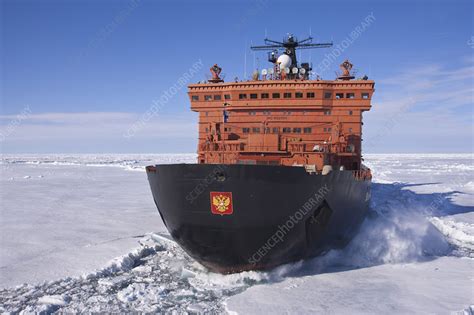
Russia currently dominates, deploying more than 50 icebreakers and ice-capable ships, including multiple nuclear-powered vessels that can operate year-round. These ships support commercial interests along the Northern Sea Route and bolster strategic activities across remote regions. Their ability to project influence in areas where others cannot go sets the tempo for geopolitical competition.
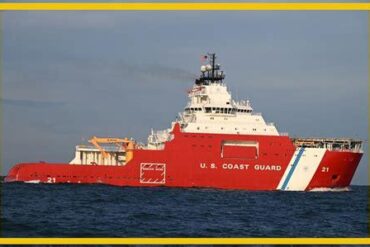
The United States faces a harder climb with an aging, limited fleet unable to maintain continuous Arctic operations. Recognizing this gap, the U.S., Canada, and Finland have initiated the Ice Pact—a cooperative shipbuilding framework intended to accelerate the creation of modern, hardened icebreakers. The program aims to counterbalance Russia’s advantage and solidify the North American and Nordic presence as polar passages grow economically valuable.
Next-Generation Icebreakers and the Future of Polar Navigation
Advances in propulsion and sustainability are shaping the next wave of icebreakers. Finnish shipbuilders, long considered pioneers in Arctic engineering, are testing hybrid diesel-electric architectures supported by battery arrays. These systems offer bursts of power when ramming dense pressure ridges while reducing emissions during lighter operations. Researchers are also exploring bio-methanol and hydrotreated vegetable oil as alternative fuels, expanding the line between ecological responsibility and operational necessity.
Hull refinement remains a priority. Through intensive model testing in controlled ice basins, naval architects study how width, curvature, and hull-to-ice angles influence channel clearance. The data guide designs that cut through thicker formations while preserving fuel efficiency. Companies such as Aker Arctic are integrating upgraded air-bubbling systems, more resilient hull plating, and refined thruster configurations to create vessels capable of navigating the brutal unpredictability of polar terrain.
On the heavy-ice frontier, nuclear propulsion stands firm as the ultimate choice. Modern compact reactors, exemplified by the Arktika-class, deliver massive power density with remarkable reliability. Their longevity enables fleets to conduct long-range missions without refueling stops, making them indispensable for nations seeking sustained Arctic reach. The result is a future where nuclear icebreakers form the backbone of polar infrastructure.
As global interest in the Arctic accelerates, icebreakers will define how nations access emerging routes, safeguard scientific exploration, and manage the geopolitical chessboard unfolding across frozen seas. Their evolution reflects a world reshaped by climate, competition, and the enduring pull of regions once hidden beneath unbroken ice.