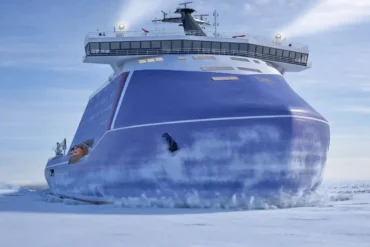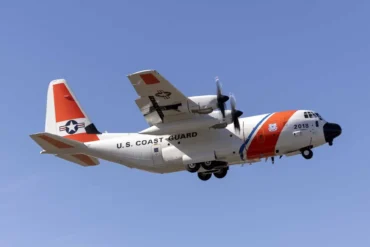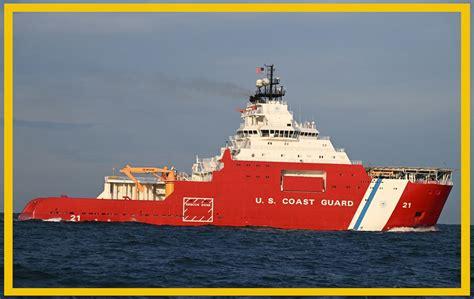
In a landmark move signaling the United States’ renewed commitment to Arctic dominance, the U.S. Coast Guard has finalized a $6.1 billion agreement with Finland to construct 11 state-of-the-art Arctic Security Cutters (ASCs). This initiative marks the largest expansion of the Coast Guard’s polar fleet in history, dramatically reshaping America’s strategic presence in the rapidly evolving Arctic theater.
A New Era of Arctic Security Begins
The October 2025 Memorandum of Understanding (MOU), signed by President Donald Trump, Finnish President Alexander Stubb, and Finnish Prime Minister Petteri Orpo, lays out a bold and collaborative shipbuilding strategy. It promises to transform the U.S. Arctic fleet by blending American industrial capacity with Finland’s cutting-edge naval engineering.
Under the agreement, seven ASCs will be constructed in U.S. shipyards, while four will be built in Finland, leveraging a transatlantic industrial partnership designed not just for speed, but sustainability and self-reliance.
Shipbuilding Powerhouses: A Transatlantic Collaboration
The success of this ambitious project depends heavily on the collaboration between Davie Shipbuilding and Bollinger Shipyards, each partnering with Finland’s foremost shipbuilders:
- Davie Shipbuilding will construct three ASCs in Texas and two more at its Helsinki Shipyard.
- Bollinger, a stalwart of U.S. naval construction, has partnered with Rauma Marine Constructions to deliver four cutters in the U.S. and two in Finland.
This partnership is not only about building ships; it’s about transferring advanced Finnish icebreaker technology to U.S. yards, enabling long-term domestic production of Arctic-capable vessels.
Bridging the Icebreaking Capability Gap
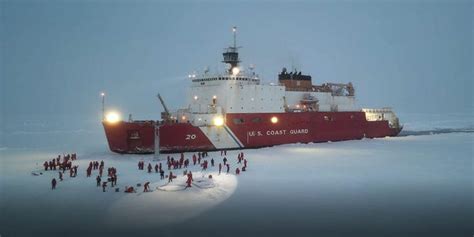
At present, the U.S. Coast Guard operates only three active icebreakers: the aging USCGC Polar Star (commissioned in the 1970s), the USCGC Healy (launched in 1999), and the M/V Aiviq, now designated CGC Storis, purchased in 2024. The decommissioning of the Polar Sea in 2010, along with a 2024 electrical fire aboard the Healy, has left the U.S. polar fleet dangerously thin.
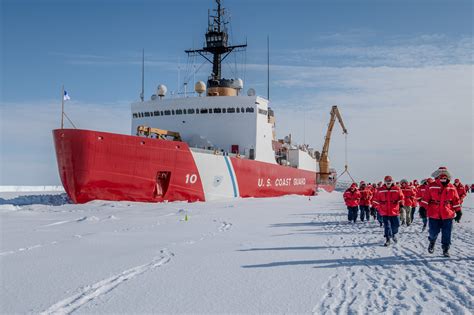
The new ASC fleet promises to reverse that trend. By 2028, five of the new vessels are projected to be operational, closing the dangerous capability gap that has persisted for over a decade. Government assessments have long warned that the Coast Guard requires eight to nine polar icebreakers for reliable, year-round operations in both the Arctic and Antarctic. Until now, that goal has remained elusive.
Engineering the Future: Arctic Security Cutter Design
The incoming ASCs will be among the most advanced ice-capable ships in existence. The Bollinger-Rauma MPI-class vessels feature:
- The ability to break through four feet of ice continuously
- A 12,000-nautical-mile range for extended missions without resupply
- Fuel capacity supporting up to 60 days of autonomous operations
Meanwhile, Davie’s MPPS-100 design, developed with Finland’s Helsinki Shipyard, is being touted as a “fourth-generation” Arctic Security Cutter, emphasizing maneuverability, advanced navigation systems, and survivability in extreme polar conditions.
National Security and Economic Drivers
Beyond technological innovation, the ASC program is anchored in national security and economic imperatives. As Arctic ice recedes and new shipping lanes emerge, the United States faces growing competition from Russia and China, both of whom have aggressively expanded their icebreaking and military presence in the region.
Russia currently operates over 40 icebreakers, including nuclear-powered heavy variants. In contrast, the U.S. presence has been minimal. This imbalance has prompted growing concern among defense analysts and policymakers. The expanded ASC fleet is intended to restore strategic balance in Arctic waters and enable the Coast Guard to project force, deliver humanitarian aid, and support scientific research throughout the polar region.
Economically, the MOU will create thousands of skilled shipbuilding jobs in both the U.S. and Finland, reinforcing domestic industrial capacity and stimulating allied cooperation. It also ensures technology transfer from Europe’s most experienced Arctic engineers, sowing the seeds for a self-sufficient U.S. icebreaker construction ecosystem.
Long-Term Implications for Arctic Strategy
The Arctic is becoming a new frontier of geopolitical contest, and the ASC expansion is about more than ships — it’s about sovereignty, diplomacy, and climate resilience.
With climate change accelerating, the Northern Sea Route and Transpolar Passage are expected to become increasingly navigable. These shipping routes dramatically reduce transit time between Asia, Europe, and North America, making them strategically vital. The Coast Guard’s enhanced presence ensures that U.S. interests are protected as this emerging global thoroughfare takes shape.
Furthermore, the ASCs will support scientific missions vital to climate research, enabling year-round access to melting ice caps, shifting marine ecosystems, and atmospheric monitoring.
Challenges on the Horizon
Despite its promise, the program is not without hurdles. Deliveries are not expected until 2028, and any delay in production could push back the fleet’s readiness well into the 2030s. The simultaneous development of the heavier Polar Security Cutter program, which has already experienced setbacks, presents an additional logistical and financial challenge.
Moreover, operating in polar conditions demands highly trained crews, specialized maintenance infrastructure, and sophisticated weather modeling support — all of which require further investment.
Building a Lasting Legacy
If successful, the Arctic Security Cutter program will lay the foundation for the United States’ largest polar fleet expansion in modern history. It also sends a powerful message: that the U.S. is committed to protecting Arctic sovereignty, enabling sustainable exploration, and countering adversarial moves in the high north.
The program is a prime example of 21st-century defense diplomacy — where alliances are not just forged in military bases, but in drydocks, engineering labs, and shared maritime innovation.
By embracing this transatlantic effort, the United States and Finland are not just building ships — they are building the future of Arctic security.
Conclusion
The U.S. Coast Guard’s ASC program represents a historic turning point in polar strategy. With 11 new cutters set to join its ranks, America is poised to regain its footing in one of the most strategically significant, climatically volatile, and economically promising regions on the planet. From Texas to Helsinki, and from frozen sea lanes to bustling shipyards, this is an investment in national resilience, international partnership, and polar power projection that will shape the next century of Arctic affairs.