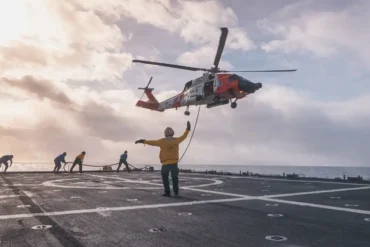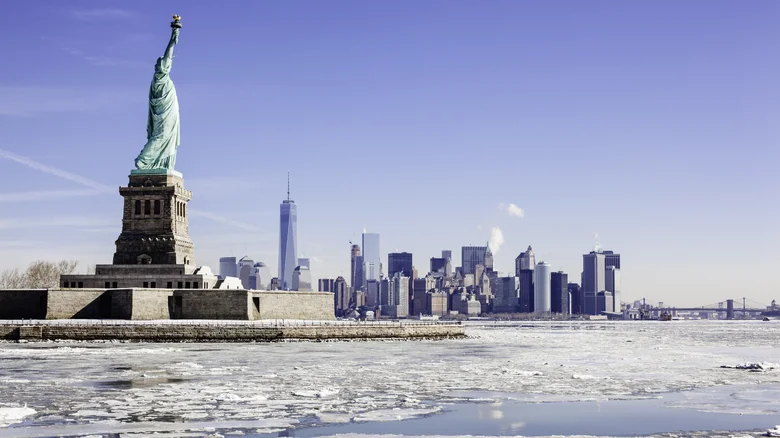
New York City rarely thinks of itself as an Arctic port, yet winter has a way of rewriting geography. In early 2026, prolonged cold triggered by Winter Storm Fern transformed New York Harbor and the Hudson River into a maze of floating ice. What followed was not a symbolic show of force, but a precise maritime response: the US Coast Guard moved icebreaking ships into position to keep the city’s lifelines open.
The Coast Guard’s mandate is deceptively simple—protect, defend, and save—but in practice it means preserving the invisible systems that keep a megacity alive. When ice thickens across navigable waterways, ships slow, deliveries stall, and essential supplies face disruption. New York’s ports remained technically open, yet the risks to navigation escalated fast as ice spread from the harbor toward the Hudson Valley, complicating commercial traffic and public transit alike.
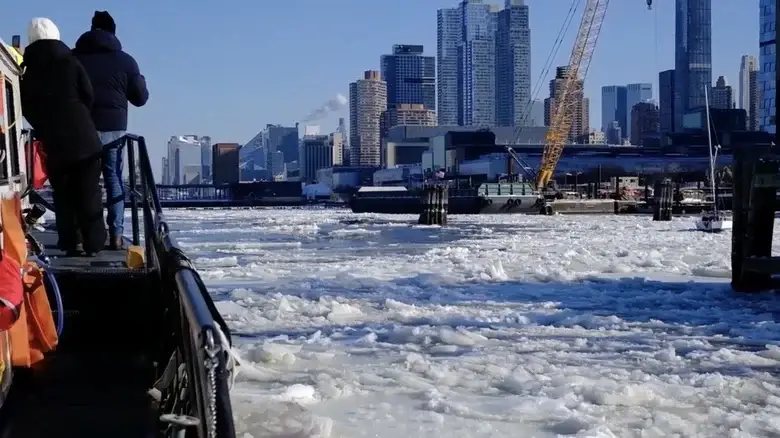
By late January, conditions had deteriorated enough for the New York City Ferry Service to suspend all routes, citing safety concerns for crews and passengers. Ferries are only one piece of the puzzle. Beneath the surface, tankers carrying fuel, heating oil, and industrial cargo depend on clear channels. In freezing temperatures, even short delays can ripple outward, affecting energy availability and regional commerce.
Icebreaking as Urban Infrastructure Protection
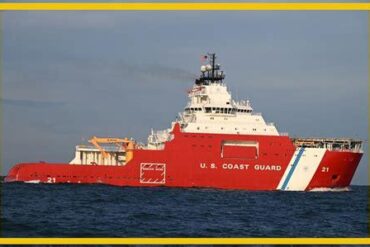
The deployment centers on three vessels purpose-built for winter warfare against ice: the 140-foot Bay-class icebreaking tugs CGC Penobscot Bay and CGC Sturgeon Bay, supported by the 65-foot harbor tug CGC Hawser. Homeported in Bayonne, New Jersey, these cutters are designed to crush, push, and clear ice while maintaining maneuverability in narrow, crowded waterways.
This mission falls under Operation Reliable Energy for Northeast Winters (OP RENEW), a regional effort focused on ensuring that cold weather does not choke off energy and commercial supply routes. Icebreaking in this context is not dramatic heroics; it is deliberate, methodical channel maintenance. By carving navigable paths through ice-choked waters, the Coast Guard reduces the risk of groundings, hull damage, and cascading delays across the port complex.
Why New York Harbor Freezes Faster Than Expected
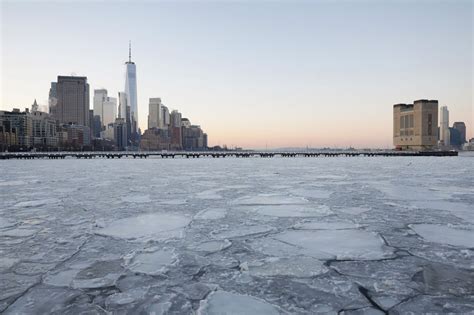
New York’s maritime geography works against it in extreme cold. The Hudson River’s freshwater flow, combined with tidal mixing in the harbor, accelerates ice formation during prolonged freezes. Once ice sheets begin to stack and compress, they can thicken rapidly, especially in sheltered areas near terminals and ferry routes. The Coast Guard described the situation in late January as “significant amounts of ice from the harbor to the Hudson Valley,” a warning that conditions were moving beyond routine winter navigation.
The impact goes beyond ships. Icy waterways complicate bridge operations, interfere with tug-and-barge movements, and stress port schedules already calibrated to minute-by-minute efficiency. For a city that consumes enormous volumes of energy daily, keeping marine corridors open becomes a matter of urban resilience, not convenience.
Keeping Energy and Commerce Moving
Among the Coast Guard’s stated priorities is facilitating the safe movement of critical commercial traffic. In winter, that phrase carries extra weight. Heating oil deliveries, fuel shipments, and bulk commodities must arrive on time while temperatures remain below freezing. Ice does not merely slow vessels; it increases fuel consumption, strains propulsion systems, and raises the risk of mechanical failure.
The CGC Penobscot Bay has a track record that underscores this role. In past winters, it helped clear ice-jammed rivers in Maine, breaking through ice reported to be up to five feet thick. More recently, it escorted a vessel carrying over 10 million barrels of oil out of New Jersey waters, a reminder that icebreaking often involves shepherding high-value, high-risk cargo through hostile conditions.
A Standing Mission, Not an Emergency Reaction
While the 2026 deployment drew attention, it was not improvised. The Coast Guard deliberately stations icebreakers along the Northeastern seaboard, including multiple locations in Maine, Rhode Island, Connecticut, and New Jersey, to ensure rapid response when waterways freeze. Crews are lean—sometimes fewer than 20 Coast Guardsmen per cutter—and often live aboard their ships during extended operations, operating as mobile winter infrastructure.
Coordination is constant. The Coast Guard works with state and local emergency management agencies, port authorities, and commercial operators to prioritize channels and respond to developing hazards. At the time of deployment, no formal port restrictions were imposed in New York, yet advisories urged mariners to exercise extreme caution, monitor ice conditions, and report hazards immediately.
What the Deployment Signals About the Coast Guard’s Role
The presence of Coast Guard cutters in New York Harbor during deep winter sends a clear message: maritime security includes climate resilience and economic continuity. Icebreaking is not peripheral to national security; it safeguards energy flows, stabilizes regional supply chains, and prevents winter from becoming a systemic shock.
As extreme weather grows more frequent and unpredictable, operations like OP RENEW illustrate how the Coast Guard adapts its traditional missions to modern urban realities. In New York City, the icebreakers are not there to make headlines. They are there to keep the city warm, supplied, and moving—quietly turning frozen water back into usable space.