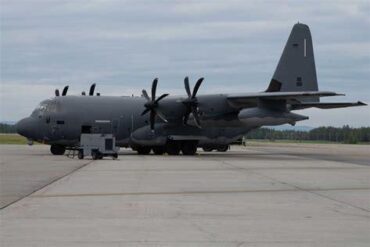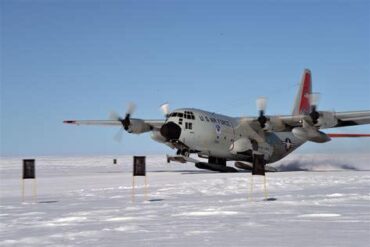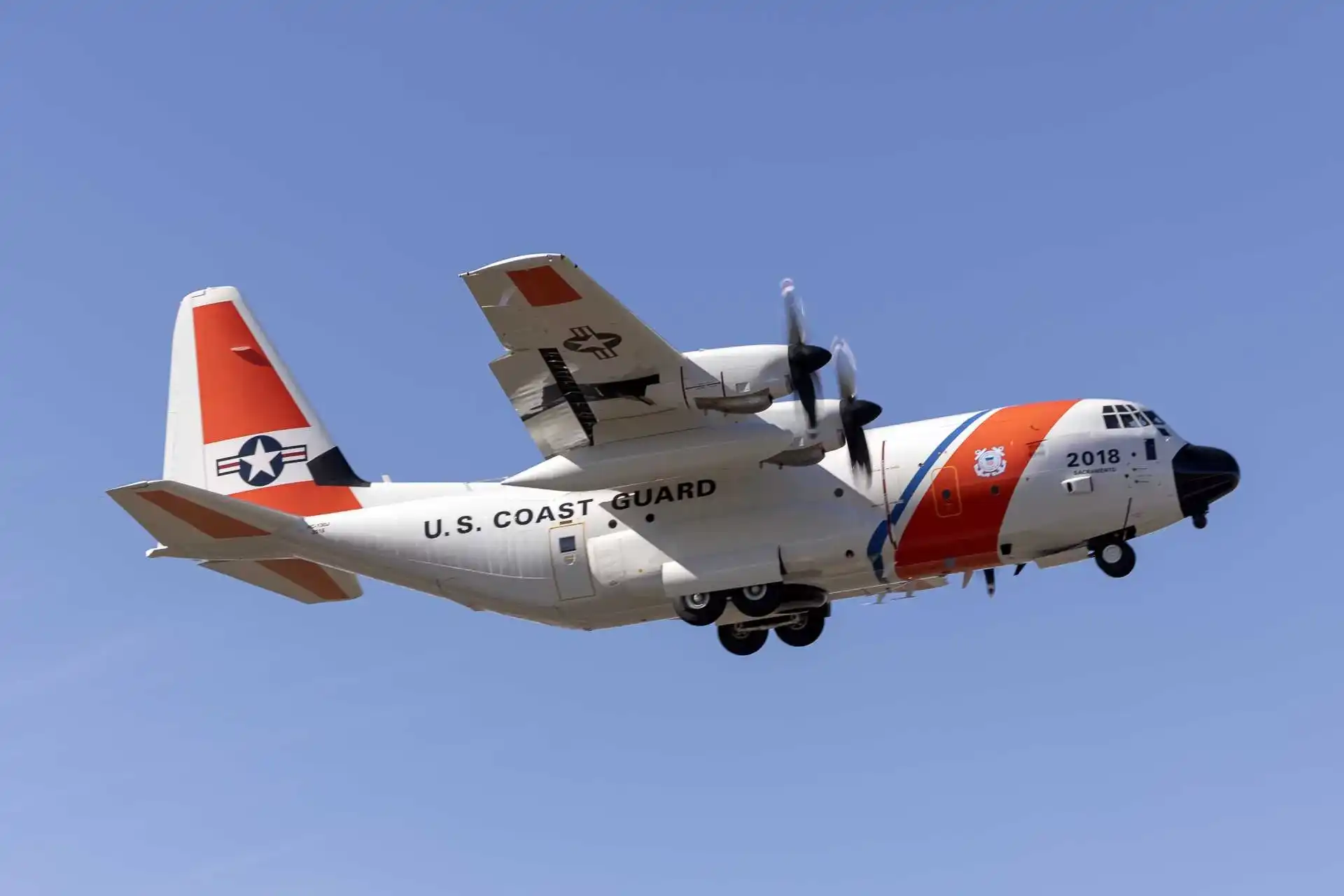
The United States Coast Guard has reached another important milestone in its long-running aviation modernization effort with the delivery of its 18th HC-130J Super Hercules long-range search and rescue aircraft. Confirmed on February 4, 2026, the handover marks a steady and deliberate step toward a fully standardized fixed-wing fleet capable of meeting expanding operational demands across U.S. maritime domains. The aircraft, designated CGNR 2018, was delivered following the completion of full missionization work by L3Harris Integrated Mission Systems in Waco, Texas.
This delivery is not simply another aircraft added to the inventory. It represents the convergence of fleet recapitalization, sensor modernization, and strategic basing decisions that are reshaping how the Coast Guard conducts long-range surveillance, search and rescue, maritime law enforcement, and command-and-control operations. As older HC-130H aircraft continue to retire, the HC-130J is emerging as the backbone of the service’s fixed-wing operational reach.
A Fully Missionized HC-130J Joins the Operational Fleet
The newly delivered HC-130J CGNR 2018 arrived fully configured for operational use, completing the missionization process that transforms a baseline C-130J Super Hercules into a specialized Coast Guard asset. Missionization was carried out by L3Harris, which integrates the aircraft’s sensors, communications systems, and mission software into a unified operational suite tailored to Coast Guard requirements.
This particular aircraft supports the Coast Guard’s objectives of fleet standardization and expanded operational coverage, while directly enabling the planned transition away from legacy HC-130H aircraft. The delivery was completed ahead of its original schedule, allowing the service to accelerate crew training, logistics planning, and operational integration. Early delivery also reduces transition risk as additional air stations prepare to adopt the HC-130J platform.
Expanding HC-130J Operations Across U.S. Air Stations
Until now, HC-130J operations have been concentrated at three strategically vital locations: Air Station Elizabeth City in North Carolina, Air Station Kodiak in Alaska, and Air Station Barbers Point in Hawaii. These bases provide coverage for the Atlantic, Pacific, and Arctic approaches, giving the Coast Guard long-range reach into some of the world’s most demanding operating environments.
With the arrival of CGNR 2018, the Coast Guard is preparing to expand HC-130J operations to two additional air stations, with Air Station Sacramento, California, identified as the first to transition. The Sacramento transition, scheduled to begin later in 2026, will see the HC-130J replace the HC-27J Spartan, delivering significantly greater range, endurance, and on-scene command capability. This shift reflects a broader strategic preference for platforms capable of wide-area surveillance and extended mission persistence, particularly in support of border security and offshore operations.
Mission Systems Built for Modern Maritime Operations
At the heart of the HC-130J’s operational value is its Mission System Suite Plus (MSS+), an advanced sensor and mission management package developed around the Minotaur mission architecture. Integrated by L3Harris, MSS+ combines multi-mode maritime search radar, electro-optical and infrared sensors, and secure, networked communications into a single, cohesive system.
This architecture enables aircrews to detect, track, classify, and identify contacts across vast ocean areas, while simultaneously sharing data with cutters, other aircraft, and shore-based command centers in near real time. The result is a persistent, networked surveillance capability that strengthens maritime domain awareness and shortens response times during search and rescue or law enforcement operations.
The system also supports the HC-130J’s role as an on-scene command-and-control platform, allowing crews to coordinate complex multi-asset operations while maintaining a common operating picture. Incremental enhancements introduced under Block Upgrade 8.1 include improved approach and landing systems, expanded onboard diagnostics, and civil GPS integration, all designed to increase availability and interoperability across the fleet.
Funding and Procurement Under the One Big Beautiful Bill Act
The delivery of the 18th HC-130J is underpinned by robust congressional funding. Through the One Big Beautiful Bill Act, the Coast Guard received $1.142 billion dedicated to the procurement and acquisition of fixed-wing aircraft. These appropriations cover a total program of 25 HC-130J aircraft, along with a full-flight simulator, an initial spare parts inventory, and site activation for two additional air stations.
This funding framework allows the Coast Guard to move beyond incremental fleet introduction toward sustained, large-scale operational deployment. With 18 aircraft now delivered, the HC-130J program has reached a critical mass that supports standardized training pipelines, consolidated maintenance practices, and predictable operational availability.
The HC-130 Lineage and the Evolution to the J-Model
The HC-130’s roots trace back to the original C-130 Hercules, developed by Lockheed in the late 1950s. The “HC” designation reflects the aircraft’s adaptation for long-range search and rescue, a mission the Coast Guard embraced early to extend coverage far beyond the reach of shorter-range patrol aircraft. Beginning in the early 1960s, HC-130 variants became central to overwater patrol, ice patrol, and maritime command missions.
Over subsequent decades, the platform evolved through variants such as the HC-130E and HC-130H, incorporating improved sensors, greater fuel capacity, and mission-specific equipment. By the early 2000s, however, aging airframes and escalating maintenance demands made replacement unavoidable. The transition to the HC-130J Super Hercules marked a generational shift, delivering modern avionics, improved propulsion, and dramatically enhanced reliability while preserving the endurance that defines the mission.
Coast Guard and Air Force Variants: Shared Airframe, Divergent Missions
While both the U.S. Coast Guard and the U.S. Air Force operate HC-130J aircraft, their configurations reflect distinct operational doctrines. The Coast Guard’s HC-130J focuses on maritime surveillance, search and rescue, and command and control, and does not include helicopter air-to-air refueling capability. Its mission equipment is optimized for wide-area detection, information sharing, and coordination with surface assets.
In contrast, the Air Force operates the HC-130J Combat King II, a platform tailored for personnel recovery in permissive and contested environments. This variant features underwing refueling pods, internal auxiliary fuel tanks, and the ability to refuel helicopters and tilt-rotor aircraft in flight, while also receiving fuel from boom-equipped tankers. Despite these differences, both variants benefit from the C-130J’s reduced crew requirements, digital flight controls, and enhanced survivability.
Performance Characteristics That Enable Persistent Presence
As a derivative of the C-130J Super Hercules, the HC-130J is powered by four Rolls-Royce AE2100D3 turboprop engines driving six-bladed composite propellers. This configuration delivers a cruise speed of approximately 320 knots, improved fuel efficiency, and superior high-altitude performance compared to earlier C-130 models. Depending on configuration and payload, the aircraft’s range extends to roughly 4,900 nautical miles, with endurance exceeding 20 hours during long-duration surveillance missions.
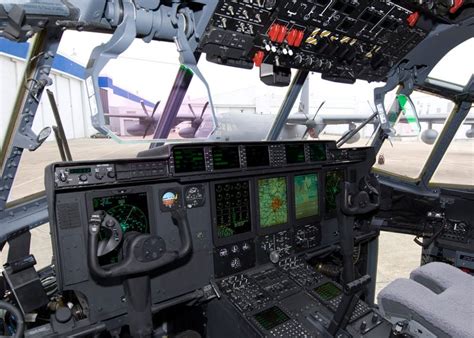
The aircraft’s all-glass cockpit reduces crew workload and supports sustained operations in low-visibility and night conditions through full compatibility with night vision systems. Structurally, the HC-130J retains the iconic rear cargo ramp and expansive internal volume of the Hercules family, allowing it to carry rescue equipment, personnel, pallets, or auxiliary fuel tanks. This flexibility underpins the aircraft’s ability to transition seamlessly between search and rescue, logistics support, and command roles within a single sortie.
Strategic Impact of the 18th Delivery
The arrival of CGNR 2018 underscores the Coast Guard’s steady progress from legacy fleet replacement toward a future-ready aviation force. Each additional HC-130J strengthens the service’s ability to respond to border security challenges, maritime emergencies, and contingency operations across vast distances. With expanded basing and standardized systems, the aircraft also enhances interoperability with other Coast Guard platforms and joint partners.
As further deliveries continue and additional air stations transition to HC-130J operations, the platform’s role will only grow more central. The 18th delivery is not a symbolic endpoint, but a marker of momentum—evidence that the Coast Guard’s long-range surveillance and search and rescue capability is entering a phase defined by modern sensors, extended reach, and sustained operational resilience.