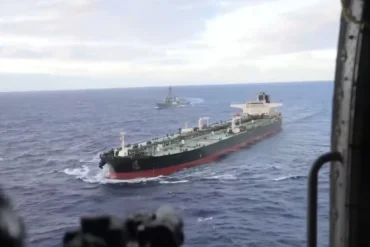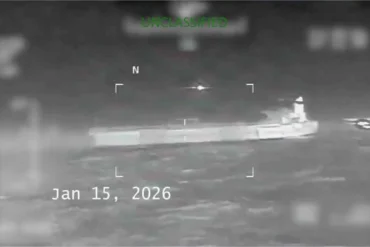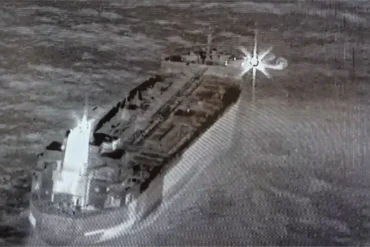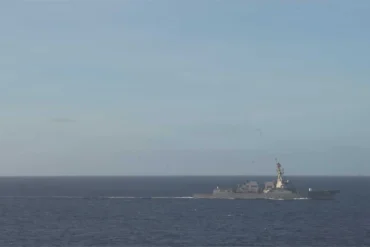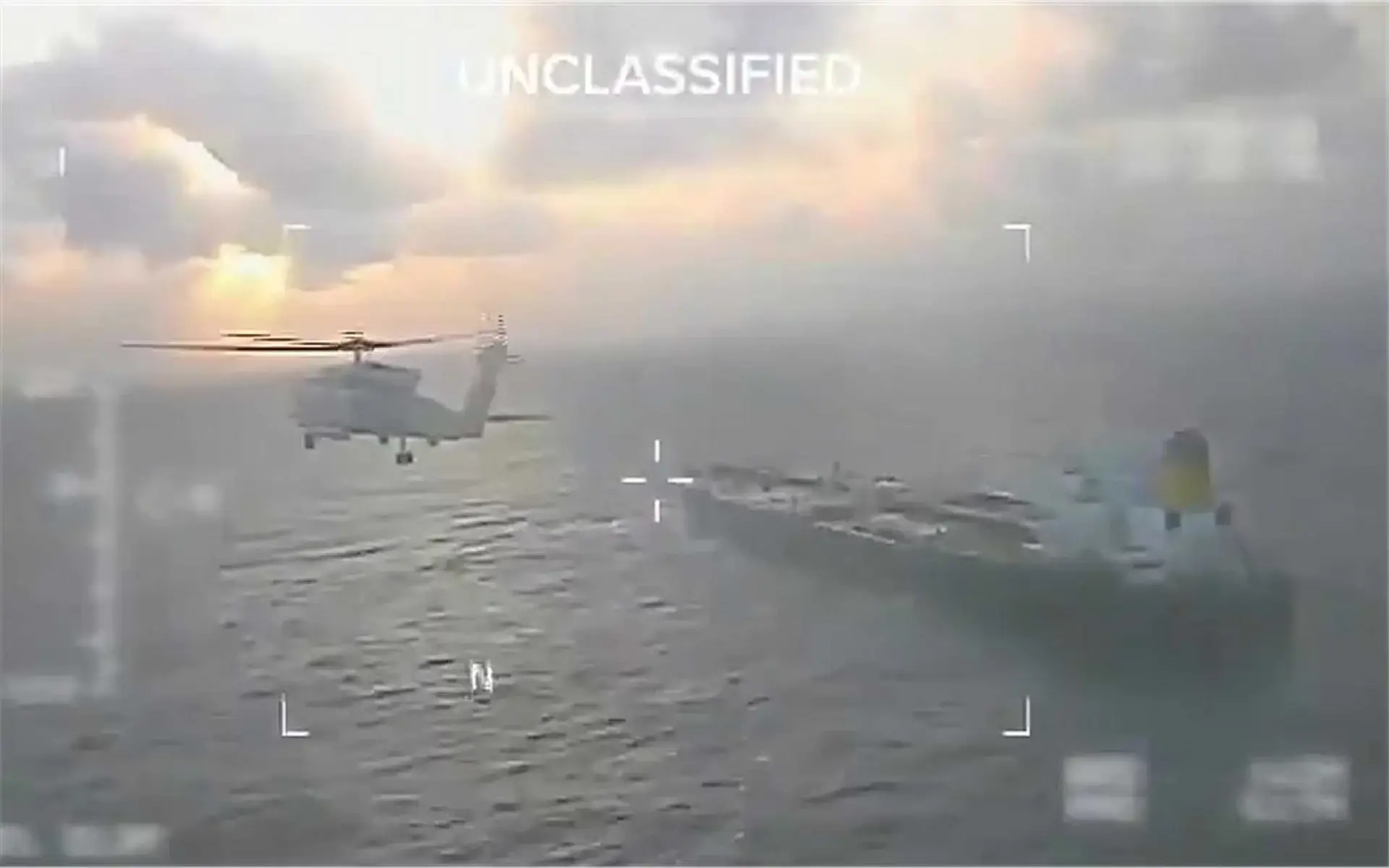
On December 20, 2025, a high-stakes maritime interdiction unfolded in the Caribbean Sea when the U.S. Coast Guard, backed by U.S. Navy aviation assets, intercepted a tanker—the Centuries—suspected of transporting nearly 2 million barrels of sanctioned Venezuelan crude oil to China. The operation, conducted in international waters east of Barbados, reflects a decisive escalation in Washington’s enforcement of oil sanctions and maritime law.
Bold U.S. Enforcement on Sanctioned Oil Shipments
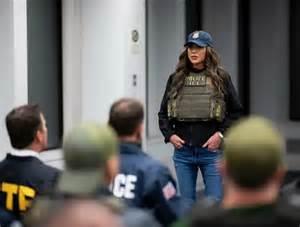
According to a formal announcement by Homeland Security Secretary Kristi Noem, the intercepted tanker had departed Venezuela’s José Terminal, carrying between 1.8 and 2 million barrels of crude. Ownership of the cargo was traced to Satau Tijana Oil Trading, a Chinese firm frequently cited in confidential PDVSA (Petróleos de Venezuela, S.A.) documents tied to shadow oil sales. Despite its evasive profile, the vessel was not previously listed on any U.S. sanctions registry.
The tanker was believed to be operating under a false flag, using deceptive tactics such as falsified vessel identities, spoofed AIS transponder signals, and concealed ownership structures—hallmarks of Venezuela’s “shadow fleet,” a clandestine maritime network employed to bypass international sanctions.
Tactical Execution: The Role of U.S. Maritime Assets
The interception showcased the synergy between Coast Guard cutters, advanced aviation platforms, and elite tactical units. Aerial support was provided by MH-60T Jayhawk helicopters, a multi-mission maritime aircraft known for its versatility and extended operational range. The Jayhawk’s FLIR (Forward-Looking Infrared) system, advanced radar, and secure communications suite enabled seamless coordination with the surface units below.
Defense insiders suggest the boarding was likely executed by members of the Maritime Security Response Team (MSRT)—the Coast Guard’s premier high-threat interdiction force. These elite units specialize in non-compliant boardings, counter-terrorism, and high-risk ship takedowns, and are equipped with suppressed M4 carbines, night-vision gear, and breaching tools. Operating from helicopters or high-speed boats, MSRT teams are trained for rapid and precise maritime enforcement in complex international scenarios.
Although the MSRT’s involvement has not been officially confirmed, the nature of the interdiction aligns with the unit’s operational profile, particularly in missions requiring swift, high-stakes action on potentially hostile vessels.
A Message to Sanctions Evaders
In her official statement, Secretary Noem asserted:
“This operation is a warning to those using flags of convenience, false registries, and hidden ownership to traffic sanctioned cargo. If you attempt to evade U.S. law at sea, you will be found and stopped.”
Her remarks underscore a growing resolve within the U.S. administration to aggressively police global maritime corridors, particularly where state-sanctioned oil is being trafficked in defiance of international and U.S. law.
China and Venezuela Respond: A Diplomatic Flashpoint
The interception prompted immediate backlash from both Beijing and Caracas. China’s Ministry of Foreign Affairs denounced the operation as a “serious violation of international maritime law”, accusing Washington of extraterritorial overreach by applying its domestic sanctions to global trade. Simultaneously, Venezuela condemned the boarding as an act of “piracy in the Caribbean”, vowing to raise the issue at the United Nations.

These responses highlight the geopolitical tension brewing around the enforcement of energy sanctions and maritime sovereignty, particularly in strategic regions like the Caribbean Sea and the South China Sea.
Intelligence-Driven Interdiction: A New U.S. Doctrine
Unlike previous interdictions that focused primarily on vessels explicitly listed in Treasury Department sanctions, this operation marks a shift toward pre-emptive, intelligence-led enforcement. The Centuries had not been officially blacklisted, but it was targeted based on real-time intelligence and patterns of deceptive behavior. This approach demonstrates a move toward proactive enforcement, wherein actionable intelligence alone is deemed sufficient grounds for intervention.
This evolving doctrine blurs the traditional line between law enforcement and geopolitical deterrence, reflecting a bolder maritime posture from Washington.
The MH-60T Jayhawk: The Tip of the Spear
The MH-60T Jayhawk was central to the operation. Derived from the Navy’s Seahawk platform, this twin-engine aircraft is adapted specifically for Coast Guard use. Its capabilities include:
- All-weather performance with corrosion-resistant components
- Advanced radar and infrared surveillance for tracking stealthy vessels
- Secure communication links to coordinate with tactical teams
- 275 kg hoist for rapid insertion and extraction of personnel
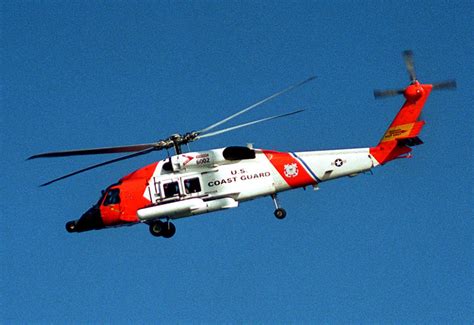
The Jayhawk enables operations far from U.S. shores, reinforcing Coast Guard reach across contested international waters and allowing seamless integration with Navy platforms in joint task force environments.
The MSRT: Silent Warriors of the Sea
The Maritime Security Response Teams, though rarely seen publicly, are pivotal to the Coast Guard’s evolving enforcement mandate. These specialized units conduct high-risk operations including:
- Hostage rescue
- Shipboard takedowns
- WMD interdictions
- Counter-terrorism raids
They operate under extreme secrecy, trained to deal with volatile and politically sensitive maritime incidents. Their presence—whether confirmed or implied—signals that the U.S. is willing to apply tactical force in the enforcement of sanctions, particularly in regions where rogue actors attempt to exploit legal gray zones.
Strategic Implications: A Signal to Iran and Beyond
While this operation directly targeted Venezuelan oil, strategic analysts suggest its implications reach further. Iran, which employs similar tactics using cloaked tankers to export oil under sanction, may see this as a clear signal of heightened U.S. maritime enforcement. The Caribbean, once a haven for ambiguous shipping activity, is now being subjected to persistent aerial and naval surveillance.
Washington’s capability to intercept, board, and control vessels in open waters—even those not yet officially sanctioned—sends a powerful deterrent message to other regimes engaged in clandestine energy trade.
What Comes Next: Rising Tide of Enforcement
The Centuries remains under U.S. custody as investigations proceed into its cargo, ownership structure, and crew. Initial findings could trigger secondary sanctions, criminal charges, or diplomatic escalations, depending on the scope of involvement uncovered. Meanwhile, the U.S. is actively tracking a wider network of tankers linked to Venezuelan and Iranian oil smuggling operations, signaling that this interdiction was not a one-off event.
U.S. surveillance operations in the Atlantic approaches and Caribbean Basin are being intensified, with increased coordination between Coast Guard, Navy, and interagency partners. Future operations may expand beyond the Americas, particularly as the U.S. sharpens its global focus on illicit maritime energy flows.
Conclusion: Maritime Law Meets Geopolitical Muscle
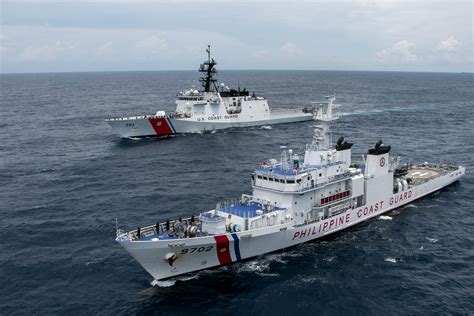
The seizure of the Centuries is more than an isolated enforcement action; it’s a geopolitical message wrapped in a tactical operation. By blending intelligence-driven targeting with advanced aviation and elite interdiction forces, the U.S. is rewriting the rules of maritime sanctions enforcement. In doing so, it reinforces its role not just as a regulatory power—but as a strategic enforcer in the global contest over energy security, trade legitimacy, and state sovereignty at sea.
As global energy trade becomes increasingly fraught with covert routes and disputed flags, the United States appears fully prepared to meet deception with detection—and evasion with interdiction.