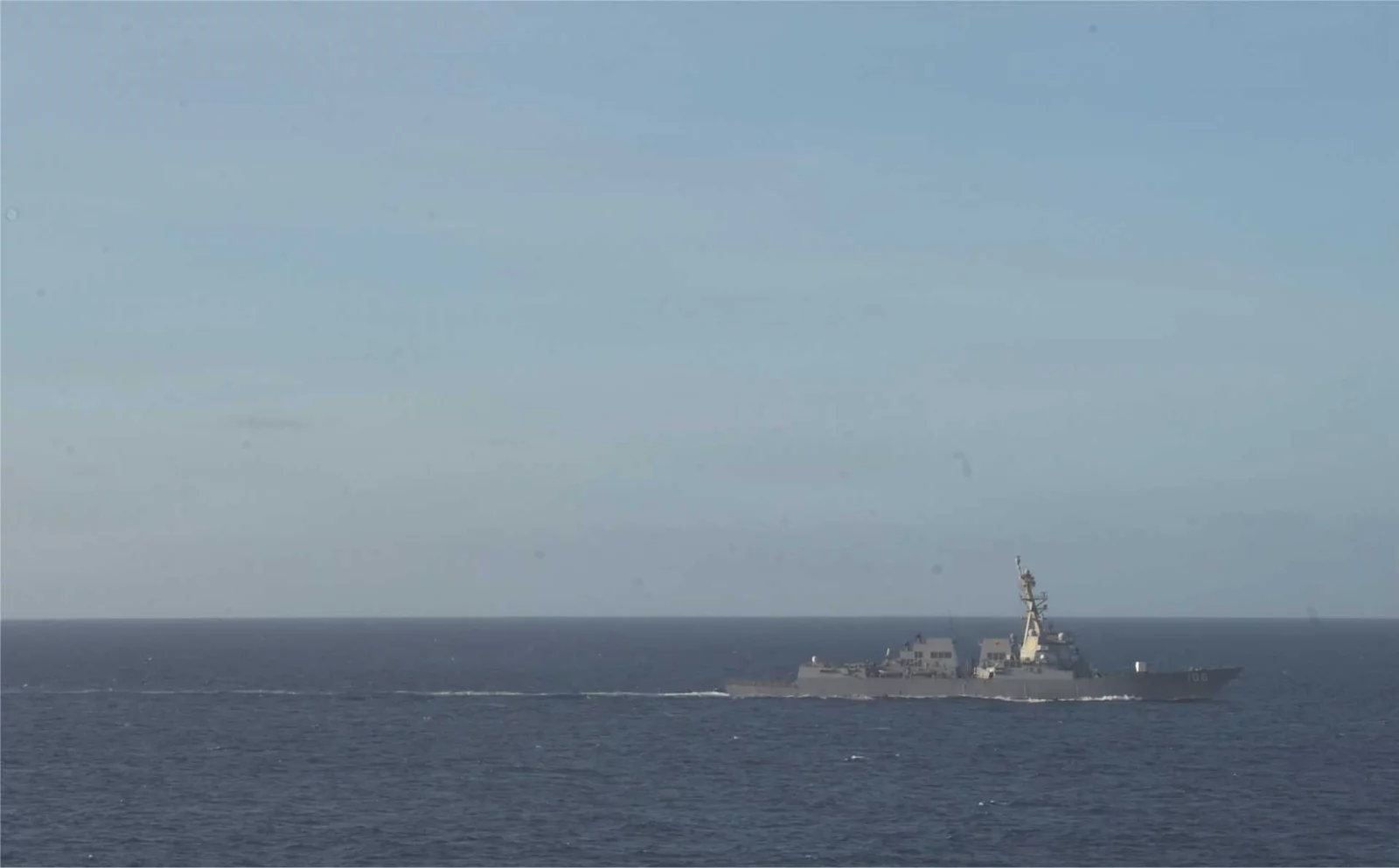
In a significant escalation of maritime enforcement in the Caribbean, the USS Stockdale, an Arleigh Burke-class guided-missile destroyer, intercepted a Russian-flagged oil tanker attempting to deliver fuel to Venezuela. The U.S. Navy’s maneuver effectively blocked the delivery of naphtha, a critical substance for Venezuela’s oil production, highlighting an aggressive U.S. strategy to counter Russian support for the Maduro regime.
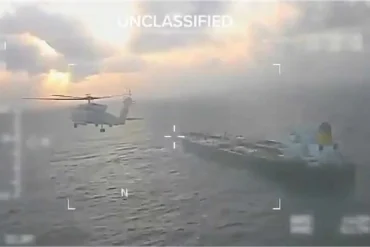
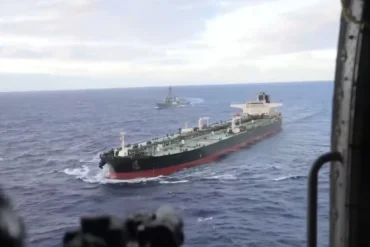
The event unfolded in mid-November 2025, when the Russian tanker Seahorse, sanctioned by both the European Union and the United Kingdom, departed from Cuba en route to Venezuelan waters. Carrying a cargo of naphtha used to dilute Venezuela’s extra-heavy crude oil, the Seahorse’s path was deliberately obstructed by the USS Stockdale (DDG 106). Confronted with the warship’s presence near Venezuelan territorial waters, the Seahorse veered off its trajectory, retreating toward Cuba and later stalling in the central Caribbean.
This naval action is part of a wider operational shift by the United States. While publicly labeled a counter-narcotics deployment under the U.S. Southern Command, the presence of more than a dozen U.S. warships in the Caribbean has taken on new geopolitical dimensions. U.S. military assets are now not only tracking drug cartels but also enforcing economic sanctions by disrupting illicit fuel shipments between sanctioned actors, including Russia and Venezuela.
The Seahorse’s failure to deliver its cargo underscores a broader transformation in U.S. maritime operations. What was once framed as a mission to combat narcotrafficking has evolved into a strategic pressure campaign—an indirect form of sanction enforcement carried out through maritime power. This campaign now targets critical logistical arteries, especially those sustaining Venezuela’s crumbling oil infrastructure.
The implications for the Nicolás Maduro government are considerable. Venezuela’s state oil company, PDVSA, relies heavily on imported naphtha to blend its ultra-heavy crude for export. Any interruption in this supply chain cripples production and export capacity, threatening one of the last viable revenue streams for the regime. In this context, the U.S. Navy’s ability to disrupt fuel deliveries becomes an effective form of economic attrition without firing a shot.
Analysts monitoring regional maritime traffic note that the Seahorse’s altered course and subsequent loitering behavior are highly irregular. The tanker has made multiple failed attempts to approach Venezuelan shores since its initial retreat, indicating a high level of operational disruption caused by U.S. naval presence. This not only delays essential fuel deliveries but also raises the cost and complexity of such operations for Russia.
The USS Stockdale’s deployment is emblematic of a new approach to naval diplomacy—where posture equals power. Without a formal blockade, the mere presence of advanced U.S. warships capable of enforcing economic policy deters adversaries. This kind of “gray zone” maneuvering—operating below the threshold of open conflict—offers Washington a flexible, effective lever in confronting authoritarian regimes without direct military escalation.
Meanwhile, Joint Interagency Task Force South (JIATF-S) continues to integrate naval power with intelligence and interagency coordination. By monitoring both narcotics and energy flows, the U.S. further tightens its grip over crucial Caribbean routes, making it increasingly difficult for sanctioned entities to operate undetected.
As of late November 2025, the Seahorse remains in a holding pattern, its naphtha undelivered and its mission compromised. This single event is indicative of a broader geostrategic recalibration, where U.S. maritime power projects sanctions enforcement and containment across an increasingly contested Western Hemisphere.
The USS Stockdale’s successful interception not only hinders Russian influence in Latin America but also reasserts U.S. naval dominance in a region that is once again becoming central to great power competition. With every denied delivery and forced retreat, the message becomes clearer: the Caribbean is no longer safe harbor for sanctioned statecraft.