US President Donald Trump has made it clear: no more four billion USD federal funding for California’s high-speed rail. This sudden move puts the future of the ambitious project in serious jeopardy. The announcement, coming at a crucial time, adds new urgency to an already embattled venture. Trump’s stance sends shockwaves through California’s transportation strategy, which relies heavily on continued federal backing. Meanwhile, the decision casts doubt on the state’s ability to complete its long-planned high-speed rail network. As pressure mounts, questions explode across the travel and infrastructure sectors. What led US President Donald Trump to pull support now? Why is California’s high-speed rail suddenly being pushed to the edge? The funding halt is more than a budget cut—it’s a political storm with far-reaching consequences. And for California, the stakes have never been higher. The countdown begins, and the rail’s future now hangs by a thread. What happens next could reshape U.S. transit history.
California’s long-delayed high-speed rail project is now facing its most serious threat yet—$4 billion in federal funding may be stripped away, casting doubt over the future of one of America’s most significant transportation investments. The conflict has escalated into a national controversy, drawing attention from policy experts, infrastructure advocates, and regional planners. The issue isn’t just about funding. It’s about what the loss of this project means for the future of fast, clean, and efficient public transportation in the United States.
Federal Tensions Reach Boiling Point
Recent political developments have brought the project into the crosshairs. The White House has questioned the viability of the California high-speed rail project, citing delays, mismanagement, and rising costs. The Department of Transportation has supported a critical audit, recommending that $4 billion in federal grants be rescinded. This total includes $929 million awarded in 2010 and $3 billion allocated more recently. Both grants were meant to accelerate development in California’s Central Valley, an area long underserved by major infrastructure investment. The sudden threat to this massive sum has rattled officials across California and beyond. The uncertainty comes at a time when public infrastructure spending is being prioritized nationally, yet California’s flagship rail project may be left stranded.
Project’s Scope and Stakes
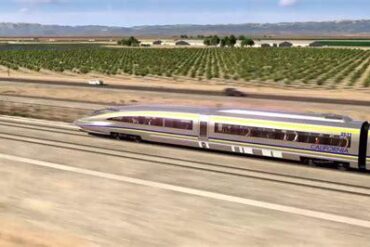
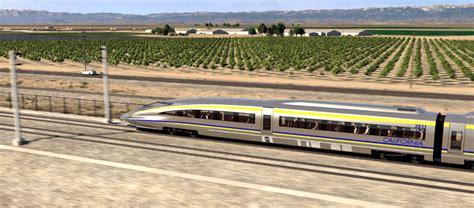
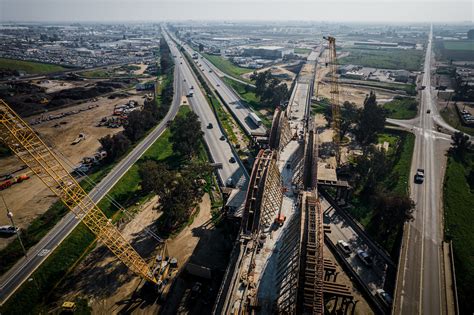
California’s high-speed rail system is envisioned as a transformative route connecting Los Angeles and San Francisco in under three hours. But so far, only 119 miles in the Central Valley are under active construction. The full planned segment is 172 miles, and even that is far from complete. The project has already received nearly $7 billion in federal support over the past 15 years. While progress has been visible in some parts of the state, questions remain about long-term funding and realistic timelines. However, if completed, the rail line could fundamentally reshape tourism, business travel, and regional mobility in California. High-speed connectivity between major cities would cut down on emissions, ease congestion, and make travel safer and more predictable.
Political Pressure Mounts
The situation intensified after recent comments from federal leadership signaled strong disapproval of how the project is being managed. The suggestion that California has failed to honor the terms of its grants sent shockwaves through the infrastructure and transportation sectors. Although final decisions have not been formally announced, the prospect of losing $4 billion in active funding is enough to halt progress indefinitely. And for tourism-dependent regions relying on rail connectivity to boost visitor access and economic development, the fallout could be immense. Moreover, the rail authority faces skepticism about whether it can bridge the funding gap to complete the current phase—even if federal support continues.
Local Resilience and State Response
Despite the turmoil, California officials remain committed to the project. The California High-Speed Rail Authority insists that construction will move forward, with tracks expected to be laid in the Central Valley next year. The agency also confirmed it receives about $1 billion annually from the state’s cap-and-trade program, offering some financial stability through 2045 if extended. Supporters argue that abandoning the rail system now would squander billions already spent, along with decades of planning. The environmental benefits, regional job creation, and tourism potential still make the project a worthy long-term investment. They stress that the Central Valley segment isn’t just a test case—it’s the backbone for future expansion to San Francisco and Los Angeles. For towns like Fresno, Bakersfield, and Merced, the train could be a lifeline—connecting them to the broader economy and tourism networks.
Impact on Travel and Tourism
Beyond California, the consequences ripple into the broader travel and tourism ecosystem. High-speed rail has long been a missing link in U.S. mobility. Europe and Asia have already demonstrated how rail can drive regional travel, cut airline pressure on short-haul routes, and enhance tourism spending in smaller markets. If California’s rail system collapses, it sends a chilling message about America’s ability to commit to long-term infrastructure projects. Domestic travelers will continue to rely heavily on cars and short flights, both of which carry higher environmental and logistical costs. Meanwhile, destinations along the unfinished corridor risk losing years of anticipated economic growth tied to increased visitor access.
Infrastructure Crossroads
The timing couldn’t be more sensitive. The U.S. is currently facing a turning point in infrastructure policy. Massive federal investments are being debated to modernize roads, airports, and transit systems. If the California high-speed rail loses federal backing, it could set a dangerous precedent—one where political disagreements override long-term mobility goals. The travel industry, already fragile in a post-pandemic economy, depends on dependable transportation networks. Without them, regional tourism can’t scale. Hotel occupancy declines. Visitor spending drops. Smaller destinations get left behind.
Looking Ahead
For now, California’s rail authority is fighting to retain its funding and complete the Central Valley segment. It claims it has multiple options to secure additional capital and plans to stay on course. Still, questions loom large. Will federal aid return to the table? Can the state build confidence in its ability to deliver? And what message will this send to other regions considering similar high-speed rail investments? What’s clear is that this isn’t just a California story. It’s a national stress test on how America builds its future, connects its people, and fuels its travel economy. The next few months will be critical. What happens in California may shape the blueprint for all future U.S. transportation projects.