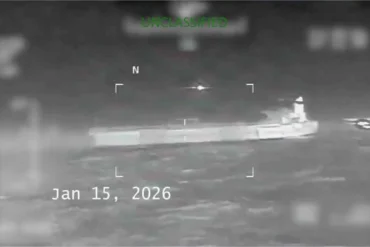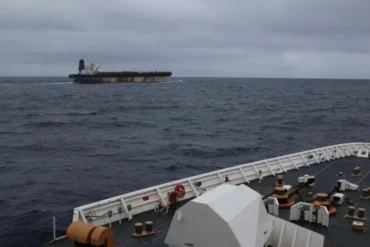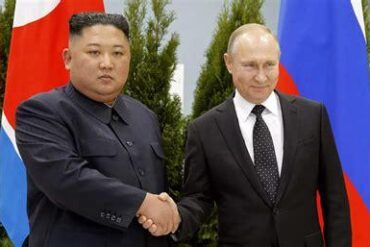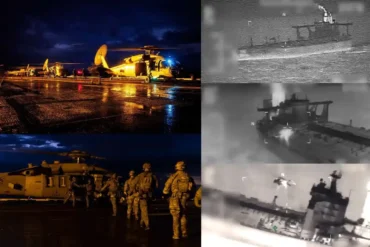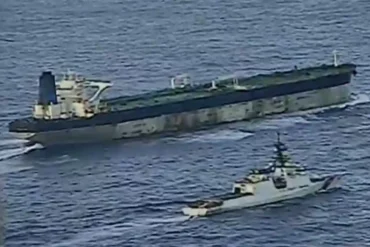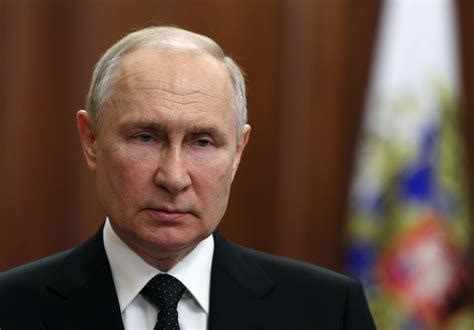
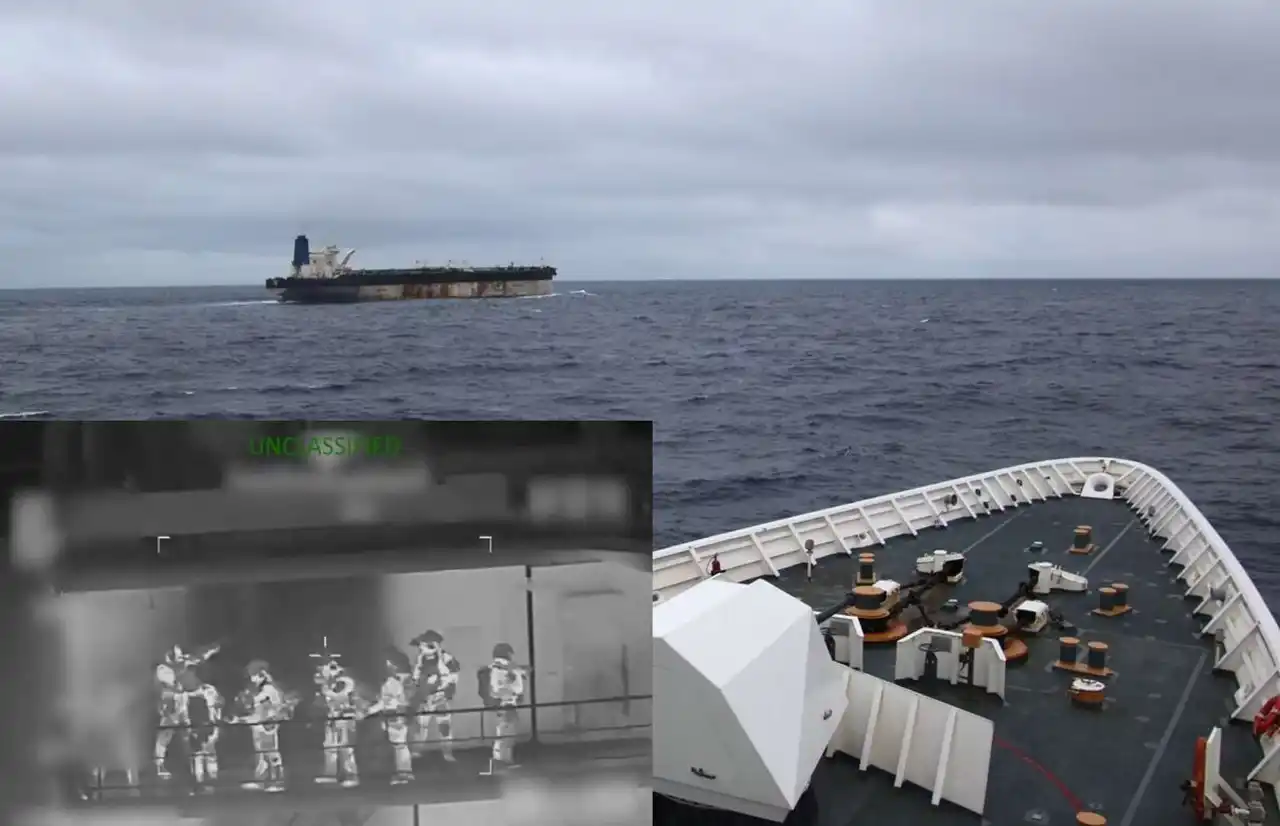
The seizure of a Russian-flagged oil tanker in the North Atlantic, carried out by United States forces thousands of kilometers from the American coastline, has triggered a geopolitical shockwave that extends far beyond the fate of a single vessel. We are witnessing an episode that challenges the carefully curated image of Russian power, tests the credibility of Moscow’s nuclear deterrence posture, and exposes the fragility of President Vladimir Putin’s long-standing strongman narrative.
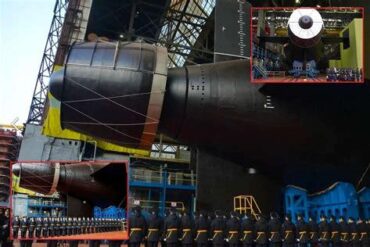
For years, the Kremlin has relied on a blend of military symbolism, strategic ambiguity, and controlled escalation to project inevitability and dominance. Nuclear submarines, in particular, occupy a sacred space in Russian strategic culture. They are not merely weapons platforms; they are floating emblems of sovereignty, deterrence, and existential parity with the United States. When the reported presence of a Russian nuclear submarine failed to prevent American special forces from boarding and seizing a sanctioned oil tanker, that symbolism cracked in full view of the world.
This incident is not about a ship alone. It is about credibility. We are observing a moment where perception, power, and restraint collide, forcing Moscow into a dilemma with no clean exits. Act forcefully, and Russia risks catastrophic escalation while already mired in Ukraine. Refrain from action, and the myth of invulnerability that sustains Putin’s domestic authority begins to erode.
The Atlantic Incident That Shook Moscow’s Aura
The tanker, reportedly carrying sanctioned Russian oil, was intercepted in international waters of the North Atlantic. According to multiple accounts, the vessel attempted last-minute measures to obscure its origin, including repainting identifiers, before being boarded by U.S. forces. What transformed a sanctions enforcement operation into a strategic humiliation was the reported proximity of a Russian nuclear submarine that failed to intervene.
From a purely operational perspective, the message was stark. The United States demonstrated that it could project conventional military power decisively, even in waters far from its own shores, and do so without triggering an immediate Russian response. The optics were devastating for the Kremlin. Russia appeared unable—or unwilling—to defend a sovereign-flagged asset, despite deploying one of its most prized strategic platforms nearby.
In authoritarian systems, image is oxygen. Putin’s rule has long depended on the perception that he alone can shield Russia from humiliation by foreign powers. The Atlantic seizure punctured that shield. The silence that followed from Moscow was louder than any missile launch could have been.
A Nuclear Submarine That Could Not Deter
Russian nuclear submarines are designed for one overriding purpose: deterrence through uncertainty. Their mere presence is intended to complicate adversary decision-making, injecting risk into any hostile action. Yet deterrence only works when the adversary believes escalation is plausible. In this case, Washington clearly did not.
Defense analysts have noted that if Moscow truly intended to escalate, it would not have passively observed the boarding of its tanker. The restraint suggests an uncomfortable truth: Russia understands that in conventional maritime warfare, it is outmatched by the combined capabilities of the U.S. Navy and NATO forces. This is not a secret within military circles, but it is rarely acknowledged so openly through action—or inaction.
The failure of the submarine to alter American behavior undermines one of the core assumptions behind Russia’s post-Cold War military doctrine. Nuclear weapons remain a final guarantee, but below that threshold, Moscow’s leverage appears disturbingly thin.
Putin’s Catch-22: Escalate or Appear Weak
We are confronted with a classic Catch-22. If Putin authorizes a military response, he risks opening a second front against the United States while Russian forces are deeply committed in Ukraine. Such a move could unify Europe even further against Moscow and invite devastating retaliation. If he does nothing, the domestic consequences may be just as severe.
Within Russia, nationalist lawmakers and military commentators have already filled the vacuum with incendiary rhetoric. Calls to sink American ships, seize U.S. tankers, or even threaten nuclear retaliation reflect not confidence, but anxiety. These voices thrive on confrontation, and they draw their legitimacy from the belief that Russia must never back down.
Failure to respond decisively risks ceding ideological ground to more extreme figures who argue that Putin has grown cautious, compromised, or incapable of defending Russian honor. In regimes built on strength, perceived hesitation can be fatal.
The Limits of Russian Escalation
Despite the bluster, Russia’s real-world options are painfully constrained. The war in Ukraine has consumed enormous resources, manpower, and political capital. Opening a maritime confrontation with the United States would stretch Russian forces beyond sustainable limits.
Europe, already unified by fear of Russian expansionism, would almost certainly close ranks behind Washington. Sanctions could intensify, naval patrols could expand, and Russia’s access to critical maritime routes could narrow further. Moscow would find itself isolated at sea while still fighting for leverage on land.
Even Russia’s remaining partners are in weakened positions. Syria’s leadership has collapsed, Venezuela’s influence has waned, and Iran is grappling with internal instability. China remains cautious, prioritizing its own economic interests over overt military alignment. In this strategic environment, escalation is not strength; it is self-harm.
Economic Warfare and the Oil Pressure Point
The tanker seizure must also be understood as an act of economic warfare. Russian oil exports remain a critical lifeline for Moscow’s budget and war effort. By demonstrating the ability to physically interdict shipments on the high seas, the United States has raised the stakes dramatically.
Proposed legislation in Washington threatens punitive tariffs of up to 500 percent on buyers of Russian oil and uranium. While some countries may attempt to circumvent these measures, many—including key Asian importers—will think twice. The chilling effect alone could constrict Russian revenues at a moment when military expenditures are already straining the state.
This economic dimension amplifies the humiliation of the Atlantic incident. It signals that Russia’s shadow fleet is not as untouchable as once believed, and that distance from U.S. shores offers no guarantee of safety.
Why Ukraine Remains the Decisive Front
Strategically, Ukraine remains the arena that truly matters for Moscow. Opening new fronts would dilute focus and weaken Russia’s ability to achieve its declared objectives. Some analysts argue that the only viable response to American provocation is not at sea, but on land—by accelerating operations in Ukraine to force a decisive outcome.
From this perspective, restraint in the Atlantic is not cowardice but calculation. By avoiding direct confrontation with U.S. forces, Russia preserves the option to concentrate its remaining leverage where it believes the stakes are existential. The logic is brutal but consistent: win in Ukraine, and Washington’s attempts at pressure lose credibility.
Yet this path carries its own risks. Escalation in Ukraine, especially through heightened nuclear signaling, increases global anxiety and narrows diplomatic off-ramps. The margin for error shrinks with every move.
The Cracking of the Strongman Myth
Authoritarian power is sustained by stories as much as by soldiers. Putin’s story has always been one of control, resolve, and inevitability. The Atlantic tanker seizure disrupts that narrative. It presents an image of Russia reacting rather than dictating, absorbing blows rather than delivering them.
For domestic audiences, this moment matters. If the Kremlin cannot convincingly explain why a Russian-flagged vessel was taken under the watch of a nuclear submarine, doubts will fester. Those doubts may not erupt immediately, but they accumulate, quietly corroding legitimacy.
History shows that strongmen rarely fall because of a single event. They fall when repeated contradictions between image and reality become impossible to ignore. The Atlantic incident adds a sharp, uncomfortable data point to that ledger.
A Calculated Silence or a Dangerous Precedent
Whether this episode becomes a turning point depends on what follows. Silence may buy time, but it also sets a precedent. If Russian assets can be seized without consequence, similar actions may follow. Each repetition would further normalize American assertiveness and further diminish Russian deterrence below the nuclear threshold.
At the same time, reckless escalation would validate the very fears that have unified Russia’s adversaries. The strategic space available to Moscow is narrow, unforgiving, and shrinking.
In this sense, the failure of a nuclear submarine to alter events in the Atlantic is not merely a tactical embarrassment. It is a strategic signal that the balance of power, at least in conventional terms, has shifted decisively. We are watching a regime built on strength grapple with the costs of restraint—and the dangers of losing face in a world that never forgets weakness.
The tiger, once mounted, now refuses to slow. And dismounting, for the rider in the Kremlin, has never looked more perilous.