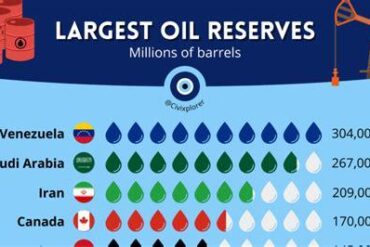
The United Kingdom is preparing a decisive escalation in maritime sanctions enforcement, laying the legal and operational groundwork to authorize military seizure of shadow fleet oil tankers suspected of evading sanctions tied to Russian, Iranian, and Venezuelan oil exports. This shift marks a clear departure from reliance on financial penalties and monitoring alone, signaling London’s readiness to use hard naval power to disrupt illicit energy flows that have continued despite years of restrictions.
At the heart of the policy shift is growing frustration inside government that existing sanctions regimes, while extensive on paper, have failed to halt sanctioned oil movements at sea. Shadow fleet tankers continue to move millions of barrels of crude through opaque ownership structures, false flags, and insurance loopholes, undermining the credibility of Western sanctions and generating ongoing risks to maritime safety near British waters.
The decision follows weeks of internal legal and operational planning, prompted in part by allied actions at sea and by mounting evidence that shadow fleet operations are expanding rather than contracting. British ministers now believe they have identified a domestic legal basis that could allow Royal Navy vessels to board, detain, or redirect certain oil tankers when clear sanctions violations are suspected.
Legal Foundations for Military Enforcement at Sea
Central to the UK’s reassessment is the Sanctions and Anti-Money Laundering Act 2018, legislation originally designed to provide broad enforcement tools following Brexit. Within its shipping provisions, ministers have identified clauses that allow the detention, control, or restriction of movement of specified or disqualified ships operating in UK waters or connected to sanctioned states.
Crucially, legal advisers argue that vessels operating without a valid national flag or under false registration may fall outside the normal protections of international maritime law. In shadow fleet operations, such practices are routine. Ships frequently reflag to jurisdictions with limited oversight, change names multiple times in short periods, or sail under documentation that cannot be verified. Under UK law, these vessels can be classified as disqualified ships, opening the door to direct enforcement, including military involvement.
Officials emphasize that this interpretation represents an escalation of enforcement mechanisms, not a change in sanctions policy itself. The sanctions already exist; what is changing is the willingness to physically enforce them when financial and administrative measures fail.
What Military Seizure Could Look Like in Practice
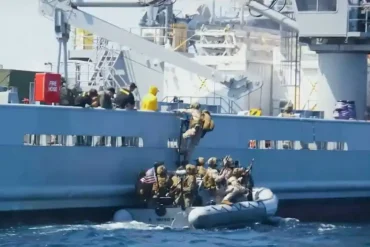
While no UK military boarding has yet taken place, planners have outlined a range of potential operational options should political authorization be granted. These could include Royal Navy surface ships stopping suspect tankers, supported by maritime patrol aircraft providing persistent surveillance and intelligence.
In higher-risk scenarios, ministers have not ruled out the involvement of special forces boarding teams, particularly if crews resist inspection or if vessels attempt to flee UK-controlled waters. Actions could range from controlled boarding and inspection to diversion of ships to port, detention offshore, or enforced removal from UK waters.
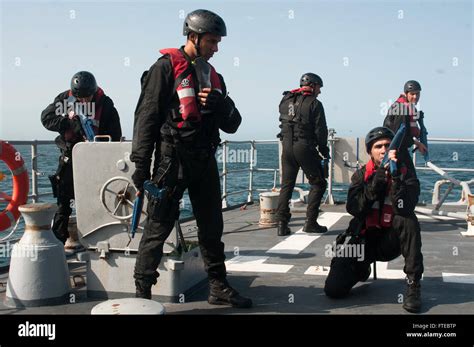
Officials stress that each operation would require case-by-case political approval, with careful consideration of legal, diplomatic, and escalation risks. The intent, they say, is not indiscriminate confrontation but targeted disruption of the most blatant sanctions violations.
Shadow Fleets and the Anatomy of Sanctions Evasion
Shadow fleets have become a defining feature of post-2022 global oil trade. As Western shipping companies, insurers, and traders withdrew from Russian, Iranian, and Venezuelan oil markets, a parallel maritime ecosystem rapidly expanded to fill the gap. These fleets are typically composed of older tankers purchased on secondary markets, often nearing the end of their commercial life.
Once acquired, vessels are rebranded through frequent name and flag changes, cycling through registries in states such as Panama, Liberia, Guyana, Timor-Leste, or Russia itself. Ownership structures are deliberately opaque, passing through shell companies and nominee directors to obscure links to sanctioned entities.
Insurance is another critical vulnerability. Many shadow fleet tankers operate without recognized international insurance, relying instead on obscure providers or sailing uninsured altogether. This creates significant exposure for coastal states in the event of collisions, groundings, or oil spills, risks that are amplified by the age and poor maintenance of many of these ships.
Rising Safety and Environmental Risks Near Europe
European maritime authorities have grown increasingly alarmed by the safety implications of shadow fleet activity. Several incidents involving poorly maintained tankers have already occurred in the Baltic Sea, North Sea, and Mediterranean, highlighting the environmental stakes of continued inaction.
For the UK, the concern is particularly acute. Hundreds of sanctioned or high-risk vessels transit waters near the British Isles each year, often without valid insurance or clear flag state accountability. An oil spill from one of these tankers could impose massive cleanup costs on coastal communities while triggering complex legal disputes over liability.
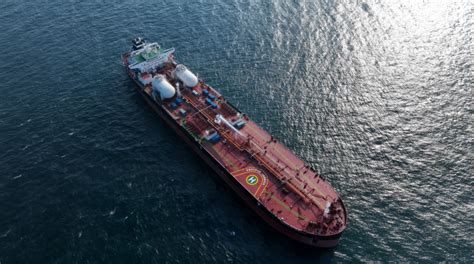
Officials argue that the ability to detain or expel such vessels is not only about sanctions enforcement but also about protecting maritime safety and environmental security.
Allied Actions and the US Shift Toward Interdiction
The UK’s move comes amid a broader shift among Western allies, led by the United States, toward direct interdiction at sea. In recent weeks, US authorities have seized multiple oil tankers linked to sanctioned flows from Venezuela, Russia, and Iran, physically removing them from service.
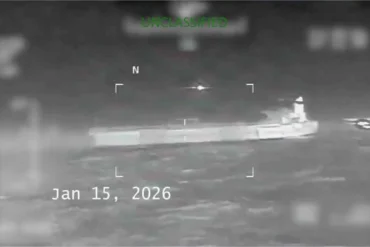
One of the most prominent cases involved the tanker Marinera, formerly known as Bella 1, intercepted in the North Atlantic with surveillance and maritime support from the UK. Other vessels, including Olina and Skipper, were accused of operating under false or rapidly changed flags while attempting to transport sanctioned crude.
These seizures reflect a growing consensus that financial sanctions alone are insufficient when confronted with agile, well-funded smuggling networks willing to exploit legal gray zones. Physically denying ships the ability to operate is increasingly seen as the only effective deterrent.
Scale of the Shadow Fleet Challenge
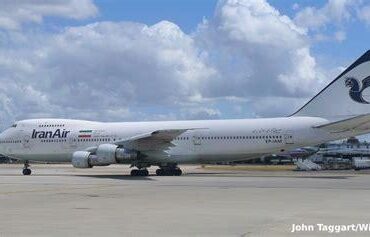
Estimates by allied governments place the global shadow fleet at more than 1,000 vessels, a number that has steadily increased since late 2022. Russia, Iran, and Venezuela are identified as the primary beneficiaries, using these networks to sustain export revenues despite price caps, insurance bans, and port restrictions.
The UK alone has sanctioned over 500 vessels linked to shadow fleet operations. Ministers report that coordinated international action has already forced around 200 ships out of active service, through seizure, denial of insurance, or logistical disruption. However, officials acknowledge that new vessels continue to enter the system, often faster than enforcement measures can keep pace.
Intensified UK Maritime Enforcement Efforts
Alongside potential military action, the UK has significantly expanded its maritime compliance checks. More than 600 ships have been stopped near the British Isles for insurance and documentation verification, with a substantial number found lacking valid coverage or transparent registration.
These inspections serve both as intelligence-gathering operations and as a signal to operators that UK waters are no longer a low-risk transit route for sanctioned oil.
Targeting the Financial Backbone of Russian Oil Exports
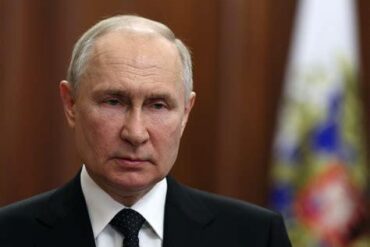
Maritime enforcement is only one pillar of a broader UK strategy. British authorities have joined the United States in sanctioning major Russian energy companies, including Gazprom Neft and Surgutneftegas, as well as traders, insurers, and shipping firms linked to oil exports.
By combining financial sanctions, vessel designations, and potential military enforcement, London aims to constrict the entire logistical chain that enables sanctioned oil to reach global markets. Ministers argue that only a multi-layered approach can meaningfully erode the revenues funding Russia’s war economy.
Strategic Implications and Escalation Risks
Authorizing military seizure of shadow fleet tankers would represent one of the most assertive sanctions enforcement steps taken by the UK in decades. While officials frame the move as legally grounded and defensive, it carries clear geopolitical and escalation risks, particularly if Russian-linked vessels resist detention or if incidents occur at sea.
Nevertheless, British policymakers appear increasingly convinced that credibility is at stake. Allowing shadow fleets to operate with impunity, they argue, undermines not only sanctions policy but the broader principle that international law has consequences.
The coming months will reveal whether the UK translates legal authority into action. What is clear is that the era of passive monitoring is drawing to a close, replaced by a willingness to physically confront sanctions evasion on the high seas.