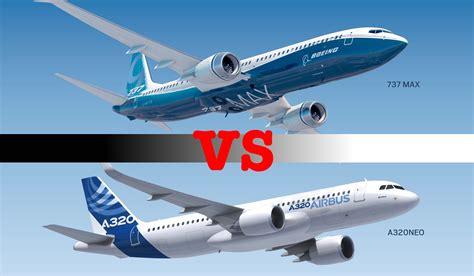
When Russia invaded Ukraine in February 2022, a wave of unprecedented international sanctions quickly followed. Among the strictest of these were restrictions targeting Russia’s aviation sector. The West swiftly cut off Russia’s access to new aircraft, spare parts, and maintenance services for its Airbus and Boeing fleets, which form the backbone of Russian commercial aviation. Yet, over two years later, Russian aircraft continue to fly—kept operational through a complex web of alternative procurement methods that have allowed nearly €1 billion worth of parts to bypass sanctions and enter Russian territory.
How Sanctions Were Supposed to Ground Russian Airlines
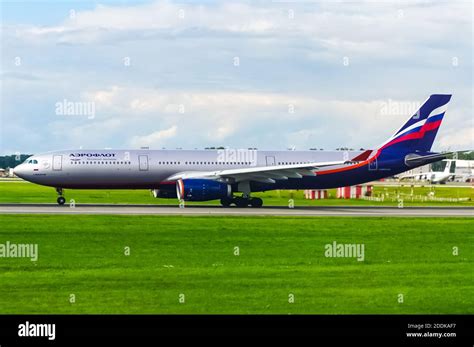
Sanctions imposed by the United States, European Union, and other Western nations aimed to paralyze Russia’s commercial aviation capabilities. Specifically, companies such as Boeing, Airbus, Comac, and Embraer were prohibited from selling aircraft, parts, or providing any services to Russian entities. The ban also extended to technical documentation essential for maintenance and operation, effectively cutting off legitimate support for Russia’s mixed fleet.
In theory, this should have led to the gradual grounding of aircraft as essential components aged, malfunctioned, or became unserviceable. Airlines like Aeroflot, S7 Airlines, and Ural Airlines—which heavily rely on Western-built aircraft—faced an existential crisis. However, the practical implementation of these sanctions revealed substantial gaps in enforcement.
The Global Sanctions Evasion Network Keeping Russian Jets Flying
According to an investigation by Finnish news outlet Yle, Russia has successfully imported over €600 million worth of Airbus parts and nearly €400 million worth of Boeing components since sanctions were enacted. These transactions did not occur directly but flowed through a sophisticated global network of intermediaries operating in countries that have opted not to participate in Western-led sanctions.
Notably, firms based in China, Türkiye, and the United Arab Emirates (UAE) have played central roles in facilitating these transfers. These companies legally purchase spare parts from the Original Equipment Manufacturers (OEMs) or secondary markets and re-export them to Russian carriers. Increasingly, businesses in India have also begun to participate in this lucrative trade, capitalizing on their nation’s neutral geopolitical stance.
While Boeing and Airbus stress compliance with international regulations, their control over parts dissipates once items leave their warehouses. Airbus acknowledges the tracking of genuine parts and documentation through serial numbers and end-user agreements. Yet, they admit the absence of mechanisms to prevent the re-export of parts to unintended destinations or the infiltration of counterfeit components into global supply chains.
Inside the Black Market for Aircraft Components
Since the onset of sanctions, more than 4,000 shipments of aircraft components have reached Russia, encompassing a vast range of parts from trivial interior fittings to critical avionics and even entire powerplants. Hundreds of international firms have facilitated these deliveries, some knowingly and others perhaps unwittingly, as components change hands multiple times across opaque global logistics channels.
Although many of these parts support civilian airlines, most major Russian carriers maintain deep ties to the Kremlin. Profits from these transactions bolster government revenue streams, and there remains a pervasive concern that components with dual-use potential—such as advanced communication systems or radar modules—could indirectly support Russia’s military operations in Ukraine.
Countries implicated in this alternative procurement network—including China, Türkiye, UAE, and increasingly India—have consistently abstained from sanctioning Russia. Consequently, Western nations have shifted focus toward imposing penalties on specific companies and individuals within these countries found to be violating export controls. Despite these efforts, dismantling the intricate global trade networks sustaining Russia’s aviation sector has proven nearly impossible.
Russia’s Struggle to Revive Its Domestic Aircraft Industry
The Soviet Union once boasted a robust domestic aviation manufacturing sector, producing airliners like the Tupolev Tu-154 and Ilyushin Il-62 that dominated internal and international flights. But in the decades following the USSR’s dissolution, Russian airlines increasingly turned to Boeing and Airbus, driven by the need for efficiency, modernity, and competitive performance standards.
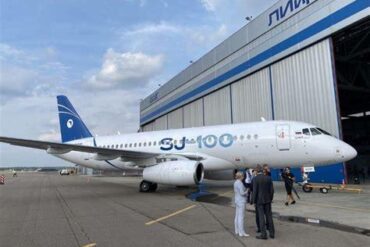
Today, with access to Western-built aircraft frozen, Moscow is racing to rebuild its indigenous aircraft manufacturing capabilities. The most notable product of these efforts is the MC-21, a domestically developed narrow-body jet designed to rival the Airbus A320neo and Boeing 737 MAX. In a significant milestone, an all-Russian version of the MC-21 performed its maiden flight recently, powered by locally-produced engines and avionics systems.
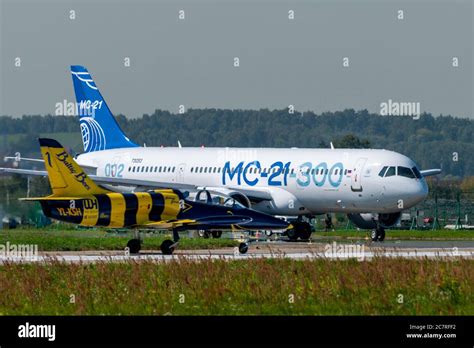
However, scaling up production of the MC-21 and similar projects faces immense technical and logistical challenges. Russian aerospace firms lack the comprehensive supply chains and technological ecosystems that underpin Western aerospace giants. Furthermore, Russia’s exclusion from global certification bodies like EASA and FAA limits the aircraft’s marketability and acceptability beyond domestic borders.
Aircraft Leasing: Another Sanctions Loophole
Beyond spare parts, Russia’s strategy for sustaining its aviation sector has exploited legal ambiguities surrounding aircraft leasing agreements. Most modern commercial airliners operate under leasing contracts, often owned by international lessors and registered in foreign jurisdictions.
Following the imposition of sanctions, lessors demanded the return of their aircraft, citing international agreements like the Cape Town Convention, which Russia has ratified. In defiance, Russian authorities directed airlines to reregister these planes domestically, effectively seizing hundreds of leased aircraft.
This unilateral move has triggered protracted legal battles and substantial insurance claims, with estimated losses to lessors exceeding $10 billion. Meanwhile, these aircraft—many of which are high-value, modern jets—continue to fly within Russia, sustained through parts acquired via sanctions evasion channels.
The Inevitable Decline: Lessons from Iran’s Sanctioned Aviation Sector
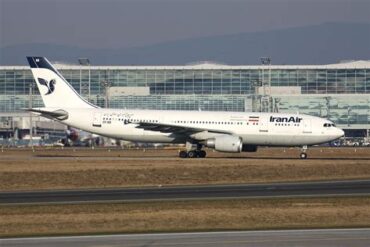
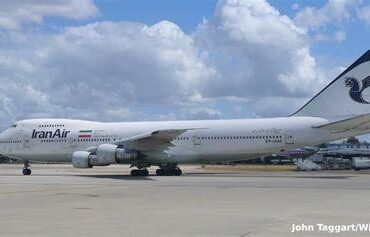
Despite short-term successes in circumventing sanctions, Russia’s aviation industry faces a trajectory reminiscent of Iran’s embattled airlines. Decades of sanctions have forced Iranian carriers to operate aging fleets, relying on cannibalized parts and localized maintenance to keep aircraft operational far beyond intended service lives.
Russia is beginning to confront similar dilemmas. Access to new aircraft remains blocked, critical components are harder to source, and the cumulative wear on its fleet will intensify safety and reliability concerns. Even with illicit parts imports and domestic aircraft development, experts predict a steady erosion of Russia’s aviation standards, operational safety, and competitiveness.
Conclusion: Sanctions Without Total Enforcement Are Blunt Instruments
The Russian aviation sector’s resilience underscores the limitations of sanctions that lack universal enforcement and global consensus. While Western nations have successfully restricted direct sales of aircraft and parts, Russia’s resourceful exploitation of international trade loopholes demonstrates the persistent challenges of isolating a nation deeply embedded in the global economy.
As long as neutral and allied countries prioritize economic interests over geopolitical alignment, Moscow will retain access to the vital components keeping its aircraft aloft. The situation remains a cautionary tale for policymakers—illustrating that in an interconnected world, even the most stringent sanctions may only clip a nation’s wings temporarily.