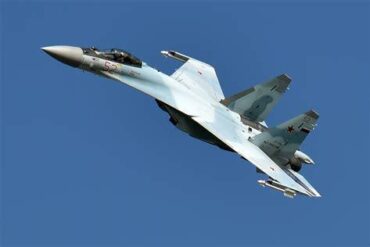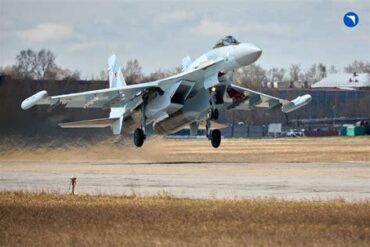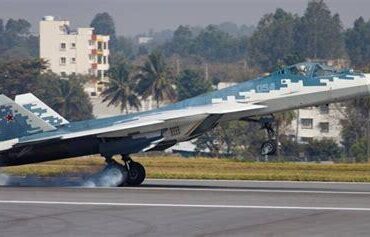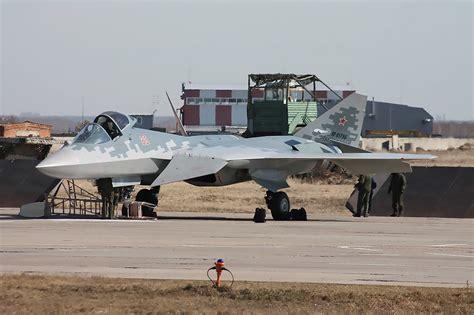
On June 25, 2025, Russia’s United Aircraft Corporation (UAC) delivered a fresh batch of Su-35S Flanker-M multirole fighters to the Russian Aerospace Forces (VKS), signaling a bold stance against ongoing Western sanctions. This move, deeply symbolic and strategically vital, reinforces Russia’s commitment to sustaining and expanding its air superiority amid the protracted war in Ukraine. The delivery, made public through an official statement by UAC and the state defense conglomerate Rostec, showcases both technological resilience and the ability to circumvent international economic pressure.
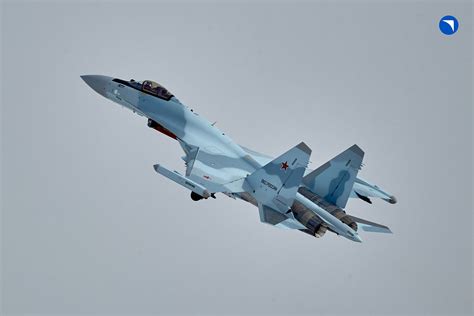
The freshly delivered jets underwent rigorous factory acceptance testing before transfer, confirming operational readiness across a spectrum of flight regimes. Russian pilots, now stationed with these new aircraft, expressed explicit gratitude to the engineers and workers at UAC’s Komsomolsk-on-Amur plant. Vladimir Artyakov, Rostec’s First Deputy General Director, praised the Su-35S as a pilot-favorite, referencing its performance in real-world operations. This delivery underscores UAC’s sustained capability to produce high-end military platforms under increasingly constrained conditions.
Su-35S Technical Superiority in Modern Combat
The Su-35S is widely recognized as a 4++ generation multirole fighter, combining raw power with advanced avionics and survivability systems. Powered by twin AL-41F1S turbofan engines with 3D thrust vectoring, the fighter reaches a top speed of Mach 2.25 and operates within a range of 3,600 kilometers, enabling extended-range missions without aerial refueling.
The centerpiece of its sensor suite is the Irbis-E passive electronically scanned array (PESA) radar, which offers detection ranges up to 400 kilometers, capable of tracking 30 targets and engaging up to eight simultaneously. This allows pilots to identify, prioritize, and neutralize threats before entering contested airspace. Paired with R-77 long-range air-to-air missiles, KAB-500 precision bombs, and anti-ship weaponry, the Su-35S becomes a flexible tool for both air dominance and precision ground attack roles.
Its Khibiny-M electronic warfare suite enhances survivability, jamming enemy radars and missile lock-ons. Compared to its predecessor, the Su-27, the Su-35S boasts a significantly improved payload capacity, sensor integration, and combat endurance. The result is a platform optimized for multi-domain operations in contested airspaces—a factor that proves decisive in the Ukrainian theater.
Strategic Deployment in Ukraine’s Air War
In the Special Military Operation (SMO) in Ukraine, the Su-35S has become a key component of Russia’s air strategy. Its advanced sensors and long-range missiles provide a substantial edge in air-to-air combat, particularly against older Ukrainian aircraft such as the MiG-29 and Su-27. Russian forces have utilized the jet not just for dogfights but for precision strikes on key infrastructure—targeting logistics hubs, radar sites, and command centers with pinpoint accuracy.
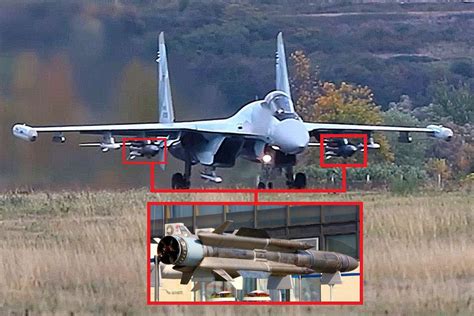
Equally important is its role in networked warfare. Integrated with AWACS platforms, S-400 air defense systems, and ground-based radar networks, the Su-35S contributes to a broader ecosystem of coordinated air operations. Analysts argue its operational flexibility—rapidly switching from air superiority to close air support—has helped secure critical advances on the battlefield.
Defense experts point out that the Su-35S’s battlefield success is not purely technical. It reflects a larger doctrine of Russian layered air dominance, wherein modern fighters like the Su-35S spearhead offensives under protective umbrellas of integrated defense networks.
Combat Losses and Operational Risks
Despite its capabilities, the Su-35S has not been immune to combat attrition. Open-source intelligence platforms like Oryx confirm at least five Su-35S losses as of June 2025. One of the most high-profile incidents involved a Patriot missile battery in Kursk Oblast that reportedly downed a Su-35S in a rare long-range interception. Additional Ukrainian claims suggest successful engagements using MANPADS and legacy S-300 systems.
Technical malfunctions have also played a role in operational losses. These include electrical failures and navigational system errors, likely exacerbated by the dense electronic warfare environment dominating the frontline. Moreover, at least two incidents have been attributed to friendly fire, with S-400 systems mistakenly engaging friendly aircraft—a serious issue in the fog of war.
Nonetheless, analysts underscore that the Su-35S’s survivability features, particularly its Khibiny-M jammers, have likely prevented even greater losses. The aircraft’s success-to-loss ratio remains favorable, especially when considering the complexity of missions it undertakes deep in contested zones.
UAC’s Industrial Backbone and Ramp-Up
The United Aircraft Corporation operates one of the most advanced aerospace production hubs in Russia at Komsomolsk-on-Amur. Here, assembly lines for the Su-35S blend traditional Russian engineering precision with increasingly modernized manufacturing methods. Each jet is custom-built, undergoing meticulous system integration of components such as radar, engines, and avionics.
General Director Vadim Badeha noted that UAC aims for a 30% increase in labor efficiency by 2030, with 2025 already surpassing the previous year’s production targets. Advanced tools—ranging from robotic arms to digital diagnostics—accelerate output while maintaining quality. Skilled laborers install critical systems like the Khibiny-M, a process requiring high technical expertise.
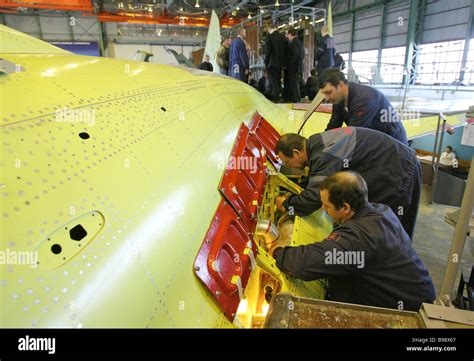
Crucially, UAC coordinates with a vast network of suppliers, many of whom have shifted to domestic substitutes for formerly imported parts. This production capacity is vital not only for the VKS but also for potential export deals, allowing Russia to maintain its presence in the international arms market even under embargo conditions.
Sanctions and the Path to Technological Sovereignty
The ongoing sanctions imposed since 2022 aimed to cripple Russia’s ability to manufacture advanced defense systems. However, the continued production and delivery of the Su-35S illustrate the limitations of economic isolation in deterring military capacity.
Russian industry has responded by investing in domestic semiconductor manufacturing, sourcing components from nations like China and Iran, and retooling existing infrastructure. Reports suggest that Chinese microchips and Iranian electronics are quietly replacing banned Western inputs. The cost has been substantial—military spending hit 6.3% of GDP in 2025, with inflation and debt rising—but the strategic goal of defense self-reliance appears largely intact.
This pivot to localization reflects a broader economic shift toward military-centric growth, even at the expense of civilian sectors. Critics argue that diverting funds from healthcare and education will generate long-term instability, but in the short term, it enables continued force projection and geopolitical assertiveness.
Why the Su-35S Matters for Russia’s Military Posture
The Su-35S occupies a central role in Russia’s defense strategy, extending from the Ukrainian battlefield to the Arctic and Pacific theaters. Integrated with S-400 batteries, AWACS, and ground command posts, it acts as both a frontline platform and a force multiplier.
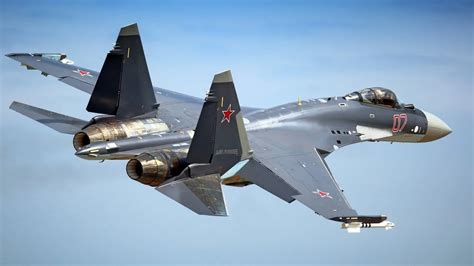
Rostec’s Artyakov summarized its significance: “These fighters accomplish all assigned tasks.” Whether deployed against NATO probes near Kaliningrad or supporting operations in Syria, the Su-35S brings tactical flexibility and strategic reach. It complements Russia’s air defense triad, sitting between the lighter MiG-35 and the stealthier Su-57.
Importantly, its presence deters adversaries, forming part of Russia’s layered deterrence posture. In regions like Eastern Europe, where airspace contests could escalate into broader conflict, the Su-35S acts as both shield and sword. Its versatility allows Russian planners to deploy it where needed most, responding swiftly to emergent threats across diverse geographies.
Looking Ahead: The Future of Su-35S
While the Su-57 stealth fighter represents the next technological leap, the Su-35S remains indispensable. Planned upgrades, according to Jane’s Defence Weekly, may include AI-assisted targeting, improved radar stealth coatings, and upgraded electronic warfare systems. These modifications will ensure relevance as aerial warfare evolves.
UAC has ambitions to expand exports, targeting partners like Algeria, Vietnam, and Egypt, where interest in non-Western systems is growing. Sanctions complicate these efforts, but strategic deals with neutral or aligned countries could bolster Russian influence and foreign currency reserves.
As the global defense landscape fractures into polarized blocs, platforms like the Su-35S become both weapons and political tools. Their presence on the world stage—be it in Europe, Asia, or the Middle East—signals Russia’s determination to remain a central force in global military aviation, regardless of economic headwinds.
In this light, the Su-35S is more than a fighter jet. It is a statement—of engineering excellence, industrial resilience, and defiance in the face of unprecedented pressure.