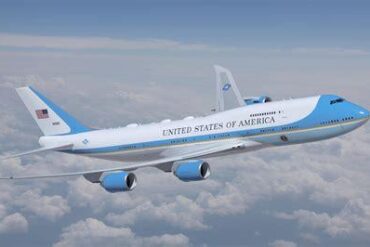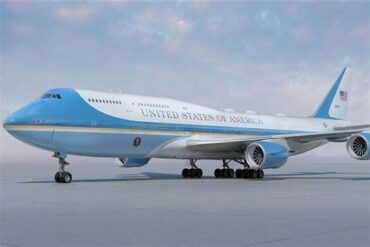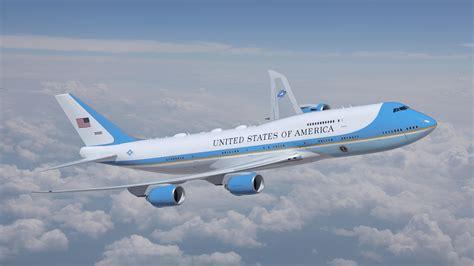
The timeline for the delivery of Boeing’s VC-25B aircraft, the next-generation planes designated to carry the President of the United States under the “Air Force One” call sign, has once again been pushed back. Initially slated for service within this decade, Boeing now confirms a revised delivery year of 2028, underscoring an era of deep turbulence for one of America’s most iconic aviation programs.
Boeing’s $3.9 Billion Gamble With Time
The $3.9 billion contract signed in 2018 was a highly ambitious plan to develop and deliver two heavily modified Boeing 747-8 aircraft as replacements for the aging VC-25A fleet. These current jets, operational since 1990, are based on the Boeing 747-200 platform but are extensively modified for presidential use, complete with secure communications systems, electronic countermeasures, and in-flight refueling capabilities.
However, the VC-25B program has struggled to gain altitude. Beset by supply chain issues, internal production inefficiencies, and broader reputational damage from Boeing’s ongoing troubles with the 737 MAX, the aerospace giant now projects delivery after nearly a full decade of development. The initial timeline has been overtaken not only by technical hurdles but also political ones, with the planes set to enter service well after the administration that initiated their construction.
Presidential Transport: Delays Create Diplomatic Workarounds
As the VC-25B delays persist, the U.S. government has taken steps to mitigate security and logistical gaps in executive air mobility. In a notable shift during the Trump administration, the U.S. accepted the donation of a Boeing 747-8 from Qatar, repurposing it for potential interim presidential transport. This aircraft, while not equipped to the standards of a full VC-25B, is undergoing modifications to handle secure communications and dignitary transport roles.
The Air Force is also procurring two additional 747-8 aircraft from Lufthansa, the German flag carrier. Like the Qatari plane, these jets must undergo extensive modifications, including classified avionics, defensive countermeasures, and mission-critical redundancy systems. According to internal Air Force projections, both planes will be delivered by late 2026, possibly bridging the operational gap until the VC-25B fleet is finally airworthy.
VC-25B: A Leap in Technology, If It Ever Takes Off
Despite the delays, the VC-25B program promises a considerable leap forward in capability. Boeing has stated the aircraft will offer increased cabin space, enhanced electronic warfare protection, next-generation secure communications, and modernized avionics systems designed to function during high-threat scenarios, including potential nuclear conflict. The exact specifications remain classified, though the promise is clear: a flying command center tailored for 21st-century warfare and diplomacy.
Still, the clock is ticking. With current projections placing delivery in 2028, the U.S. may face at least three more years relying on jets that are nearly 40 years old. Given the strategic and symbolic significance of Air Force One, such a delay is more than a technical footnote — it’s a geopolitical vulnerability.