For more than four decades, Iran’s civil aviation industry has existed under intense international pressure. Western sanctions—particularly those imposed by the United States—were designed to isolate the country from global aerospace markets. Aircraft manufacturers such as Boeing and Airbus are prohibited from selling planes or spare parts to Iranian carriers, while financial restrictions prevent most legitimate aviation transactions.
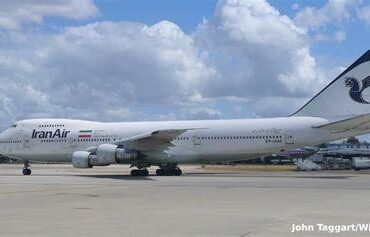
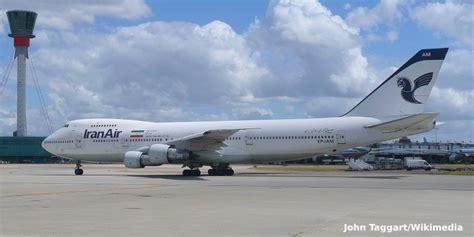
Yet despite this isolation, Iran continues to operate one of the most unusual airline fleets in the world. Dozens of Boeing aircraft—many of them originally operated by foreign carriers—are still flying within Iran or across regional routes. Aviation analysts estimate that around 60 Boeing airliners remain active in the country, even though the sanctions regime theoretically blocks every step required to acquire, maintain, and operate them.
The story behind this paradox reveals a vast shadow logistics network, stretching across continents and involving shell companies, forged registrations, covert aircraft transfers, and a gray market for aviation parts. Over time, Iran has built a parallel aviation ecosystem capable of sustaining a fleet that officially should not exist.
Behind that network lies a broader strategic objective. These aircraft are not merely commercial assets. Once they enter Iranian territory, many are quietly integrated into a dual-use logistical system connected to the Islamic Revolutionary Guard Corps (IRGC). In this system, civilian jets can support passenger travel one day and transport military cargo or personnel the next.
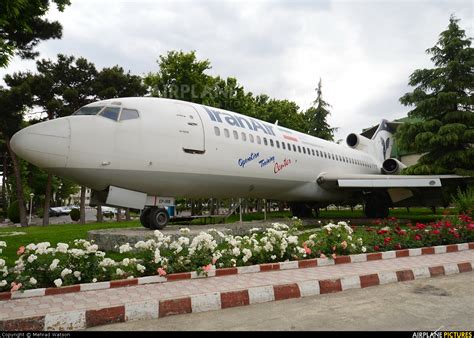
Iran’s ability to sustain this fleet represents one of the most elaborate sanctions-evasion operations in modern aviation history, combining deception, engineering ingenuity, and geopolitical alliances.
The Sanctions That Tried to Ground Iran’s Aviation Industry
Modern commercial aviation depends on an extremely complex supply chain. Airlines rely on constant flows of spare parts, software updates, engine servicing, and safety inspections. When sanctions block access to those systems, aircraft quickly become grounded.
That was precisely the goal of Western restrictions placed on Iran’s aviation sector. Beginning after the 1979 Iranian Revolution, and tightening dramatically in later decades, sanctions cut Iran off from aircraft manufacturers and global maintenance networks. Even a simple component—such as an avionics board or hydraulic actuator—could no longer be purchased legally.
The impact was immediate and severe. Iran’s commercial fleet began to age rapidly as airlines were forced to keep decades-old aircraft flying without official manufacturer support. At one point, the average age of some Iranian jets exceeded 25 to 30 years, far above global norms.
Today Iran reportedly operates around 330 civilian jetliners, but fewer than 200 are considered airworthy at any given time. Many remain parked indefinitely due to lack of spare parts or structural fatigue.
Yet the aircraft that remain operational perform an outsized role. They connect domestic cities, maintain regional links, and—critically—support Iran’s strategic logistics network across the Middle East, Africa, and Eurasia.
Maintaining those aircraft has required creativity on an almost cinematic scale.
Hijacking Old Airframes: The Shadow Acquisition Strategy
One of the most striking methods used by Iran involves covertly redirecting second-hand aircraft during transit flights.
In the global aviation industry, used airliners are routinely moved between storage facilities, maintenance centers, and new buyers. These transfers rely on legitimate flight plans filed with aviation authorities. Iran’s strategy exploits that system.
Through a network of intermediaries, shell companies purchase or temporarily register aging aircraft, often in countries with weak regulatory oversight. The aircraft then depart on what appears to be a routine repositioning flight.
But somewhere along the route, the plan changes.
Pilots may declare a technical problem, request an unscheduled diversion, or simply alter the flight path once approaching Iranian airspace. By the time international authorities realize what happened, the aircraft has already landed in Iran.
A dramatic example reportedly occurred in July 2025, when five Boeing 777-200ER wide-body jets were redirected to Tehran. The aircraft had been fraudulently registered in Madagascar and were supposedly scheduled for maintenance in Kenya after leaving storage in China. Instead, they diverted mid-route and landed in Iran.
To obscure the digital trail, pilots sometimes disable ADS-B transponders—the satellite-based tracking system used by modern aviation—while flying over regions such as Afghanistan or Iraq. Once the aircraft disappears from global tracking networks, the final leg of the journey becomes difficult to reconstruct.
Within hours of arrival, aircraft registrations are changed, paperwork is rewritten, and the jets are quietly absorbed into Iran’s domestic aviation system.
The Global Black Market for Aircraft Parts
Acquiring airframes is only half the battle. Keeping them flying requires an enormous supply of replacement components.
Modern jets contain millions of parts, from turbine blades to electronic modules. Airlines normally purchase these items directly from manufacturers or authorized suppliers. Iranian carriers, however, must rely on a complex underground market.
The process often begins with retired aircraft being dismantled in Europe or North America. Components from these planes enter the global secondary parts market, where brokers purchase them for resale.
From there, the trail becomes intentionally convoluted.
Parts may pass through multiple intermediary companies located in countries with limited export oversight. Each step obscures the final destination until the components eventually arrive in Iran through indirect shipping routes.

Some parts are genuine surplus components. Others come from cannibalized aircraft—jets that have been dismantled so their working parts can keep other planes flying.
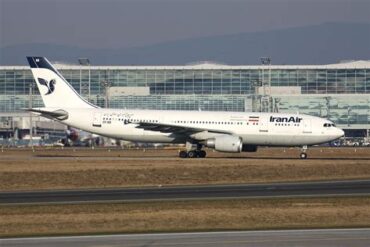
Iranian airlines such as Mahan Air and Iran Air reportedly rely heavily on these networks. Brokers arrange transactions that appear legitimate on paper while quietly funneling restricted aviation equipment toward Iranian buyers.
Despite the risks, the system has proven remarkably resilient. The gray market for aircraft components is vast, and tracking individual parts across multiple jurisdictions can be extremely difficult.
Reverse Engineering: Iran’s Domestic Aviation Industry
Smuggling parts provides short-term survival, but Iran has also pursued a more ambitious strategy: building its own aviation manufacturing capabilities.
Over the past decade, Iranian engineers have increasingly focused on reverse-engineering Western aircraft components. The goal is to replicate critical parts domestically so airlines no longer depend entirely on smuggled supplies.
Iran’s Civil Aviation Organization (CAO) announced in 2024 that local companies had mastered production techniques for a range of Airbus and Boeing components. These reportedly include structural parts, avionics modules, and certain mechanical assemblies.
By late 2025, Iranian officials claimed the country had begun producing indigenous replacement parts for several commercial aircraft systems. If accurate, that capability represents a major step toward technological independence.
Yet one area remains exceptionally difficult: jet engines.
Modern turbofan engines are among the most sophisticated machines ever built. They require exotic alloys, precision machining measured in microns, and complex aerodynamic design. Even advanced industrial nations struggle to develop new engines.
For Iran, replicating those systems domestically remains a monumental challenge. As a result, engine maintenance and replacement components continue to rely heavily on foreign supply chains.
The Moscow Connection: A New Aerospace Partnership
Sanctions reshaped another geopolitical relationship in unexpected ways. After Russia’s invasion of Ukraine in 2022, Moscow itself became the target of sweeping aerospace sanctions.
Suddenly, two countries isolated from Western aviation markets found themselves facing the same challenge.
Iran and Russia responded by deepening cooperation across the aviation sector. In 2022 the two governments signed an agreement covering technical support, spare parts production, and aircraft maintenance collaboration.
The partnership quickly produced unusual milestones.
In 2023, Russia’s national airline Aeroflot sent an Airbus A330-300 to Iran’s Mahan Air for heavy maintenance—the first time a major Russian carrier relied on Iranian facilities for such work.
By 2025, the relationship expanded further. The two countries agreed to mutually recognize aviation standards, allowing aircraft repaired in Iran to operate in Russia without regulatory complications.
Russian authorities even granted three Iranian companies licenses to provide maintenance, repair, and overhaul (MRO) services for Russian airlines.
For Iran, the arrangement provided new industrial opportunities. For Russia, it offered access to an alternative supply chain after Western manufacturers withdrew support.
When Civilian Aircraft Become Strategic Assets
Once a smuggled airliner lands in Iran, its transformation begins almost immediately.
Original airline logos disappear. Registrations are replaced with Iranian tail numbers. Ownership is shuffled between domestic carriers to create a deliberately confusing paper trail.
But the most important change is operational.
These aircraft frequently become part of a dual-use logistics network operated by the Islamic Revolutionary Guard Corps.
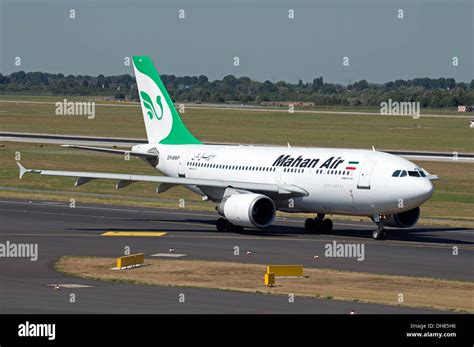
Iranian airlines—including Mahan Air and Caspian Airlines—have long been accused of supporting military logistics missions. Aircraft that appear to operate standard passenger routes can quietly transport equipment, personnel, or cargo linked to Iranian strategic interests.
Among the missions reportedly conducted:
- Transporting missile components and UAV systems to regional allies
- Moving IRGC commanders and technical specialists across the Middle East
- Supplying proxy forces such as Hezbollah
- Delivering equipment to Iranian-linked operations in Africa
One particularly controversial tactic involves carrying military cargo aboard scheduled passenger flights. By blending weapons shipments with civilian travel, operators reduce the likelihood that foreign governments will attempt interception.
Inside the IRGC, a specialized logistics division known as Unit 190 reportedly manages many of these smuggling operations.
Drones, Gold, and Long-Range Logistics
In recent years, this aviation network has expanded far beyond the Middle East.
Investigations by watchdog organizations claim Iranian civilian airliners have been used to transport Shahed-series drones and ammunition to Russia since late 2022. These shipments support Moscow’s military operations while strengthening the strategic partnership between the two countries.
Other routes extend toward Latin America.
Reports suggest aircraft linked to Iranian shell companies have flown technicians and equipment to Venezuela, where Iran maintains growing economic ties. In some cases, payment for these services reportedly comes in the form of gold shipments flown back to Tehran.
Such operations demonstrate how Iran’s aviation network functions not merely as transportation infrastructure, but as a global logistics backbone supporting geopolitical alliances.
Military Industry and Aviation Converge
Civil aviation has increasingly intersected with Iran’s broader military modernization efforts.
Tehran has pursued negotiations with Russia for advanced combat aircraft, including the Su-35 multirole fighter. Reports have suggested that up to 48 aircraft could be involved in a future procurement agreement.
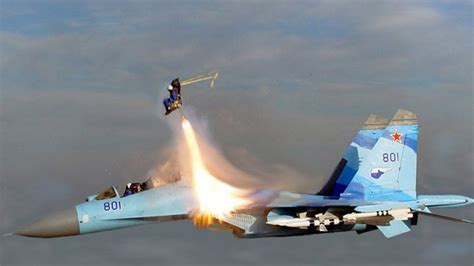
More ambitious proposals have even included the possibility of partial assembly facilities within Iran, allowing local technicians to participate in building advanced aircraft systems.
Other recent deliveries reportedly include:
- Yakovlev Yak-130 jet trainers, essential for pilot training pipelines
- Mil Mi-28 attack helicopters, strengthening Iran’s ground-attack capability
- Advanced shoulder-fired missile systems valued at hundreds of millions of dollars
While many of these deals remain partially opaque, they illustrate how Iran’s aviation industry now overlaps with its defense sector in complex ways.
Operation Epic Fury and the Future of Iran’s Shadow Fleet
The fragile ecosystem sustaining Iran’s aviation sector now faces unprecedented pressure.
During the recent military campaign known as Operation Epic Fury, strikes targeted multiple facilities associated with the Islamic Revolutionary Guard Corps. Several of those locations also support Iran’s aircraft maintenance infrastructure.
Among the facilities reportedly hit was HESA (Iran Aircraft Manufacturing Industrial Company) in Shahin Shahr, a key center for drone production and aviation maintenance.
Because many Iranian airports function as dual civilian-military hubs, the attacks have also disrupted commercial aviation operations. Damage to shared infrastructure has complicated maintenance schedules and reduced available capacity.
At the same time, the broader regional conflict has caused massive disruption to air travel across the Middle East. Iran temporarily closed its airspace, while the closure of the Strait of Hormuz forced international airlines to cancel or reroute thousands of flights.
More than 11,000 flights have reportedly been canceled since the beginning of the operation, stranding travelers across multiple countries.
The long-term fate of Iran’s clandestine aviation network now depends heavily on geopolitical developments. If current conflicts escalate further, the fragile system of shell companies, covert aircraft transfers, and underground parts markets may become increasingly difficult to sustain.
For decades, however, Iran has demonstrated an extraordinary ability to adapt its aviation industry to isolation. Through deception, engineering, and global partnerships, it has kept dozens of Boeing aircraft flying in defiance of sanctions designed to ground them permanently.
The result is a fleet that exists in the shadows of international aviation—part commercial airline network, part strategic logistics machine—and one of the most fascinating examples of technological resilience in modern geopolitics.