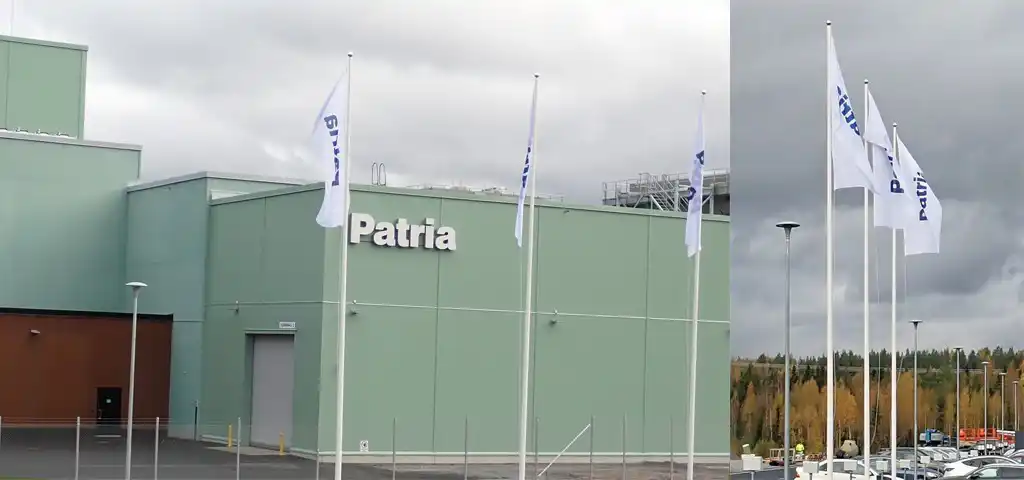
Finland has reached a pivotal moment with the official completion on October 14, 2025, of its new F135 engine assembly and maintenance center in Linnavuori, Nokia. This facility, built under the supervision of Defence Properties Finland and delivered to Patria, is a concrete symbol of Finland’s deepening integration into the global F-35 logistics network. As the country prepares to receive its first F-35A fighters at Rovaniemi Air Base in late 2026, the Linnavuori plant marks the transition from procurement toward sustained autonomy in fifth-generation airpower.
This new hub does more than erect industrial infrastructure — it underpins Finland’s emergence as a strategic node in NATO’s advanced air defense architecture, especially in the Arctic and northern flank. By giving Finland the ability to assemble, maintain, repair, and overhaul F135 engines on its soil, the nation diminishes dependence on external supply chains, reduces downtime for its air fleet, and adds resilience to NATO’s northern air posture.
Strategic Significance in Northern Europe and the Arctic
The Linnavuori facility arrives at a critical juncture for NATO’s Arctic and Baltic posture. Although Europe already hosts other F135 engine depots — including in Woensdrecht, Netherlands, and Rygge, Norway — none lie as far north as Finland’s new site. Finland’s accession to NATO makes Linnavuori a logical northern anchor in the Alliance’s sustainment network, offering redundancy, geographic depth, and operational reach in the High North.
In scenarios of regional disruption or conflict, supply lines from southern Europe could be threatened or delayed. Having a capable, secure engine hub within Finland ensures that F-35 units operating in the region can be serviced without routing parts through distant hubs. That capability enhances resilience, deterrence, and rapid reaction capacity across the Nordic, Baltic, and Arctic theaters.
Because the Arctic region imposes harsher environmental stresses — extreme cold, icing, and remote basing — turnaround times and logistics efficiency become even more crucial. A local engine maintenance capability allows Finland and nearby NATO partners to minimize logistical transit, reduce supply chain risk, and respond more swiftly to emergent air operations in the north. In short, Linnavuori shifts the balance of sustainment advantage toward northern Europe.
Technical and Operational Capabilities of the Linnavuori Hub
At its initial phase between 2025 and 2030, the Linnavuori complex will focus on assembly of F135 engines and key components. After this ramp-up period, the facility will graduate to full maintenance, repair, and overhaul (MRO) operations. That transition places Finland in a position to maintain its own F-35 fleet across its entire operational life cycle.
The facility meets the exacting safety, security, and accreditation standards dictated by Pratt & Whitney and the U.S. F-35 program. Every step — from surveillance protocols to security screening, from quality assurance to environmental controls — aligns with the rigorous demands of a fifth-generation engine infrastructure. The site underwent U.S. oversight and passed all required inspections before official handover, demonstrating Finland’s maturity in defense-industrial collaboration.
Once full MRO capability is achieved, the hangars, test cells, tooling, diagnostic systems, and supply networks at Linnavuori will allow Finland to:
- Perform routine maintenance and intermediate repairs on F135 modules and parts;
- Conduct deep overhauls and life-extension work, including turbine blade inspections, hot section refurbishment, and precision component replacement;
- Undertake diagnostic testing, performance evaluation, and certification of repaired engines;
- Integrate Finland’s logistics chain with other allied hubs, streamlining spare parts flow and supply synchronization.
Over time, the facility will provide shorter turnaround times, fewer logistical bottlenecks, and improved readiness for Finland’s F-35 fleet and allied users operating in proximity.
Helsinki’s Defense Strategy and the HX Fighter Program
The genesis of this engine hub is rooted in Finland’s HX Fighter Program, finalized in 2021, which committed approximately €9.4 billion to the procurement of new fighters, base infrastructure, and support systems. Within that comprehensive investment, the decision to localize F135 engine assembly and sustainment under the Patria-Pratt & Whitney partnership represents a national commitment to sovereignty and long-term defense autonomy.
In 2024, Patria signed an industrial agreement with Pratt & Whitney that secures local assembly capacity and ensures Finland becomes an integrated node in the F-35 supply chain. That deal effectively transforms Finland from a purchaser of high-end aircraft into a partner capable of sustaining them over time. The Linnavuori project advanced under tight U.S. oversight, but local execution, inspection, and transfer signify Finland’s ability to manage sensitive technologies and classified requirements.
Finland’s defense industrial base has long specialized in aerospace, electronics, and systems integration, but this leap into F135 engine work grants new prestige and relevance. The project will also create an estimated 50 skilled jobs during the assembly phase, with additional expansion as MRO operations scale. While budget details of construction have not been disclosed publicly, the facility counts as a pillar in Finland’s broader defense infrastructure investment tied to its HX fleet.
Operational Impact: Reducing Logistical Latency and Enhancing Readiness
One of the most tangible advantages of having a domestic F135 engine hub is the reduction of turnaround latency — the interval between an engine being removed from a fighter and reinstalled after servicing. In the absence of a local hub, engines must often be shipped to external U.S. or European depots, which introduces transport delays, customs clearances, and scheduling bottlenecks. By contrast, Linnavuori can drastically shrink that window for Finland’s F-35s and allied aircraft operating nearby.
Moreover, local availability of spare components, faster fault diagnosis, and proximity to operational squadrons mean that aircraft downtime is curtailed — thereby boosting sortie generation rates and surge capacity. In high-tempo air operations, especially under Arctic constraints, every hour matters. The ability to cycle engines rapidly translates directly into greater mission availability and agility.
Finland’s hub also complements existing European centers; it offers operational redundancy and load balancing. If one hub faces capacity constraints or disruption, the Linnavuori facility can absorb overflow or provide critical relief to ensure that allied fleets remain sustained across worst-case scenarios.
Geopolitical and Alliance Implications
Strategically, Linnavuori strengthens Finland’s role not just as a frontier defender but as a frontline industrial contributor to NATO’s collective airpower posture. Rather than remaining a passive member, Finland can now manifest its value through deep technical capacity and sustainment sovereignty. That status elevates Finland’s strategic weight within Alliance planning, particularly for northern deterrence and rapid-reaction operations.
The timing is propitious: as Arctic competition intensifies and strategic rivalry accelerates across Europe, Norway, the Baltic states, and the high latitudes, NATO’s northern supply lines and infrastructure become a vulnerable yet essential dimension of deterrence. Linnavuori secures part of that backbone. Finland’s ability to host engine sustainment assets within its territory deepens NATO’s technical footprint in the region and enhances resilience in the face of disruption.
In effect, Finland moves from being a beneficiary of alliance support to a pillar of alliance support. Its industrial capacity now rivals that of other F-35 operators and provides logical local backup to shared defense missions. That transformation is a strategic signal: Finland is not merely aligning with NATO; it is embedding into its vital infrastructure.
Challenges, Risks, and the Path Forward
Of course, groundbreaking infrastructure brings its share of challenges. The phased ramp from assembly to full MRO will demand sustained investment, skilled workforce training, quality control, and tight coordination with Pratt & Whitney and allied stakeholders. Any misstep in calibration, certification, or security could jeopardize credibility within the F-35 sustainment network.
Moreover, scaling to full throughput will require a robust supply chain of delicate engine parts, advanced test systems, and continuous upgrades to tooling. Arctic operations impose tighter tolerances and increased wear; the hub must be resilient against extreme cold, icing, and thermal cycling. Maintaining a high state of readiness means sustaining spare parts inventories, diagnostic databases, and logistics redundancy sufficient to withstand supply shocks.
International oversight and auditing will remain a constant presence. The security paradigm around fifth-generation engines is stringent: Finland must maintain uninterrupted compliance with U.S. export control regimes, classified component handling protocols, and system access restrictions. Corruptions or breaches would carry reputational and operational risks.
Longer-term, the hub must prove cost-effective and performance-reliable relative to more mature depots. It must build a track record of turnaround times, quality assurance, and availability metrics that invite greater workload from allied partners. If the hub underdelivers, it risks failure to attract shared sustainment tasks.
Broader Implications for Arctic Air Supremacy
The completion of Linnavuori signals more than just an industrial expansion — it could reshape the calculus of air readiness and deterrence in the Arctic. As Russia continues to fortify its northern military posture and as climate change opens new Arctic corridors, NATO’s ability to sustain high-end air operations in the region becomes a strategic imperative. A local engine hub provides Finland and the Alliance with a bulwark of reliability, speed, and persistence in contested northern skies.
In high-latitude operations, the margin of error is slim. Aircraft cannot wait days for a skid of replacement parts or engine modules. Local sustainment capacity ensures that fighters can bounce between forward bases and return to full mission-ready status faster. That accelerates operational tempo, deterrent credibility, and surge flexibility.
Beyond Finland, Linnavuori may attract regional users. Nordic and Baltic F-35 operators may look to leverage its proximity to reduce transit and cost. In turn, Finland may evolve from national sustainment to regional servicing node, reinforcing Northern Europe’s collective resilience.
Conclusion: A Strategic Hedge in Northern Defense Infrastructure
The Linnavuori F135 engine facility is more than bricks and high-spec tooling — it is a strategic hedge in northern defense infrastructure. It transforms Finland from a passive air force operator into a sustainment lynchpin within NATO’s advanced network. As the first F-35s arrive at Rovaniemi, Finland will already have the industrial backbone necessary to keep them flying without being tethered to distant supply chains.
In a region where logistics are often the hidden sinew of power projection, Linnavuori injects new vitality into Arctic air readiness. It strengthens NATO’s northern flank with redundancy, resilience, and proximity. It elevates Finland’s role from strategic border sentinel to indispensable industrial collaborator. And as tensions in Europe and beyond escalate, that kind of sovereignty, speed, and integration may make all the difference.
Finland’s future in F-35 operations is no longer limited to flying the jets — it now includes building, sustaining, and advancing the very engines that power them. The Arctic skies may be cold, but Finland’s new hub could turn sustaining fifth-generation airpower in the north into a defining advantage.