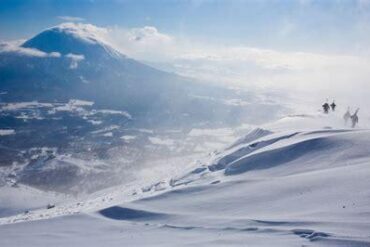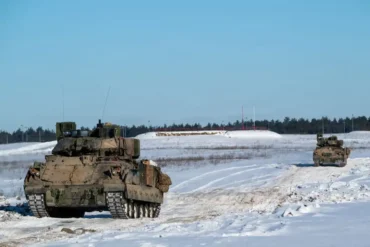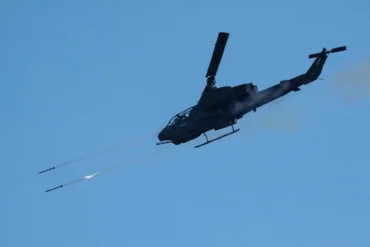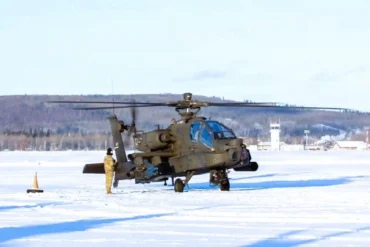
Winter has a way of stripping warfare down to first principles. Metal becomes brittle, engines resist starting, exposed skin becomes a liability, and logistics slow to a crawl. Against that backdrop, U.S. Army and Japan Ground Self-Defense Force (JGSDF) units have launched Exercise North Wind 26 in northern Japan, transforming Hokkaido’s deep snowfields and sub-zero temperatures into a proving ground for modern Arctic and sub-Arctic warfare. Running from January 20 to February 3, the exercise is not a symbolic winter drill, but a deliberate stress test of allied combat power in conditions designed to punish complacency and reward preparation.
North Wind 26 unfolds across key training areas including Camp Makomanai and the Hokudai-en Hokkaido Large Training Area, regions selected precisely because they resemble the operational challenges of high-latitude battlefields. The exercise brings together U.S. Army Japan and the JGSDF in a tightly integrated framework, emphasizing not only survival in extreme cold, but sustained offensive and defensive operations when snow, ice, and wind chill become active adversaries. The message is unambiguous: winter is no longer an operational pause, but a domain to be mastered.
At its core, North Wind 26 is about interoperability under stress. Radios behave differently in cold, batteries drain faster, weapons require constant maintenance, and movement options narrow dramatically. By training together in these conditions, U.S. and Japanese forces are aligning tactics, techniques, and procedures for a scenario where mistakes are amplified and margins for error are thin. This is alliance warfare tested not in classrooms, but in frozen terrain where theory collides with reality.
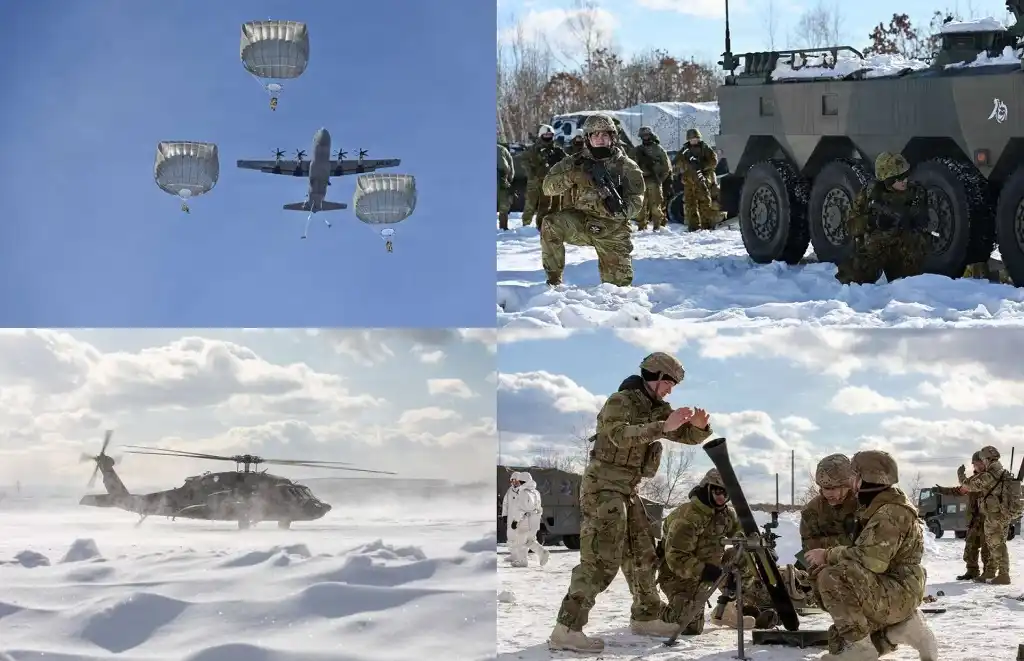
The U.S. ground component is anchored by paratroopers from the 3rd Battalion, 509th Parachute Infantry Regiment, part of the 2nd Infantry Brigade Combat Team, 11th Airborne Division. On January 22, these soldiers executed a mass tactical airborne operation into Hokudai-en, seizing key terrain before transitioning immediately into cold-weather maneuver. Airborne insertions in winter environments carry unique risks, from reduced canopy performance to hazardous landing zones hidden beneath snow. Executing such an operation demonstrates confidence in training, equipment, and leadership under Arctic-like constraints.
Once on the ground, the operational logic becomes clear. Speed matters more in winter, because slow forces bleed heat, energy, and initiative. The ability to seize ground rapidly, then sustain combat power without reliance on established infrastructure, defines success. For the 11th Airborne Division, reactivated specifically to reclaim U.S. Army cold-weather and Arctic expertise, Hokkaido offers a laboratory that closely mirrors the challenges of Alaska, northern Europe, and other high-latitude theaters.
North Wind 26 also integrates an important multinational dimension. Canadian Army personnel participated alongside U.S. and Japanese units, focusing on cold-weather medical familiarization. In extreme cold, casualty care becomes exponentially more complex. Hypothermia accelerates blood loss, tourniquets stiffen, and evacuation timelines stretch as weather limits air movement. Training medics and infantry together under these conditions is not a courtesy exercise, but a recognition that coalition warfare demands shared medical standards and realistic expectations in winter combat.
Mobility sits at the heart of the exercise, and here North Wind 26 leans into an often-overlooked truth: in deep snow, technology sometimes yields to tradition. U.S. and JGSDF soldiers trained extensively in ski-based movement, treating skis not as a novelty, but as a core infantry capability. Ski mobility allows silent, fuel-free maneuver away from predictable road networks, enabling flanking movements, reconnaissance, and resupply across terrain that would otherwise immobilize wheeled vehicles and strain tracked platforms.
For light infantry formations, skis restore tactical freedom. Crew-served weapons, ammunition, and sustainment loads can be distributed across teams rather than concentrated on vulnerable vehicles. In an environment where recovery assets are limited and breakdowns can be catastrophic, this approach reduces logistical risk while increasing operational tempo. North Wind 26 reinforces that cold-weather warfare is as much about human endurance and skill as it is about hardware.
Fire support provides the lethal backbone that turns movement into combat power. During the exercise, U.S. paratroopers employed the M252A1 81 mm mortar, while JGSDF units conducted parallel drills with 120 mm rifled towed mortars. The 81 mm system remains indispensable for light infantry, offering a balance of portability, responsiveness, and versatility. Its ability to deliver high-explosive, smoke, and illumination rounds under austere conditions makes it a critical tool when visibility is limited by snowfall or darkness.
The heavier 120 mm mortar extends this capability, delivering greater range and destructive effect. With effective ranges exceeding eight kilometers and the option for rocket-assisted munitions, the 120 mm system provides commanders with organic firepower that can shape the battlefield without reliance on heavier artillery formations. In winter terrain, where road movement is restricted and artillery deployment windows narrow, mortars offer a flexible, rapidly deployable solution.
Aviation integration forms the third pillar of North Wind 26. UH-60 Black Hawk helicopters from U.S. Army Aviation Battalion Japan conducted cold-weather flight operations, including snow landings in austere zones. Flying in winter environments demands exceptional discipline. Whiteout conditions can erase depth perception, icing threatens lift and control surfaces, and ground crews must work efficiently despite numb hands and limited visibility. Every sortie becomes a rehearsal for combat conditions where aviation may be the only means of overcoming terrain-imposed isolation.
Operationally, the Black Hawk’s value lies in restoring flexibility. It enables rapid insertion of forces, emergency resupply, and casualty evacuation when ground routes are compromised. In Arctic and sub-Arctic warfare, air mobility often determines whether units remain combat-effective or become isolated. North Wind 26 tests not only aircraft performance, but the coordination between pilots, infantry, and logisticians required to sustain tempo in hostile weather.
Beyond tactics, the strategic significance of North Wind 26 is difficult to miss. The exercise underscores a broader shift in allied defense planning toward high-latitude readiness. For the United States, the reactivation of the 11th Airborne Division reflects recognition that Arctic and cold-weather operations are no longer niche skills. For Japan, training in Hokkaido reinforces the defense of its northern approaches and demonstrates the credibility of its alliance commitments under all seasonal conditions.
The timing and visibility of the exercise also serve a signaling function. In a security environment marked by increasing great-power competition, demonstrating the ability to operate year-round, in all climates, matters. Winter has historically been viewed as a constraint on large-scale operations. North Wind 26 challenges that assumption, showing that allied forces are prepared to fight when others might hesitate.
In the end, North Wind 26 is less about spectacle and more about discipline. It is about soldiers maintaining weapons in freezing winds, medics treating casualties with gloved hands, pilots landing on snow-covered clearings, and commanders making decisions with limited information. The environment is not a backdrop, but an adversary woven into every action. By confronting that adversary together, U.S. and Japanese forces are sharpening a capability that modern warfare, in an increasingly unpredictable world, can no longer afford to ignore.