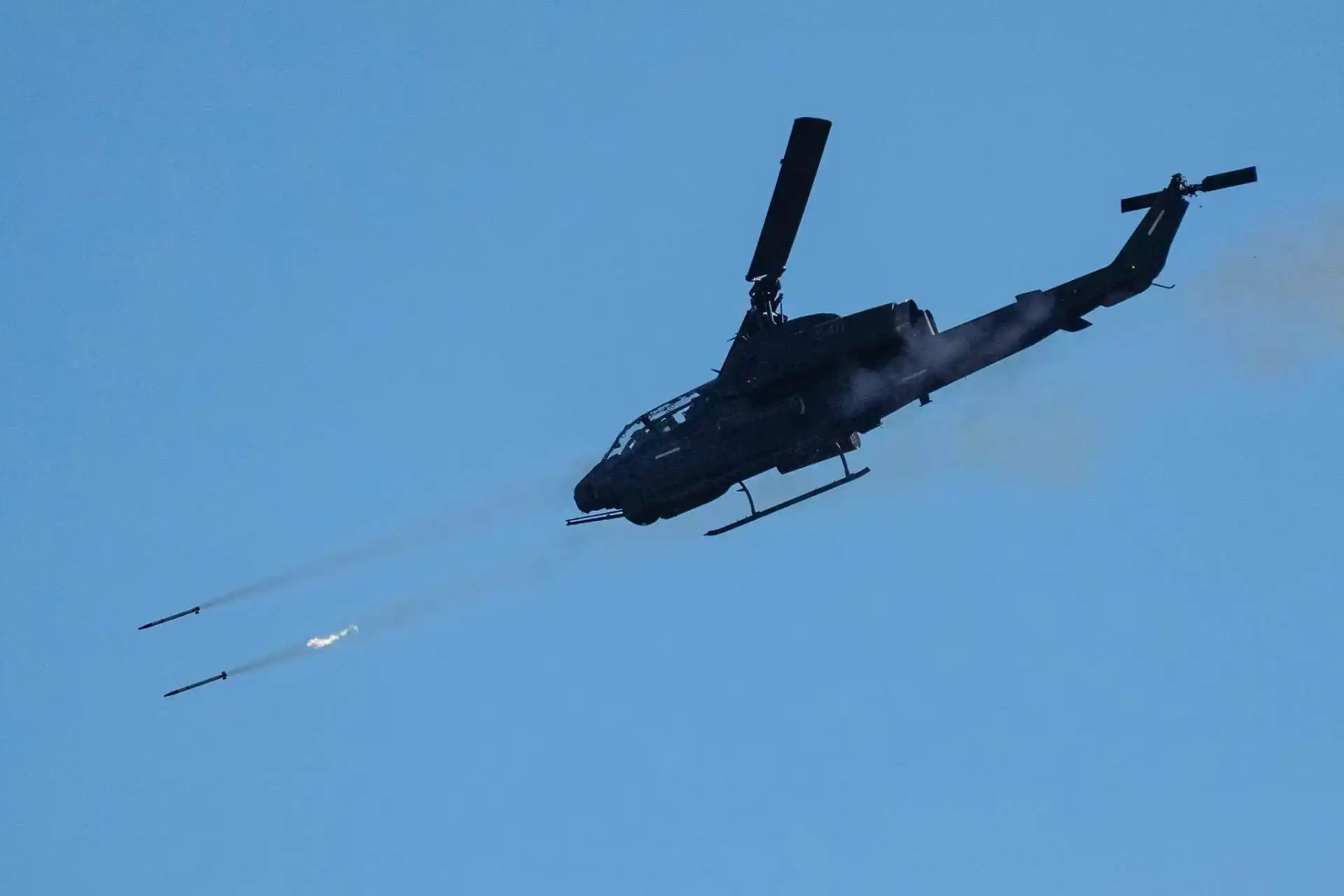
Taiwan has taken a decisive step to reinforce its frontline strike capabilities by conducting live-fire drills featuring AH-1W Super Cobra attack helicopters in the southern region of Hengchun. These exercises, carried out over three days in March 2026, highlight a deliberate effort to enhance rotary-wing combat effectiveness, joint-force coordination, and rapid-response readiness amid increasing regional military pressure.
The drills are not routine training iterations. They represent a calculated escalation in operational tempo and realism, placing both aircrews and ground units in high-intensity scenarios that simulate actual combat conditions. By integrating multiple aviation assets and live munitions, Taiwan is refining its ability to respond swiftly and decisively in a contested battlespace.
The Hengchun Peninsula Joint Services Training Base provides a controlled yet highly adaptable environment where complex mission profiles can be executed. Here, Taiwan’s military is not only testing hardware but also validating tactical doctrines, communication protocols, and engagement strategies that would be critical in a real conflict scenario.
Integrated Helicopter Operations Strengthen Joint Combat Capability
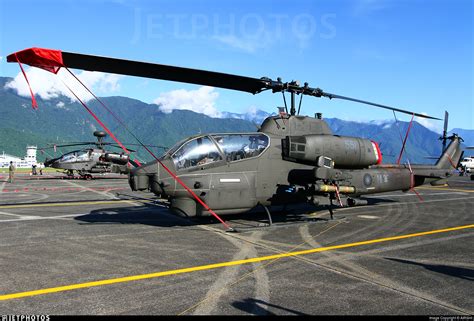
A defining feature of these drills is the integration of multiple helicopter platforms, including the AH-1W Super Cobra, OH-58D Kiowa Warrior, and UH-60M Black Hawk. Each aircraft fulfills a specialized role, forming a cohesive operational network that enhances battlefield awareness and strike precision.
The AH-1W Super Cobra serves as the primary attack platform, delivering firepower through its M197 20mm rotary cannon and Hydra 70 rocket systems. Meanwhile, the OH-58D Kiowa Warrior provides armed reconnaissance, identifying targets and relaying critical intelligence. The UH-60M Black Hawk supports troop transport and logistical coordination, ensuring sustained operational flow.
This layered approach allows Taiwan to simulate close air support (CAS), armed reconnaissance missions, and suppressive fire operations in real time. The drills emphasize seamless coordination between aircrews and forward air controllers on the ground, ensuring that targeting data is processed and executed with minimal delay.
AH-1W Super Cobra: A Proven Platform with Modern Relevance
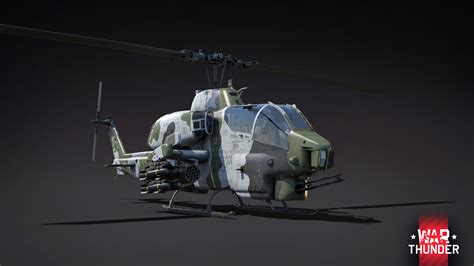
At the core of Taiwan’s rotary-wing strike force, the AH-1W Super Cobra remains a formidable asset despite its legacy origins. Powered by twin General Electric T700-GE-401 engines, the helicopter offers improved survivability and redundancy compared to earlier single-engine variants, making it well-suited for high-risk combat environments.
Its armament configuration provides versatility across mission types. The chin-mounted M197 cannon delivers high-rate suppressive fire against infantry and light vehicles, while wing-mounted pylons support Hydra 70 rockets and BGM-71 TOW anti-tank missiles, enabling precision strikes against armored targets and fortified positions.
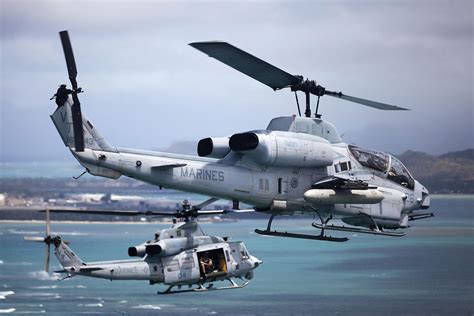
Beyond raw firepower, the Super Cobra’s effectiveness is amplified by its advanced avionics and targeting systems. Stabilized sighting equipment, laser rangefinders, and night vision compatibility allow crews to conduct operations in low-visibility conditions with high accuracy. The tandem cockpit design supports a hunter-killer dynamic, where pilot and gunner coordinate seamlessly to detect and engage threats.
Tactical Adaptability in Coastal Defense Scenarios
Taiwan’s geography demands a defensive strategy centered on counter-amphibious operations, and the AH-1W is uniquely suited to this role. Its ability to perform low-altitude ingress, terrain masking, and pop-up attacks allows it to exploit natural terrain while minimizing exposure to enemy radar and air defenses.
In a potential conflict scenario, Super Cobra units would be tasked with disrupting amphibious assault formations, targeting landing craft, armored vehicles, and supply chains before they can establish a foothold. This capability is central to Taiwan’s broader denial strategy, which aims to prevent adversaries from achieving operational momentum.
The helicopter’s mobility ensures rapid redeployment across key areas, enabling commanders to respond dynamically to shifting threats. This flexibility transforms the AH-1W into more than just a strike platform—it becomes a force multiplier within Taiwan’s defensive architecture.
Live-Fire Training Enhances Real-World Combat Preparedness
The use of live munitions during these drills marks a critical step in bridging the gap between simulation and reality. Crews engage targets using 20mm cannon fire, 70mm rockets, and door-mounted machine guns, replicating the stress and unpredictability of actual combat engagements.
Such exercises test not only individual skill but also unit cohesion and decision-making under pressure. Pilots must adapt to evolving scenarios, coordinate with ground forces, and execute precision strikes within tight time constraints. Ground crews, in turn, are evaluated on their ability to maintain aircraft readiness and support rapid sortie generation.
The emphasis on real-time targeting and engagement cycles ensures that every component of the mission—from detection to destruction—is executed with maximum efficiency. This holistic approach underscores Taiwan’s commitment to maintaining a combat-ready force capable of immediate response.
Asymmetric Warfare and the Strategic Value of Rotary-Wing Assets
Taiwan’s defense strategy increasingly emphasizes asymmetric warfare, leveraging mobility, precision, and adaptability to counter larger adversarial forces. Within this framework, the AH-1W Super Cobra plays a pivotal role by delivering rapid, targeted firepower where it is needed most.
Unlike fixed-wing aircraft, attack helicopters can operate closer to the battlefield, respond faster to emerging threats, and maintain persistent presence over critical regions. This makes them invaluable for interdiction missions, defensive counterattacks, and battlefield shaping operations.
The integration of reconnaissance and transport helicopters further enhances this capability, creating a networked operational environment where information flows seamlessly between units. This interconnected approach allows Taiwan to maximize the effectiveness of its existing assets without relying solely on numerical superiority.
Global Context: Enduring Relevance of the Super Cobra
Taiwan is not alone in recognizing the enduring value of the AH-1W. Other operators, including Türkiye, continue to deploy the platform in modern operational contexts. Notably, Turkish Super Cobras have demonstrated their effectiveness in NATO exercises, including close air support missions launched from amphibious assault ships.
This global usage underscores the helicopter’s adaptability across diverse theaters, from maritime environments to land-based conflict zones. Its proven track record reinforces confidence in its continued deployment, even as newer platforms emerge.
For Taiwan, this means the AH-1W remains a reliable and battle-tested component of its defense strategy, capable of evolving alongside modern warfare requirements through updated tactics and integrated operations.
Sustained Readiness as a Strategic Signal
The Hengchun live-fire drills send a clear message: Taiwan is committed to maintaining credible deterrence through continuous training and operational refinement. By pushing its forces through realistic, high-intensity scenarios, the military ensures that both personnel and equipment are prepared for the complexities of modern conflict.
The inclusion of multiple aircraft types, live munitions, and joint-force coordination reflects a comprehensive approach to readiness. It is not merely about demonstrating capability but about ensuring that every element of the force can function cohesively under pressure.
As regional dynamics continue to evolve, Taiwan’s investment in rotary-wing strike capability and integrated training exercises positions it to respond effectively to emerging threats. The AH-1W Super Cobra, supported by a network of complementary platforms, remains at the forefront of this effort—delivering precision, mobility, and resilience where it matters most.