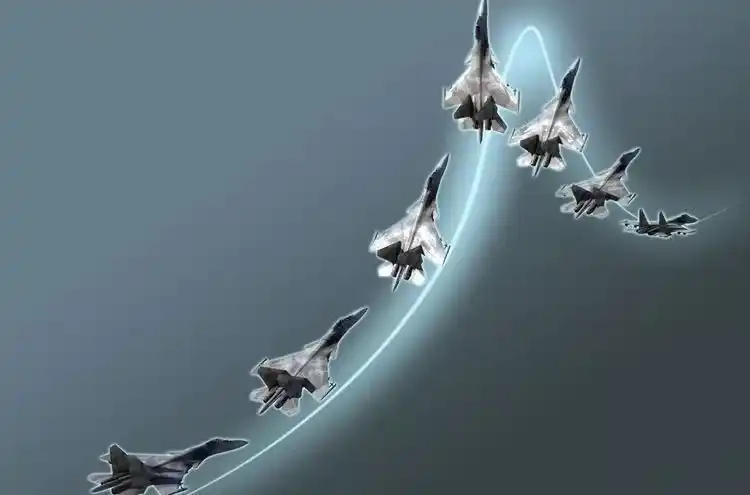
The Cobra Maneuver is one of the most visually striking and tactically significant high-angle-of-attack (AoA) maneuvers in modern aerial warfare. It allows a fighter jet to execute a sudden and extreme pitch-up, momentarily halting its forward momentum before regaining controlled flight. First publicly demonstrated in 1989 with the Sukhoi Su-27, this maneuver continues to be a benchmark for aircraft agility and advanced flight control systems. In this article, we explore the origins, execution, engineering challenges, combat applications, and future developments of this breathtaking aerial tactic.
Origins and Basic Mechanics
Historical Background
The Cobra Maneuver was discovered accidentally by Soviet test pilot Viktor Pugachev during a test flight with the Sukhoi Su-27 Flanker. It was later showcased at the 1989 Paris Air Show, stunning spectators and military analysts worldwide. Although initially considered a mere airshow stunt, the maneuver demonstrated the potential of post-stall agility, reshaping the understanding of supermaneuverability in combat aviation.
Technical Execution
Executing the Cobra Maneuver requires precise stick and throttle control:
- The pilot abruptly pulls back on the control stick, causing the aircraft’s nose to pitch up to an extreme angle (110°–120°).
- At this stage, the aircraft enters a near-vertical stall, momentarily halting forward motion.
- Controlled thrust application stabilizes the plane as the pilot pushes the nose down, returning to level flight without significant altitude loss.
- The aircraft must maintain stability, preventing excessive yaw and roll instability due to asymmetric airflow separation.
Aircraft & Engineering Considerations
Key Platforms
The Cobra Maneuver is executed only by aircraft with exceptional thrust-to-weight ratios, advanced aerodynamics, and high AoA flight controls. Among the most capable platforms are:
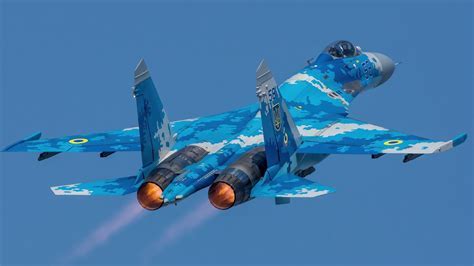
- Sukhoi Su-27, Su-30, Su-35 – These fighters pioneered the maneuver using thrust vectoring engines and forebody aerodynamics to ensure stability.
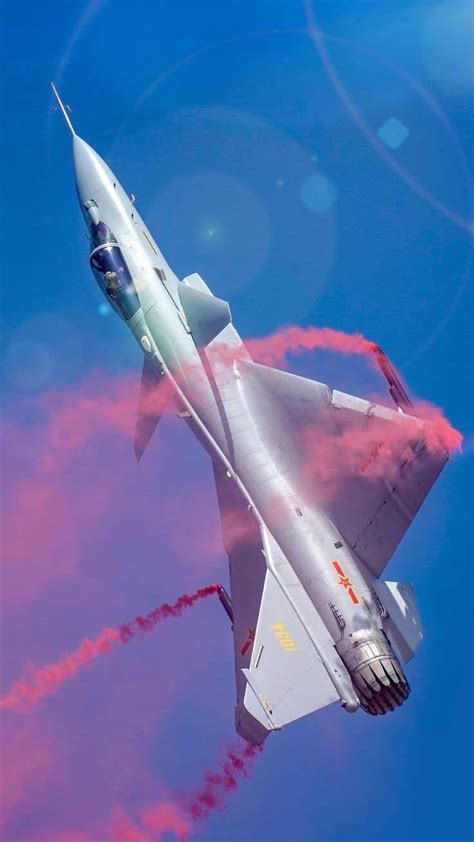
- Chengdu J-10B – China’s J-10B became the first single-engine, canard-configured fighter to perform the Cobra Maneuver, utilizing the WS-10B thrust-vectoring engine.
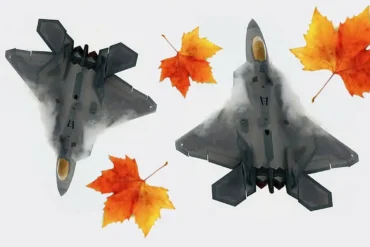
- Lockheed Martin F-22 Raptor – While not commonly associated with the Cobra, the F-22 possesses supermaneuverability, allowing it to execute similar high-AoA post-stall maneuvers.
Aerodynamic and Engine Challenges
To perform the Cobra Maneuver safely, fighter jets must overcome several engineering challenges:
- Loss of Lift: At high angles of attack, wings generate minimal lift, making the aircraft susceptible to stalling.
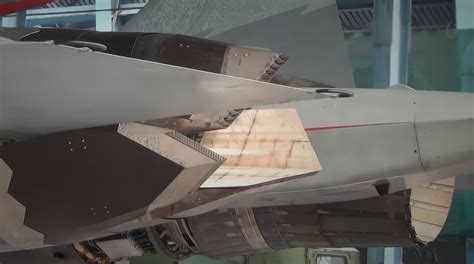
- Thrust Vectoring: Advanced thrust vectoring nozzles compensate for aerodynamic instability by directing engine thrust.
- Forebody Chines: The Su-27’s forebody chines mitigate asymmetric vortex shedding, crucial for maintaining lateral stability.
- Flight Control Systems: Modern digital fly-by-wire (FBW) systems assist pilots by preventing uncontrolled spins or excessive G-forces.
Tactical Applications in Combat
Missile Evasion
By executing a Cobra Maneuver, a pilot can rapidly alter the velocity vector, breaking enemy missile radar lock and infrared tracking. This is especially effective against semi-active radar-guided missiles, forcing them to lose guidance.
Dogfight Advantages
The Cobra forces a pursuing aircraft to overshoot, allowing the pilot to quickly regain a superior rearward firing position. In a close-range engagement, this advantage can be decisive, enabling an immediate counterattack with short-range infrared-guided missiles or guns.
Psychological Impact
A pilot demonstrating post-stall agility instills psychological pressure on adversaries, forcing them to rethink their engagement strategy. This maneuver showcases an aircraft’s superior maneuverability, potentially deterring enemy pilots from pressing aggressive engagements.
Limitations and Constraints
Despite its advantages, the Cobra Maneuver is not without limitations:
- Energy Loss: The rapid deceleration reduces airspeed, making the aircraft vulnerable if the enemy maintains momentum.
- G-Force Strain: Pilots endure extreme high-G forces, requiring specialized training and conditioning.
- BVR Combat Shift: Modern aerial warfare increasingly relies on beyond-visual-range (BVR) missile engagements, where the Cobra Maneuver has limited applicability.
Related High-Alpha Maneuvers
The Cobra Maneuver belongs to a broader category of post-stall maneuvers, including:
- Kulbit Maneuver – A full 360° backflip performed at near-zero speeds.
- Herbst Maneuver – A rapid 180° yaw turn, leveraging thrust vectoring to face a pursuer directly.
- Falling Leaf Maneuver – A controlled side-slipping motion, destabilizing an opponent’s targeting solution.
Future of Cobra Maneuver and Automation
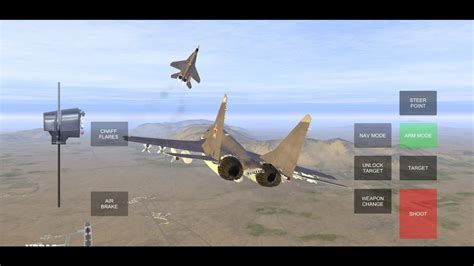
Advancements in artificial intelligence (AI) and flight automation could redefine high-AoA combat tactics. Research in Iterative Learning Control (ILC) is exploring automation of the Cobra Maneuver, ensuring precision and reducing pilot workload. Future sixth-generation fighters may incorporate autonomous maneuvering systems capable of executing Cobra-like maneuvers without human input, enhancing combat effectiveness.
Conclusion
The Cobra Maneuver remains a remarkable feat of aviation engineering and pilot skill. While its combat relevance is evolving due to the shift toward stealth and BVR warfare, it still serves as a key benchmark in assessing fighter aircraft agility and high-AoA performance. With ongoing research in AI-assisted flight controls, the principles behind this maneuver may find new applications in next-generation air combat scenarios.
FAQ
1. Can all fighter jets perform the Cobra Maneuver?
No. Only aircraft with high thrust-to-weight ratios, thrust vectoring, and advanced flight control systems can safely execute the Cobra Maneuver. Examples include the Su-27 family, J-10B, and F-22 Raptor.
2. Is the Cobra Maneuver useful in modern combat?
Its utility is limited in beyond-visual-range (BVR) combat, but it remains highly effective in close-range dogfights for forcing an enemy overshoot and repositioning for a counterattack.
3. Why do Western fighter jets rarely perform the Cobra Maneuver?
Western air combat philosophy emphasizes energy retention and BVR engagements. While the F-22 and F-35 are capable of high-AoA maneuvers, their tactics focus more on stealth and missile dominance rather than extreme post-stall agility.