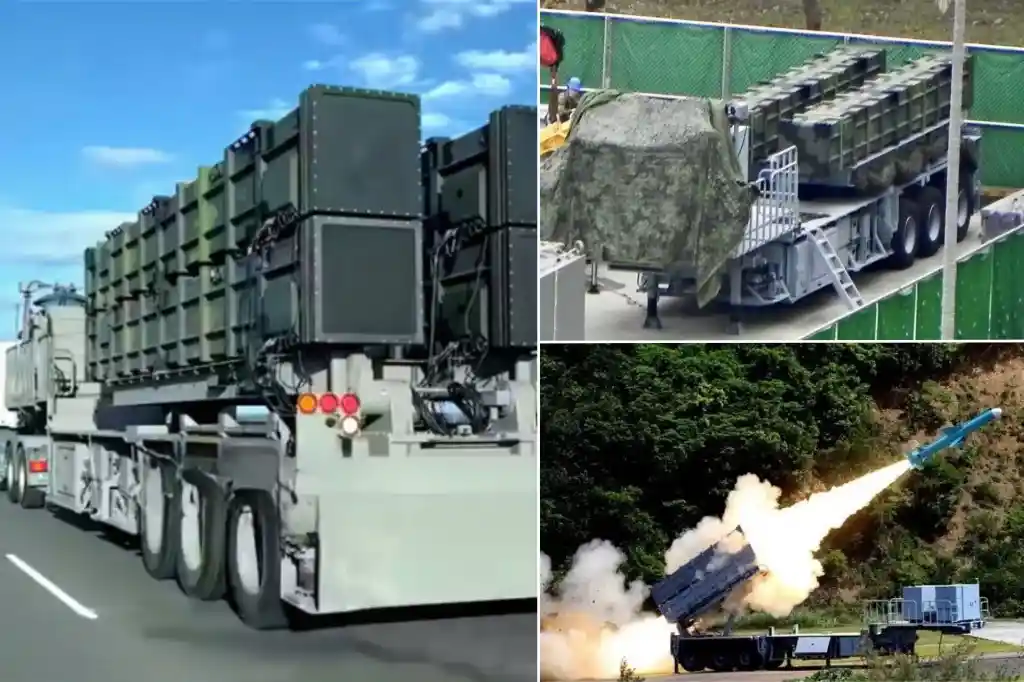
On December 31, 2025, Taiwan quietly moved one of its most potent strategic assets along the island’s eastern corridor—an action that coincided with large-scale live-fire exercises by the People’s Liberation Army (PLA) of China. The vehicle, believed to be a mobile launcher for the Hsiung Feng IIE (HF-2E) land-attack cruise missile, was spotted traversing public roads from Hualien to Taitung, stirring regional and international attention.
Strategic Mobility During Heightened Tensions
The movement of the missile platform appears far from routine. It comes at a moment of intense cross-strait tensions, as Beijing has steadily increased military activity around Taiwan in a display of power and political messaging. Observers believe Taiwan’s Ministry of National Defense (MND) is responding with asymmetric readiness, leveraging the mobile nature of the HF-2E system to complicate adversarial targeting and enhance survivability.
Open-source imagery, widely shared on platforms such as Facebook and X, captured a containerized launcher on a flatbed trailer. While early claims suggested it belonged to the Haifeng anti-ship missile brigade, a closer inspection of the container’s design and platform configuration closely aligns with the HF-2E land-attack system, not its anti-ship counterparts.
The Brave Wind IIE: Taiwan’s Strategic Strike Asset
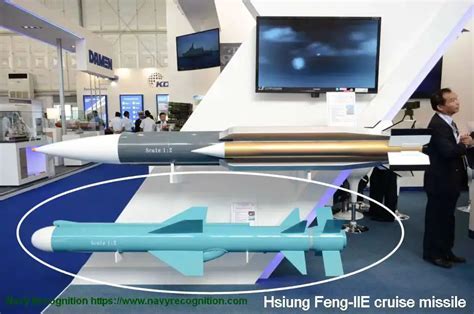
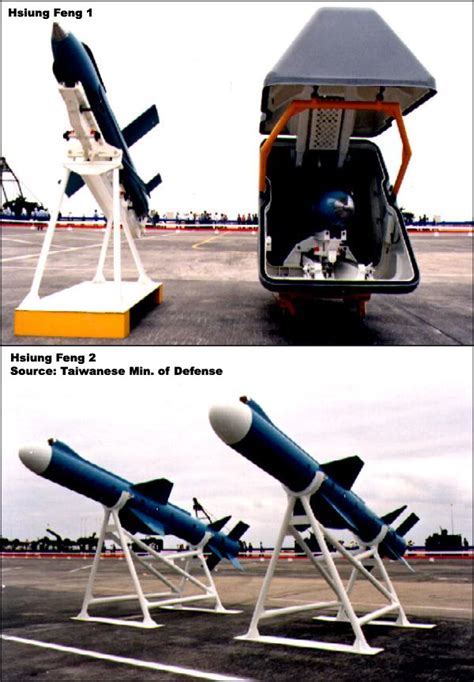
The Hsiung Feng IIE, also known as the Brave Wind IIE, is Taiwan’s only cruise missile designed specifically for land-attack missions. Developed by the National Chung-Shan Institute of Science and Technology (NCSIST), this missile program was launched around 2001 in response to the limitations of Taiwan’s earlier strike systems, which were primarily effective only against targets along China’s coastline.
Capabilities and Range: Targeting Deep Inside China
The baseline HF-2E boasts a range of approximately 600 kilometers, while its advanced variant, known as the Hsiung Sheng, may reach or exceed 1,200 kilometers. This extended range places critical military and industrial targets in central and eastern China—such as Shanghai and regions in Zhejiang Province—within striking distance. It’s a game-changing dimension in Taiwan’s defense posture.
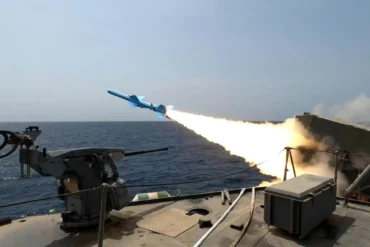
The missile itself is roughly 6 meters in length, expanding slightly in size for the long-range model. Launch weight is estimated around 980 kilograms, with warhead payloads between 200 and 450 kilograms, depending on the variant. Initial boost is provided by a solid-propellant booster, followed by a liquid-fueled turbojet engine that sustains subsonic cruise speeds of about 290 meters per second.
Accuracy and Guidance Systems: Precision Beyond Borders
The HF-2E integrates multiple guidance systems to ensure strike precision:
- Inertial navigation coupled with GPS updates
- Terrain contour matching (TERCOM) to maintain low-altitude stealth cruise
- Likely inclusion of infrared imaging for terminal guidance, improving final-phase targeting
Estimates suggest a circular error probable (CEP) of roughly 15 meters, which, while not on par with advanced U.S. systems like the Tomahawk Block IV, remains a formidable capability in Taiwan’s arsenal.
Specialized variants are also believed to exist:
- A version designed to target reinforced bunkers and command centers
- Another tailored for airfield denial, potentially using submunitions to disable runways
Development History: From U.S. Resistance to Operational Reality
Taiwan’s pursuit of the HF-2E was not without controversy. The United States initially expressed deep concerns about Taiwan developing offensive missile capabilities, fearing it might provoke Chinese retaliation or alter the delicate regional balance. Nevertheless, Taiwan pressed on.
- 2005: First test-firing of the HF-2E
- 2007-2008: Additional tests, including of extended-range versions
- 2009: Low-rate initial production begins
- 2011: Full-rate production and operational status achieved
- 2018: Extended-range variant nearing production phase completion
- 2021: Reports indicate small-scale deployment of upgraded variants
Funding for the missile’s development and deployment has been substantial. By 2018, Taipei had earmarked over $440 million USD for at least 100 units of the extended-range system. Such investments reflect growing determination to maintain credible deterrence amid China’s military buildup.
A Mobile and Concealable Platform
Unlike fixed silo-based systems, the HF-2E is road-mobile, mounted on trailers or specially modified military vehicles. This mobility is strategic. It allows for quick dispersal, relocation, and concealment, greatly reducing vulnerability to a first-strike scenario by China’s missile forces.
The recent sighting on Taiwan’s east coast—a region buffered by rugged terrain and fewer surveillance threats compared to the more densely monitored west—may indicate a deliberate maneuver to ensure survivability and strategic ambiguity.
Implications for Cross-Strait Stability
China’s intensifying live-fire drills, often conducted near Taiwan’s air defense identification zone (ADIZ), are clearly designed to coerce and intimidate. Yet Taiwan’s calibrated deployment of the HF-2E during such a time sends a potent counter-message: Taipei will not passively absorb pressure.
By keeping these high-value systems mobile and unconfirmed, Taiwan sustains a deterrence-by-denial strategy—complicating PLA planning and raising the potential costs of aggression.
Unconfirmed, But Tactically Transparent
The Ministry of National Defense in Taipei has not officially confirmed the identity of the system observed in the video footage. However, given the distinct visual signatures, expert analysis, and the context of Chinese exercises, many defense analysts consider it highly likely that the observed platform was indeed the HF-2E or its extended variant.
This deliberate lack of confirmation fits Taiwan’s broader playbook of operational ambiguity—revealing enough to shape adversarial calculations without provoking outright confrontation.
HF-2E in Taiwan’s Broader Strategic Doctrine
The HF-2E is not a standalone capability—it is part of a broader Taiwanese effort to develop credible stand-off strike options. In the face of China’s massive investment in anti-access/area denial (A2/AD) capabilities and rapid force projection tools, Taiwan needs systems that can strike key military nodes, disrupt logistics, and raise the cost of aggression.
While the island lacks the scale and depth of the PLA, it compensates through precision, agility, and innovation. Systems like the HF-2E, deployed effectively, serve not as tools of aggression but as instruments of strategic equilibrium.
Conclusion: The Message Behind the Movement
The redeployment of Taiwan’s HF-2E during live-fire PLA drills was a move layered with strategic signaling and operational readiness. It underscored Taipei’s resolve, its capacity for long-range precision strike, and its commitment to maintaining deterrence through credible defense.
In a region marked by military brinkmanship and political friction, Taiwan’s message was clear: the island will not remain passive, and it retains both the will and the tools to hold strategic targets at risk if pushed toward the brink.
As tensions persist, the HF-2E will remain one of the most closely watched yet rarely seen elements of Taiwan’s defense architecture—a symbol of its quest for sovereignty, security, and survival amid an evolving Indo-Pacific landscape.