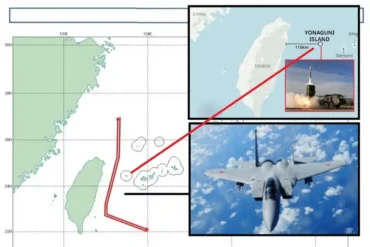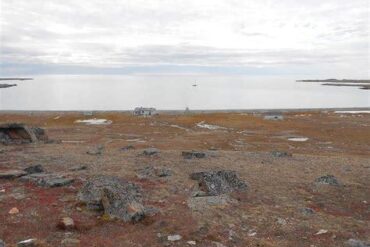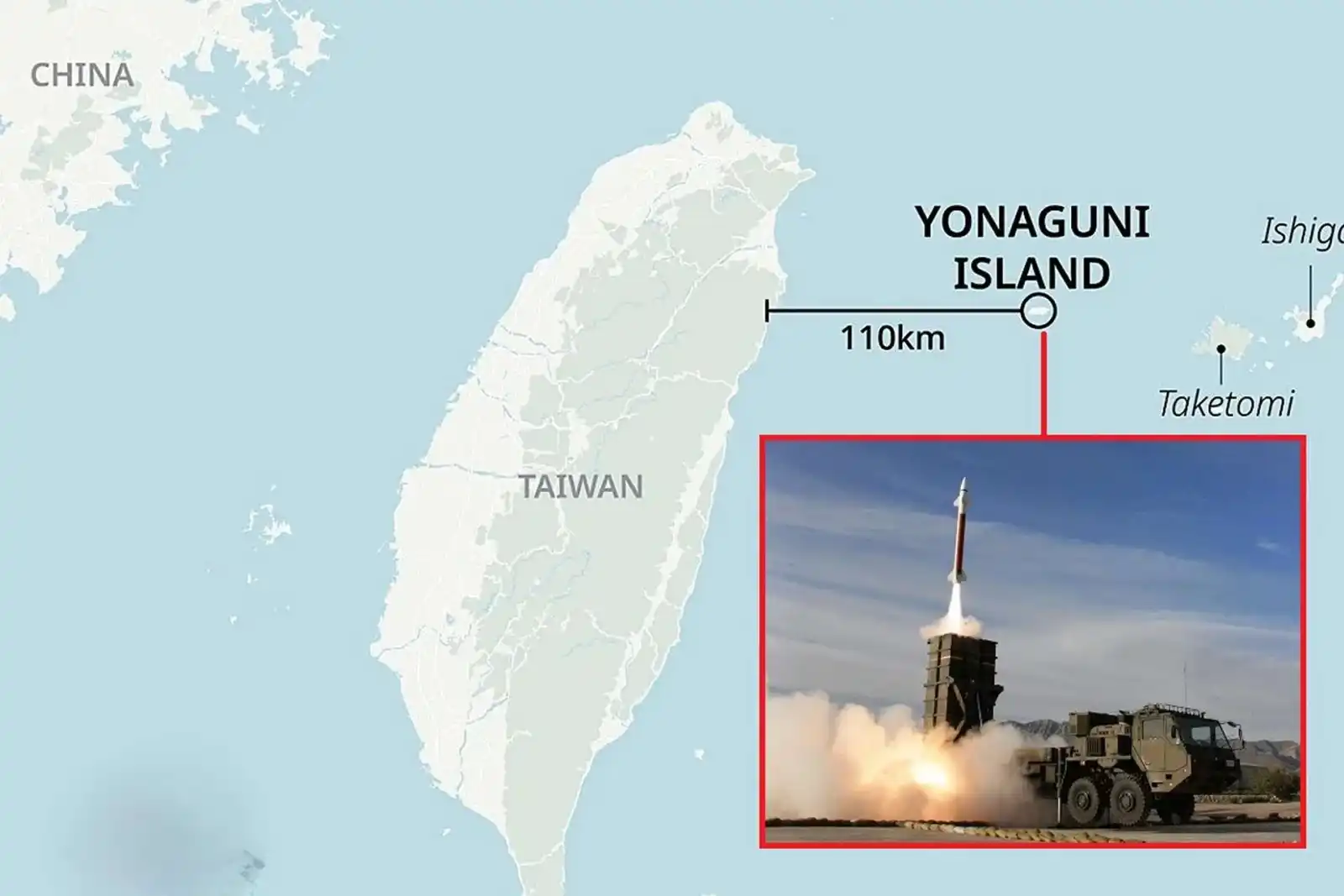
Japan has officially confirmed the deployment of advanced medium-range surface-to-air missiles on Yonaguni Island, a move that significantly strengthens its defense posture near Taiwan amid escalating regional tensions. The island, located just 110 kilometers east of Taiwan, is set to become a pivotal point in Japan’s air defense strategy. This strategic decision, announced on November 23, 2025, by Japan’s Defense Minister Shinjiro Koizumi, underscores Japan’s commitment to fortifying its southwestern defense perimeter in the face of growing security concerns, particularly from China.
Rising Tensions and Strategic Implications
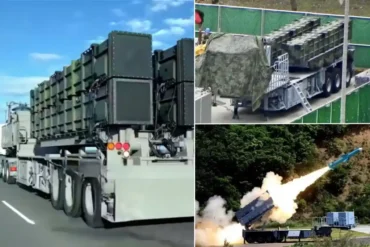
The deployment of the Type 03 medium-range surface-to-air missile system, also known as Chu-SAM, marks a decisive shift in Japan’s military alignment, bringing it closer to U.S. defense concepts surrounding Taiwan. This move, while framed by Tokyo as a defensive countermeasure, has raised the stakes for regional security, especially with the growing threat of Chinese military assertiveness. The decision aligns Japan more directly with U.S. operational frameworks, further complicating any potential military conflict over Taiwan.
The Type 03 system, which replaces older Hawk missile systems, is designed to provide enhanced air defense capabilities. Each mobile platform can engage aircraft, helicopters, and cruise missiles within a 50-kilometer range, providing crucial coverage over the waters surrounding Taiwan. The system’s advanced radar and ability to track and engage up to 12 targets simultaneously make it highly effective against fast-moving and maneuverable threats, such as enemy aircraft or missiles. This upgrade is part of Japan’s broader modernization strategy, which includes integrating air defense systems with radar stations, electronic warfare units, and Aegis-equipped destroyers.
Strengthening a Multi-Layered Defense Network
Yonaguni’s geographical location, at the western edge of the Ryukyu archipelago, places it at a strategic crossroads between the East China Sea and the Pacific Ocean. This makes the island an ideal location for enhancing Japan’s defense capabilities and providing a forward-operating base for potential operations related to Taiwan. The missile defense system will complement other regional defense assets, including U.S. military forces stationed on Okinawa and Japan’s existing radar and missile defense systems. Notably, the Type 03 system integrates with Japan’s broader air defense network, including PAC-3 missile batteries and Aegis-equipped destroyers, creating a comprehensive defense shield extending across key islands in the southwest.
Japan’s defense planners have carefully considered the system’s placement on Yonaguni, recognizing its importance in contesting air routes frequently used by Chinese military aircraft. The Type 03 system, with its active radar seeker and AESA radar, is less susceptible to jamming and can engage multiple targets simultaneously, making it an effective deterrent against saturation attacks. Its range, combined with the island’s proximity to Taiwan, positions it as a key asset in defending both Japanese territory and international sea lanes against potential Chinese threats.
China’s Response and Regional Reactions
From Beijing’s perspective, the deployment of the Type 03 missile system is viewed as part of a broader U.S.-Japan effort to create an anti-access barrier along the first island chain. China has long perceived the Ryukyu Islands, including Yonaguni, as a critical line of defense in its attempts to extend naval and air power into the Pacific. The expansion of Japan’s air defense systems in this region is likely to be interpreted as an escalation, further intensifying the already delicate security dynamics in the Taiwan Strait and surrounding waters.
In Japan, the deployment has sparked both support and opposition. Some security experts argue that it will enhance Japan’s deterrence capabilities, raising the threshold for Chinese aggression in the region. However, critics warn that increased militarization of the southwestern islands could exacerbate tensions with China, potentially making Japan a direct target in any conflict over Taiwan.
A New Chapter in Japan’s Defense Strategy
The Yonaguni deployment represents a critical milestone in Japan’s evolving defense strategy, reflecting a significant departure from its traditional stance of “exclusive self-defense.” With defense spending at record highs and a shift toward a more proactive defense posture, Japan is embracing a networked, multi-layered defense system that integrates domestic capabilities with U.S. military assets. This strategic evolution underscores Japan’s commitment to safeguarding its national security in a region marked by growing uncertainties and geopolitical rivalries.
As Japan continues to bolster its defense capabilities, particularly in the southwestern island chain, it will need to navigate a delicate balancing act between deterrence and escalation. The Yonaguni missile deployment serves as a reminder that Japan’s security is inextricably linked to the broader stability of the Taiwan Strait and the surrounding waters, and that the evolving security landscape demands increasingly sophisticated and interconnected defense systems.