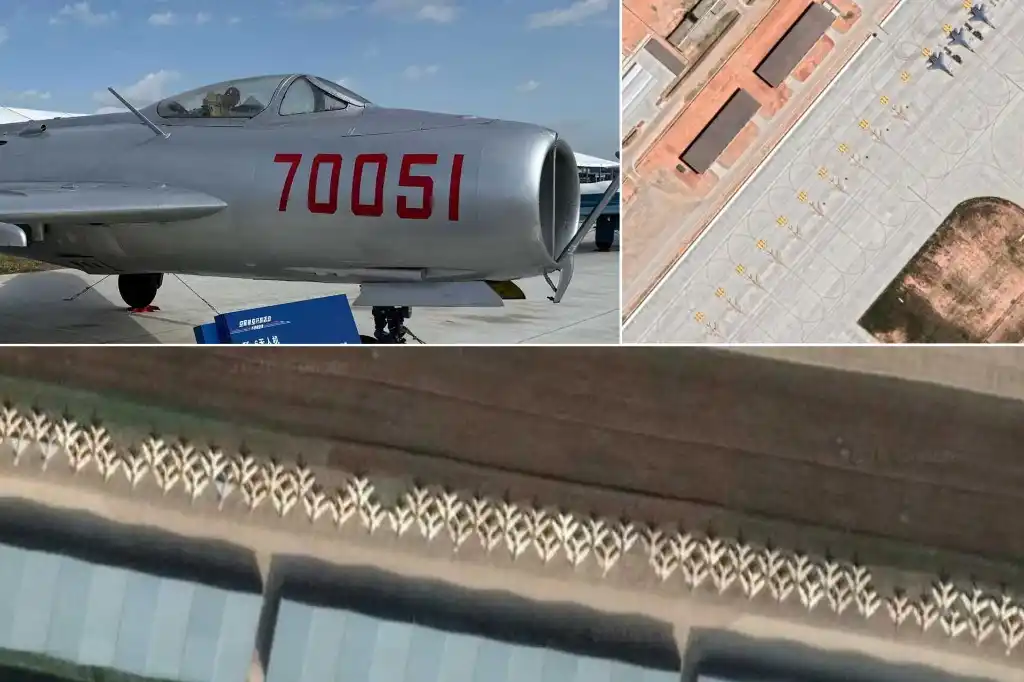
The quiet accumulation of aging fighter jets rarely signals innovation. Yet along China’s southeastern coastline, a seemingly obsolete fleet is being repositioned with calculated intent. Hundreds of J-6 fighter aircraft, relics of Cold War-era aviation derived from the Soviet MiG-19, are now appearing at forward-operating airbases facing Taiwan. Their presence, when viewed in isolation, might suggest logistical overflow or training redundancy. Instead, when aligned with satellite imagery, infrastructure expansion, and evolving battlefield doctrine, a far more consequential narrative emerges—one centered on mass, expendability, and saturation warfare.
Recent satellite assessments, including those conducted by Japan’s National Institute for Defense Studies (NIDS), reveal a deliberate co-location of these legacy aircraft alongside modern J-16 multirole fighters. This juxtaposition defies conventional air force doctrine, where generational separation typically ensures operational efficiency. Here, the blending of eras is not inefficiency—it is design. The J-6 is no longer merely a fighter; it is a potential unmanned strike platform, designated in its converted form as the J-6W, intended to operate as part of a high-volume aerial assault system.
Strategic Repositioning Signals a New Airpower Philosophy
The deployment pattern of these aircraft suggests more than defensive posture—it reflects a strategic pivot. Coastal airbases in Fujian and Guangdong provinces have undergone significant infrastructure upgrades, including runway duplication, expanded aprons, and hardened aircraft shelters. These are not symbolic improvements; they are engineered for sustained, high-tempo sortie generation under combat conditions.
At Suixi Air Base, parallel runways now allow simultaneous takeoffs and landings, dramatically increasing throughput. Similarly, Longtian Air Base has expanded its hardened shelters and munitions storage, enabling rapid turnaround between missions while improving survivability against counterstrikes. These developments point toward an operational model designed not for brief engagements, but for continuous, multi-day air operations under attrition-heavy scenarios.
The presence of J-6 aircraft at these forward bases is particularly revealing. In standard practice, outdated jets are relegated to training or storage roles, especially when modern assets like the J-16 are available. Their frontline positioning suggests immediate operational readiness, reinforcing the hypothesis that these aircraft are intended for rapid deployment in expendable roles.
From Cold War Relic to Unmanned Strike Asset: The Rise of the J-6W
The transformation of the J-6 into the J-6W unmanned aerial system is both pragmatic and strategically elegant. The original airframe, capable of supersonic speeds exceeding Mach 1.3 and carrying up to 500 kilograms of payload, offers a robust platform for conversion. By removing pilot systems and integrating remote control modules, autopilot systems, and pre-programmed navigation, China effectively repurposes surplus hardware into a modern threat vector.
This conversion enables the aircraft to function in multiple roles: as a one-way attack drone, a decoy to trigger enemy defenses, or a sensor-disrupting platform. With an estimated operational payload of around 250 kilograms and speeds approaching 1,600 km/h, the J-6W dramatically outperforms typical low-cost drones in both velocity and destructive potential.
Unlike smaller unmanned systems, which rely on stealth or swarm tactics, the J-6W leverages kinetic momentum and volume. Its radar signature is larger, making detection easier—but this is a calculated trade-off. In saturation warfare, visibility is not a liability; it is bait.
Layered Deployment: Coastal Pressure Meets Inland Reserves
The geographic distribution of these aircraft reveals a two-tiered force structure. While forward bases host operational units ready for immediate launch, inland facilities such as Baofeng Airfield in Henan Province serve as vast reservoirs of airframes. Satellite imagery shows hundreds of J-6 aircraft arranged in accessible formations, with taxiways extending into mountainous areas that likely house underground storage and maintenance facilities.
These inland sites lack the hardened infrastructure of frontline bases, indicating their role as logistical hubs rather than combat zones. Aircraft are maintained in flyable condition, positioned for rapid towing or activation. This setup allows for scalable force generation, where additional units can be ferried to coastal bases within hours, dramatically increasing sortie capacity during escalation.
Such a structure supports a surge deployment model, where initial waves of drones are followed by successive reinforcements drawn from deep reserves. Estimates suggest that if even a fraction of China’s remaining J-6 inventory—potentially numbering in the thousands—is converted, the resulting fleet of J-6Ws could reach operational volumes unprecedented in modern air warfare.
Saturation Warfare: Overwhelming Defense Through Volume
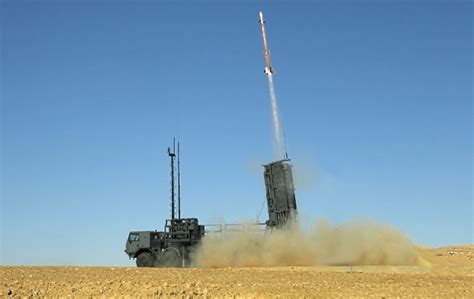
At the heart of this strategy lies a simple but powerful principle: overload the defense system faster than it can respond. Modern air defense networks, including those operated by Taiwan, rely on layered interception systems that combine radar detection, missile engagement, and electronic warfare. These systems are highly effective against limited threats—but they are not infinite.
In a hypothetical scenario where 700 to 1,000 J-6W drones are launched within a narrow time window, the الدفاع system faces immediate strain. Standard engagement doctrine often requires two interceptors per target to ensure a high probability of kill. This means that a wave of 1,000 incoming drones could demand up to 2,000 interceptor missiles.
Even with an optimistic interception rate of 80 percent, approximately 200 drones would penetrate defenses, delivering tens of thousands of kilograms of explosive payload. The economic asymmetry is equally significant. High-end interceptor missiles can cost millions of dollars per unit, while converted drones represent a fraction of that expense. The result is a cost-imposition strategy, forcing defenders into unsustainable expenditure patterns.
This concept has been observed in recent conflicts, notably in Ukraine and the Middle East, where low-cost drones have compelled the use of expensive الدفاع systems. China’s adaptation introduces a new variable: speed and payload at scale, compressing reaction times and increasing impact severity.
Blurring the Line Between Decoy and Threat
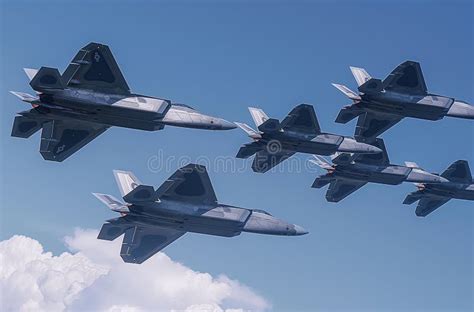
One of the most challenging aspects of the J-6W strategy is its ambiguity. On radar, an unmanned J-6W may appear indistinguishable from a piloted fighter like the J-16. This forces defenders into a dilemma: treat every contact as a high-value threat or risk allowing a genuine strike aircraft to pass through.
This ambiguity amplifies the effectiveness of saturation tactics. Even if a portion of incoming drones are configured as decoys, they still achieve strategic objectives by triggering radar activation, exposing defense positions, and depleting interceptor inventories. The psychological pressure on operators—facing hundreds of fast-moving targets with uncertain intent—cannot be overstated.
Operational Tempo and Launch Dynamics
The success of this approach hinges on launch rate and coordination. Estimates indicate that Chinese airbases could generate between 100 and 250 sorties per hour, depending on runway availability and logistical efficiency. At this pace, a full wave of 1,000 drones could be deployed within four to eight hours, sustaining continuous pressure on defense systems.
Runway dependency does impose constraints. Unlike truck-launched drones, J-6Ws require intact airfields, making them vulnerable to preemptive strikes. However, China’s investment in redundant runways and hardened infrastructure mitigates this risk, ensuring that launch capacity remains resilient even under attack.
Implications for Taiwan’s Defense Posture
For Taiwan, the emergence of this threat model necessitates a reassessment of defensive priorities. Traditional reliance on high-cost interceptors may prove insufficient against sustained saturation attacks. Instead, a shift toward layered defense systems, including lower-cost interceptors, electronic warfare capabilities, and rapid-reload mechanisms, becomes critical.
The الدفاع calculus is no longer defined solely by technological superiority, but by endurance and resource management. The ability to maintain operational effectiveness over 24 to 48 hours of continuous engagement could determine the outcome of initial conflict phases.
A New Era of Air Warfare Defined by Quantity and Adaptation
The deployment of drone-convertible J-6 fighters represents more than a tactical adjustment—it signals a broader evolution in military thinking. In an era where precision and stealth have dominated discourse, China is reintroducing the concept of mass as a decisive factor, enhanced by modern automation and strategic foresight.
By transforming outdated aircraft into expendable assets, China effectively extends the lifecycle of legacy systems while redefining their purpose. The result is a hybrid force that combines Cold War hardware with 21st-century doctrine, creating a challenge that is as much about scale as it is about technology.
As tensions in the Taiwan Strait persist, the presence of these aircraft serves as a tangible indicator of how future conflicts may unfold—not as isolated engagements between elite systems, but as prolonged contests of capacity, resilience, and strategic ingenuity.