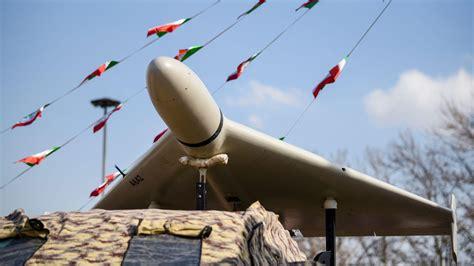
The ongoing conflict in Ukraine has brought to the forefront a new phase in modern warfare—one defined not by precision but by mass, relentless pressure, and technological saturation. Central to this strategy is Russia’s extensive use of Shahed drones, originally developed in Iran but now mass-produced within Russia using a mix of Western electronics and critical Chinese components. These drones, known for their low cost and high availability, have become a crucial element of Russia’s campaign to overwhelm Ukrainian air defenses and erode civilian morale through constant, attrition-based aerial assaults.
Russia’s use of Shahed drones represents a significant shift toward attrition warfare, a tactic focused less on precision strikes and more on exhausting the enemy’s defensive capacity. Each Shahed costs an estimated $20,000 to $50,000—a fraction of the price of a typical surface-to-air interceptor, which can run hundreds of thousands of dollars per unit. This cost asymmetry allows Moscow to launch mass drone salvos while tolerating high loss rates, often exceeding 75%, in an attempt to wear down Ukrainian defenses over time. This strategy, aimed at straining both the physical and psychological defenses of Ukraine, demands an innovative response.
The Scale and Intensity of Shahed Operations
The scale of Russia’s Shahed operations is staggering. According to Ukrainian Air Force data, the pace of Shahed launches increased dramatically in the latter half of 2024, surging from approximately 200 per week in September to more than 1,000 per week by March 2025. This escalation reflects a significant ramp-up in production capacity, likely driven by expanded manufacturing at facilities like the IEMZ Kupol and the Alabuga factory, which have been pivotal in transforming these drones from imported Iranian technology into a core component of Russia’s air campaign.
Key launch points for these drones include Primorsko-Akhtarsk in Krasnodar Krai, which alone accounts for 312 launches, and Chauda airfield in Crimea, with 160 launches. Additionally, regions bordering Ukraine, such as Kursk (248 launches), Bryansk (113), and Oryol (130), serve as forward bases for attacks targeting Ukrainian positions in the Donbas and Kharkiv regions. The wide geographic distribution of these launch sites complicates Ukrainian air defense efforts, requiring scarce precision munitions and electronic warfare assets to be stretched over a vast front.
Crucially, there has not been a single uninterrupted three-day period without a Shahed launch over the past seven months. This relentless pressure is designed to exhaust Ukrainian air defense systems and degrade civilian morale, creating a constant atmosphere of threat. Approximately 75% of Shahed launches occur on consecutive days, underscoring the sustained nature of this strategy.
Russia’s Evolving Drone Arsenal
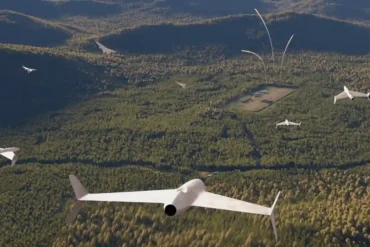
Russia’s approach to drone warfare is evolving rapidly. In addition to the standard Shahed-136 drones, newer variants like the Shahed-238 Loitering Munition have been introduced. These updated models likely feature enhanced guidance systems, including software-defined radios that complicate jamming efforts and allow for more precise targeting. In parallel, Russia has begun producing jet-powered variants, such as the Geran-3, which boasts a 2,500-kilometer range and speeds up to 550–600 kilometers per hour, making them much harder to intercept.
Additionally, reports suggest that China is manufacturing Garpiya-3 drones for Russia, capable of carrying 50 kilograms of explosives over distances of up to 2,000 kilometers. This combination of extended range and heavier payloads represents a significant escalation in Russia’s drone capabilities, potentially shifting the balance of power in the ongoing conflict.
Strategic Implications and Countermeasures
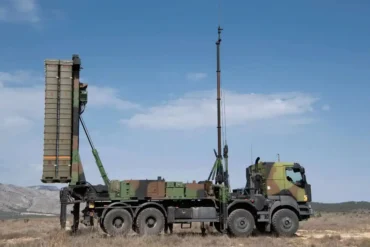
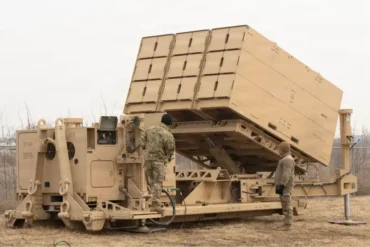
Surviving this onslaught requires a multi-layered defense approach that balances cost with effectiveness. To address this, Western allies must focus on three key areas:
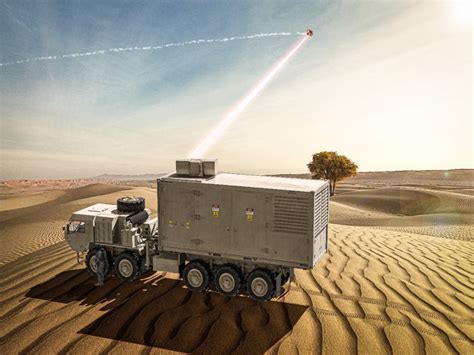
- Fielding New Defensive Technologies – Ukraine’s existing systems, including its innovative DELTA command and control network, have proven effective but require additional support. High-energy lasers, such as the RTX 50 kW DE M-SHORAD, the Lockheed Martin HELIOS (60 kW), and BlueHalo’s LOCUST, could provide a critical new layer of defense against the sheer volume of Shahed attacks. These systems offer the advantage of near-zero-cost per shot, significantly reducing the financial strain on air defense operations.
- Disrupting the Production Pipeline – The most effective countermeasure remains targeting Shahed production at its source. This can involve long-range strikes against assembly plants, storage facilities, and launch points, as well as cyber operations to disrupt manufacturing. For example, Ukraine has previously demonstrated its ability to strike deep into Russian territory, hitting key logistical nodes and airbases critical to drone operations.
- Cutting the Flow of Critical Components – Economic pressure can also play a decisive role. By disrupting the supply chains for the roughly 200 critical components required for Shahed production—many sourced from China—Western nations can significantly increase the cost and complexity of Russian drone manufacturing. This includes parts like Controlled Reception Pattern Antennas (CRP) and onboard computers critical for guidance systems.
Conclusion: Adapting to a New Era of Warfare
The Shahed campaign is not merely a tactical innovation but a strategic shift in how modern conflicts are fought. It signals a move toward warfare that prioritizes volume, persistence, and economic attrition over precise, one-time strikes. For Ukraine and its Western backers, this means rapidly adapting to a new kind of aerial threat—one defined by the constant grind of drone swarms designed to outlast, outproduce, and outmaneuver traditional defenses. To counter this, a coordinated approach integrating advanced technology, economic pressure, and targeted strikes will be essential.
The lessons from Ukraine’s defense will shape future conflicts, where the ability to counter mass, low-cost aerial assaults will be as critical as the tanks and missiles of the past. This is a fight not just for air superiority but for the economic and psychological stamina to withstand a grinding war of attrition.
In this context, the Shahed drone is not just a weapon—it is a signal of a new military paradigm that the world must confront head-on.