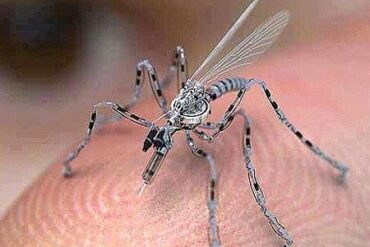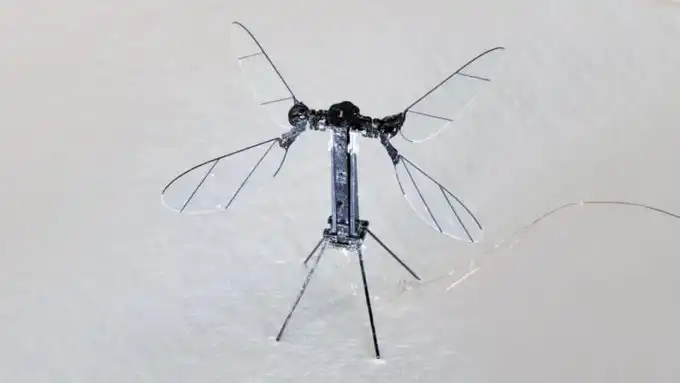
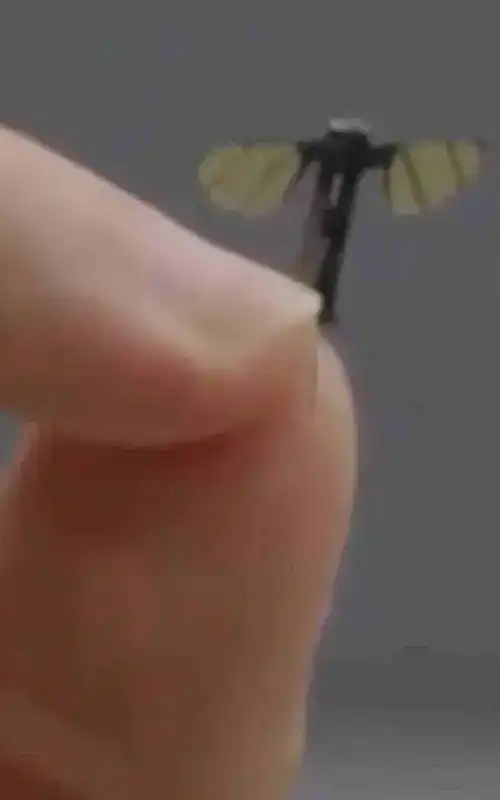
China has unveiled a groundbreaking leap in stealth warfare technology—a military-grade microdrone that mimics the size and movement of a mosquito. Developed by researchers at the National University of Defence Technology (NUDT) in Hunan Province, this 1.3-centimetre-long drone represents the next phase in micro aerial vehicle (MAV) evolution. Displayed recently on China Central Television’s military channel (CCTV 7), the mosquito drone is already drawing international attention for its potential to transform battlefield tactics and intelligence-gathering operations.
A New Era of Military Miniaturization
The NUDT micro drone is a bionic engineering marvel, designed to replicate the appearance and aerodynamics of a mosquito. It features two flapping, leaf-like wings and three ultra-thin legs. Unlike conventional drones with rotary blades or fixed wings, the flapping-wing mechanism allows this tiny robot to maintain a quiet, almost imperceptible flight profile. According to Liang Hexiang, a student at NUDT who presented the drone, the robot is tailored specifically for reconnaissance and covert special missions.
The choice of biomimicry isn’t accidental. Mosquitoes are ubiquitous, overlooked, and nearly invisible to both humans and machines. By mimicking them, Chinese engineers aim to neutralize traditional radar and visual detection systems, giving their military a distinct edge in urban surveillance, enemy infiltration, and asset tracking.
Remote Control in the Palm of a Hand
What makes this drone even more remarkable is its control interface. A basic smartphone app is sufficient to command the drone’s movements, including directional flight, hovering, and environmental scanning. The implications for mobility and decentralization of control systems are massive. Commanders no longer require bulky ground stations or complex telemetry systems—a soldier on the ground could deploy and guide this insect-like drone in real time.
Such a capability fits seamlessly into China’s broader push toward integrated, AI-powered, network-centric warfare. These drones could operate as node units in a swarm, communicating data back to a central intelligence hub or autonomous battlefield AI.
Battlefield Advantages of the Mosquito Drone
The advantages of deploying microdrones in military environments are multifaceted:
- Invisibility to the naked eye and radar systems, allowing deep penetration into enemy territory.
- High mobility in constrained environments, such as urban settings, rubble, tunnels, or dense forests.
- Minimal noise profile, ideal for night operations or missions requiring utmost silence.
- Real-time video and sensor feedback, enabling command centers to assess threats or track movement without exposing human operatives.
Unlike traditional UAVs that are susceptible to anti-air defense systems, these insect-sized drones are practically undetectable. Even if spotted, their resemblance to biological life forms would likely dismiss them as mere environmental noise.
Scientific Innovation Meets Strategic Design
While the mosquito drone might seem like science fiction, it’s built on the shoulders of two cutting-edge domains: micro-robotics and biomimetic engineering. Chinese researchers have combined ultra-light materials, nano-actuators, and precision sensors to achieve this innovation. The flapping mechanism was particularly challenging, as it requires a delicate balance between lift and energy efficiency—traits usually at odds in traditional drone engineering.
Miniaturized gyroscopes, inertial measurement units (IMUs), and micro-lens cameras are embedded inside the drone’s tiny frame. These technologies allow for autonomous stability correction, object avoidance, and even limited environmental mapping.
Dual-Use Capabilities Extend Beyond the Battlefield
Despite its origin in military R&D, the mosquito drone could eventually be repurposed for civilian or humanitarian applications:
- Search and rescue operations, where the drone could navigate through collapsed buildings to locate survivors.
- Environmental monitoring, including air toxicity levels, radiation, or hazardous particulate detection.
- Agricultural surveillance, helping to identify crop diseases or pest infestations at an ultra-localized level.
These peaceful applications underscore the potential for dual-use technology—a concept heavily prioritized by China’s tech policy. However, the geopolitical implications of such tools cannot be ignored.
Limitations and Technical Challenges
While the mosquito drone is revolutionary, it is not without its constraints:
- Limited payload capacity restricts it to ultra-light sensors and microcameras.
- Short battery life, typically under 10 minutes per charge, hampers mission longevity.
- Susceptibility to wind or environmental turbulence, given its small mass and low thrust.
To overcome these issues, Chinese researchers are focusing on advanced energy solutions, such as solid-state microbatteries and solar-assisted recharge modules. Artificial intelligence (AI) may eventually allow these drones to operate semi-autonomously, choosing optimal paths, self-correcting during flight, and avoiding obstacles without human input.
Strategic Edge: China’s Bid for Drone Supremacy
China’s unveiling of the mosquito drone fits into a larger trend of military technological acceleration. Beijing has made it clear in various defense whitepapers and speeches that it sees asymmetrical warfare—especially via unmanned systems—as crucial to its future military doctrine.
By shifting from large, expensive drones like the CH-5 Rainbow series to ultra-small systems, China seeks to overwhelm enemies with swarms of undetectable threats. Combined with satellite coordination, electronic warfare, and cyber infiltration, these drones become part of a multipronged military matrix that’s difficult to counter through conventional means.
Reactions from the Global Defense Community
The debut of such a technology has not gone unnoticed. Military analysts in the United States, India, and Japan have all raised concerns about the ethical and tactical implications of such undetectable tools of surveillance and engagement.
Some worry about the potential use of microdrones in targeted assassinations, biological warfare, or espionage, particularly given their ability to blend into environments undetected. Others emphasize the need for international regulation to prevent a new arms race in micro-robotics.
Conclusion: The Future Buzzes in Micro Form
China’s mosquito drone isn’t just another experimental toy—it’s a harbinger of a new form of warfare. One where the lines between biology and robotics blur, where surveillance can occur unnoticed, and where the battlefield can extend to your living room without a single soldier stepping inside.
While still in its prototype phase, the direction is clear: militaries that master microdrone swarms will hold a decisive strategic advantage in future conflicts. As China presses forward with refining these systems, the rest of the world will have no choice but to catch up—or fall dangerously behind.