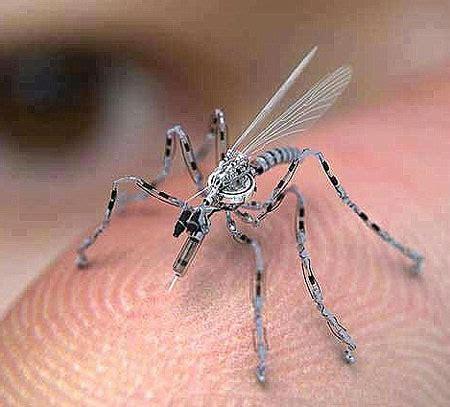
China has once again thrust itself into the global spotlight with the unveiling of a new frontier in surveillance technology — a mosquito-sized drone capable of capturing images, audio, and electronic signals, designed specifically for stealth operations. Developed by the National University of Defense Technology (NUDT), this miniature marvel is redefining the boundaries of military-grade espionage, igniting worldwide debates about privacy, security, and the future of warfare.
The Birth of China’s Mosquito Drone
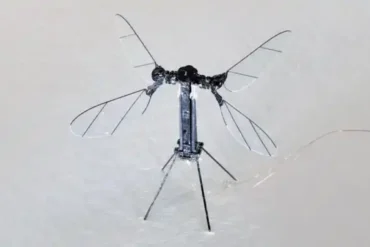
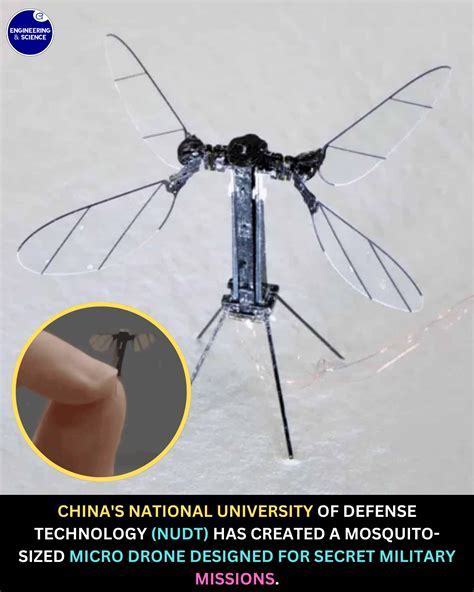
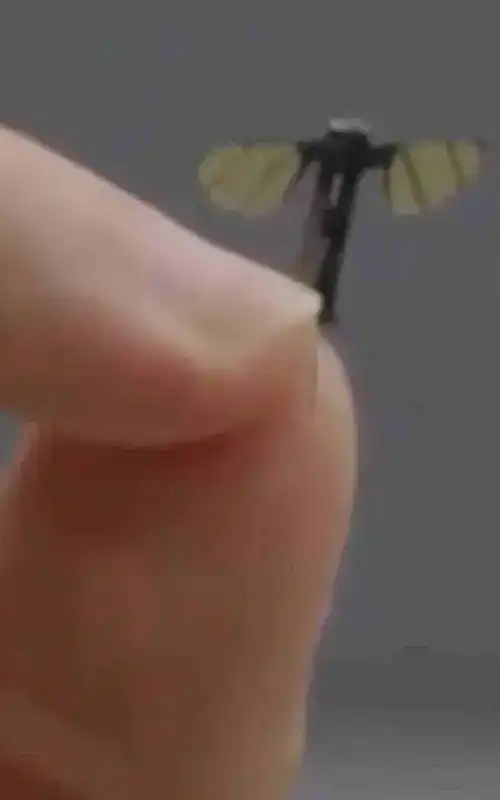
The prototype was introduced during a broadcast by CCTV-7, China’s state-run military television channel, as part of a broader exhibition on next-generation robotic systems. What appeared to be a harmless mosquito in the hand of NUDT researcher Liang Hexiang was, in reality, a technological marvel engineered for covert intelligence missions. At merely 1.3 centimeters in length and weighing under 0.3 grams, the drone is one of the smallest unmanned aerial vehicles (UAVs) ever developed for espionage purposes.
This tiny robot is modeled after nature’s most elusive and persistent insect. With two leaf-shaped wings, a slender black body, and three fine wire-like legs, the device mimics a mosquito’s appearance to such a degree that even the most vigilant observers may fail to detect it. Its ultra-miniature cameras and microphones enable it to capture high-definition images, audio recordings, and even electronic signals while remaining undetected.
Liang described the technology succinctly: “Miniature bionic robots like this one are especially suited to information reconnaissance and special missions on the battlefield.” But battlefield applications are only the tip of the iceberg.
Stealth, Silence, and the Threat to Privacy
One of the drone’s most concerning attributes is its ability to operate silently and evade radar detection, characteristics that make it particularly suitable for infiltration of secure locations. Whether inside government buildings, military installations, or private residences, the mosquito drone’s minuscule size grants it access to spaces where conventional drones simply cannot reach.
Military analysts and privacy advocates alike are raising alarms over the implications. Sam Bresnick, a research fellow at Georgetown University’s Centre for Security and Emerging Technology, emphasized the strategic advantage of such technology: “If China is able to produce mosquito-sized drones, it would likely be interested in using them for various intelligence, surveillance, and reconnaissance tasks, especially in places that larger drones struggle to access, such as indoor areas. These drones could be used to track individuals or listen in on conversations.”
The covert nature of this technology allows for potential cyber-intrusions and unprecedented surveillance, rendering conventional security measures nearly obsolete. The mosquito drone not only challenges the norms of physical security but also pushes boundaries in terms of legal frameworks and ethical considerations.
Espionage, Autonomous Attacks, and the Dystopian Future
Beyond surveillance, experts warn that the mosquito drone could usher in a new era of autonomous, lethal micro-robots. Tracey Follows, futurist and former advisor to Google, expressed grave concerns about how such devices could evolve: “This could lead to untraceable murders or drones capable of carrying pathogens,” referencing popular dystopian portrayals such as the Black Mirror series, where robotic insects are weaponized for targeted killings.
According to Follows, “In time, one expects a drone to have the situational awareness to carry out an attack autonomously without a human in the loop. The big question is what’s the payload on these drones, what are you actually attaching to the drone?”
The scenario may sound speculative, but it’s rooted in real technological trends. As artificial intelligence and miniaturization advance, so does the potential for these drones to operate with high degrees of autonomy, identify targets, and execute missions with minimal human oversight.
China’s Expanding Micro-UAV Arsenal
The mosquito-sized drone is only a fraction of China’s broader ambitions in micro-robotics. The NUDT is also developing other cutting-edge platforms, including artillery-launched drones capable of surviving the extreme conditions of being fired from 155mm cannon shells. These innovations reflect China’s drive to lead in micro-UAV technologies, a sector marked by increasing global competition.
The focus on micro-drones aligns with China’s military modernization goals, emphasizing asymmetric capabilities that can challenge technologically superior adversaries without relying on conventional force structures.
Global Micro-Drone Race: Beyond China’s Borders
While China’s mosquito drone grabs headlines, other nations are rapidly advancing in similar domains. Norway’s Black Hornet, developed by Teledyne FLIR Defence, exemplifies Western progress in miniature surveillance UAVs. Already deployed by numerous militaries worldwide, the Black Hornet has seen continuous upgrades, with the Black Hornet 4 earning the 2025 Blue UAS Refresh award from the US Department of Defense for significant improvements in battery life, signal range, and wind resistance.
Meanwhile, Harvard University’s RoboBee project has produced insect-sized drones capable of complex maneuvers, including transitions from water to air and even perching on surfaces via static electricity. These developments underscore that micro-drone technology is a focal point for defense research globally, not solely confined to China.
Civilian Applications: Promise and Peril
Despite the military emphasis, micro-drones offer compelling civilian applications. In medicine, these devices could revolutionize precision drug delivery, enabling treatments to reach highly targeted areas within the human body. In environmental monitoring, their ability to access hazardous zones — such as during floods, fires, or chemical spills — positions them as invaluable tools for disaster response.
Agricultural sectors may also benefit, with micro-drones potentially aiding in pollination, crop monitoring, and pest control, tasks currently performed with far less precision by larger, traditional drones.
However, the dual-use nature of this technology complicates its ethical landscape. The very features that make these devices revolutionary for healthcare and environmental management equally empower them to invade privacy, disrupt security, and facilitate covert attacks.
Ethical Dilemmas and the Path Forward
As the mosquito drone exemplifies, technological innovation often outpaces regulatory frameworks. The advent of insect-sized UAVs poses complex ethical, legal, and strategic questions. How do nations balance the benefits of such devices with their potential misuse? What international norms or agreements, if any, can be established to prevent abuse while fostering responsible innovation?
Some analysts call for immediate dialogue among global powers to address these concerns before mosquito-sized drones become widespread. Failure to act could result in a world where everyday spaces — homes, offices, government facilities — are vulnerable to undetectable surveillance, or worse, targeted assassinations via robotic insects.
The race is already underway, and China’s mosquito drone is a stark reminder that the future of espionage, warfare, and privacy is shrinking — both literally and figuratively — at an unprecedented pace.