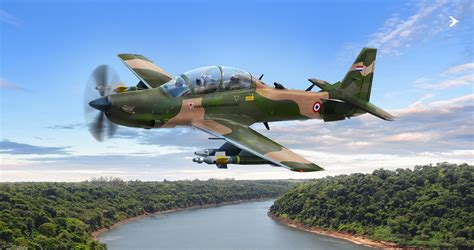
On June 30, 2025, the Paraguayan Air Force (Fuerza Aérea Paraguaya, FAP) marked a significant milestone in its military modernization with the formal receipt of four A-29 Super Tucano light attack and training aircraft. The delivery ceremony was held at Silvio Pettirossi Air Force Base, located near Asunción, and featured the presence of President Santiago Peña, Vice President Pedro Alliana, Minister of National Defense Gen. (Ret.) Óscar González, and Air Force Commander Gen. Julio Fullaondo. The event underscored not only Paraguay’s growing airpower but also the complex geopolitical dynamics currently surrounding its defense procurements.
Strategic Aircraft Acquisition: Regional Context and Operational Objectives
The Super Tucano acquisition stems from a contract signed on November 19, 2024, with Brazilian aerospace giant Embraer, totaling approximately $96.6 million for six aircraft. The financing is entirely backed by Brazil’s National Bank for Economic and Social Development (BNDES). According to the delivery timeline, all six aircraft are scheduled to be operational by July 2025.
The primary operational mission of these aircraft will be the surveillance of Paraguayan airspace, focusing on intercepting unauthorized aircraft potentially involved in narcotics trafficking, arms smuggling, and other transnational crimes. In a secondary capacity, the aircraft will be used for close air support, reconnaissance, aerial interdiction, and armed ISR (Intelligence, Surveillance, and Reconnaissance). The aircraft will be stationed at Ñú Guasú Air Base in Luque, under the Air Brigade No. 1’s Aerotactical Group, and will carry serial numbers FAP 1101 through FAP 1106.
Technical Specifications of the A-29 Super Tucano
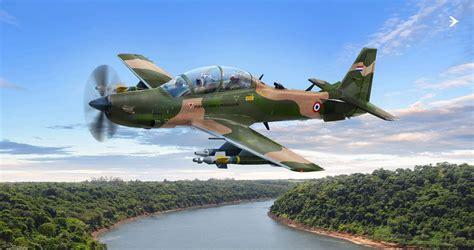
The A-29 Super Tucano is an extensively modified version of the EMB-312 Tucano, optimized for modern light attack and counterinsurgency operations. It is powered by the Pratt & Whitney Canada PT6A-68C turboprop engine, generating 1,600 shaft horsepower. With a maximum takeoff weight of 5,400 kg and an external payload capacity of 1,550 kg, the aircraft can operate in rugged environments, including unpaved runways.
Its avionics suite includes:
- Two multifunction color LCD displays (15.24 x 20.32 cm)
- One secondary multifunction display (13.76 x 17.52 cm)
- Night Vision Goggle (NVG)-compatible cockpit
- Synthetic onboard training system
- Chaff and flare dispensers for electronic defense
- MX-15 electro-optical turret, capable of both thermal and visible imaging
- Laser rangefinder for target acquisition
In terms of firepower, the aircraft features:
- Twelve LAU-32 rocket launchers, each loaded with seven 70 mm rockets
- Provisions for general-purpose and laser-guided bombs
- Two FN Herstal 12.7 mm M3P machine guns, wing-mounted
- Five external hardpoints for ordnance, pods, or fuel tanks
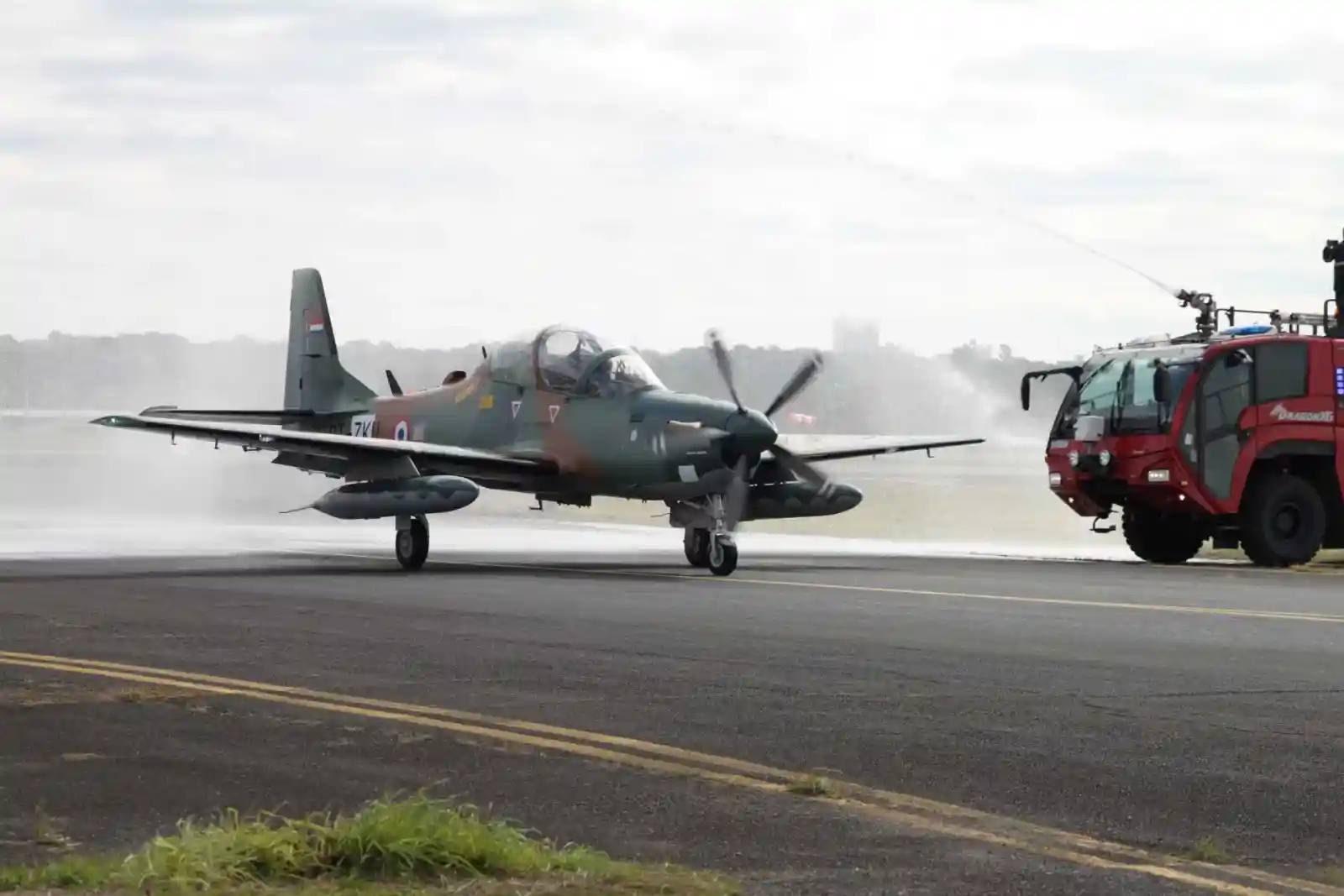
The Super Tucano reaches a top speed of 590 km/h, offers a ferry range of 2,855 km with external fuel tanks, and climbs to a service ceiling of 10,665 meters. Structurally, it is designed to handle +7/-3.5 Gs, supporting its capability for low-level attack runs and sharp aerial maneuvers.
Camouflage, Integration, and Training Support
Paraguay’s new A-29 fleet features a Southeast Asian camouflage scheme—aesthetic as well as practical—utilizing two-tone greens and sand on the dorsal surfaces and medium gray undersides. This pattern improves visual concealment in the country’s dense terrain, particularly during low-level missions.
Beyond the airframes, Embraer’s deal includes a comprehensive logistical and training package:
- Spare parts and consumables
- Scheduled and unscheduled maintenance support
- Mission planning and post-mission debriefing stations
- Pilot and technician training programs
Modernization Momentum: Broader Air Force Strategy
This delivery is a crucial component of a broader multi-year modernization strategy led by the FAP. In recent years, the Air Force has taken proactive steps to elevate its operational readiness and domestic aerospace capabilities. Notable efforts include:
- Upgrading T-35 Pillán trainers via Chilean firm ENAER
- Indigenous development of UAVs such as Taguato I, Piririta, and Taguato II
- Radar evaluations involving systems like Israel’s ELTA EL/M-2106 NG and Argentina’s INVAP RPA-240
- Proposed intercept legislation for combating illicit air intrusions (some initiatives rejected, others pending)
- Acquisition of simulators for flight and airborne troops
- Partnerships with foreign aerospace firms, notably Aerovehicles, for future Class III UAVs
Despite some legislative setbacks, including failure to pass a controversial “shoot-down” law, the FAP has expanded its role in regional airspace security through enhanced surveillance tools and drone integration.
Geopolitical Tension: Brazil-Paraguay Relations Under Strain
The aircraft deal is not without its complications. In the months preceding the delivery, Paraguay launched a formal investigation into Brazil’s ABIN (Brazilian Intelligence Agency) over alleged cyberattacks on Paraguayan government networks. Leaks suggest the attacks sought sensitive information related to Itaipu Binational Treaty’s Anexo C, a critical component of the countries’ shared hydroelectric infrastructure.
President Peña reacted by suspending bilateral negotiations with Brazil over the treaty’s renewal and publicly threatened to cancel the Super Tucano contract if espionage claims were substantiated. These developments prompted diplomatic maneuvers within Brazil. Embraer sought immediate support from Foreign Minister Mauro Vieira and Defense Minister José Mucio, who engaged in discussions to safeguard the contract amid rising tensions. While the diplomatic situation remains fluid, the June 30 delivery proceeded as planned, potentially reflecting the importance of the deal to both nations’ industrial and security interests.

Latin American A-29 Operators and Tactical Evolution
With this delivery, Paraguay becomes the eighth regional operator of the Super Tucano, joining a list that includes Brazil, Chile, Colombia, Ecuador, Dominican Republic, Panama, and Uruguay. Globally, the A-29 has demonstrated operational effectiveness in Colombian campaigns against FARC, U.S.-led operations in Afghanistan, and Brazil’s border patrol missions under Operation Ágata.
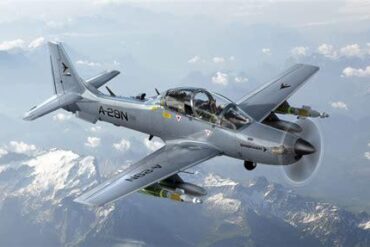
The aircraft’s proven record, rugged reliability, and advanced systems have earned it a place in the U.S. Air Force’s Light Air Support (LAS) program, with some units assembled domestically by Sierra Nevada Corporation. Embraer continues to innovate with NATO-compliant variants (A-29N) and advanced versions like the A-29M, which include upgraded wide-area cockpit displays, digital data links, and electronic warfare systems.
Paraguay’s aircraft do not yet reflect these latest updates but are nonetheless capable platforms tailored for the country’s current threats, particularly narco-trafficking flights transiting its airspace from Bolivia, Brazil, and Peru.
Future Outlook: Surveillance, Deterrence, and Sovereignty
The acquisition of the A-29 Super Tucano is not simply a matter of enhancing the FAP’s hardware inventory—it is a strategic move toward airspace sovereignty and deterrence capability. Paraguay’s air defense posture has long suffered from underinvestment, with outdated aircraft and limited radar coverage.
To remedy this, the government has also invested in a $45.7 million radar system, expected to be fully operational within 30 months, thereby complementing the new aircraft with real-time tracking and interception guidance.
This dual-pronged approach—combining kinetic and surveillance assets—signals a clear intention: Paraguay is no longer willing to remain a passive corridor for regional trafficking networks. With these enhancements, the FAP is positioned to become a more credible force in South America’s complex and evolving air security landscape.
Conclusion: A Tactical Leap Amid Political Crosswinds
While the Super Tucano deal symbolizes a leap forward for Paraguay’s airpower, it also unfolds against a backdrop of tense diplomatic realities and regional power recalibrations. The aircraft represent not only tools of national defense but also instruments of political significance—reflecting alliances, financial dependencies, and shifting strategic calculations.
As Paraguay completes the integration of its full fleet by mid-2025, the success of this program will depend not just on platform performance but on the political will to sustain defense modernization, transparency in military procurement, and resilience against both internal and external pressure.