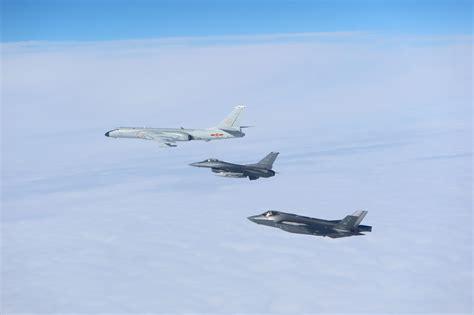
The United States stands at a strategic crossroads as Saudi Arabia’s request to purchase up to 48 F-35A stealth fighters inches closer to Congressional review. The proposed sale, recently cleared through a key Pentagon evaluation, is not merely a multibillion-dollar arms deal — it is a potential geopolitical powder keg with far-reaching consequences for U.S. national security, Israel’s military advantage, and the ongoing tech-rivalry with China.
A Historic Deal with Strategic Implications
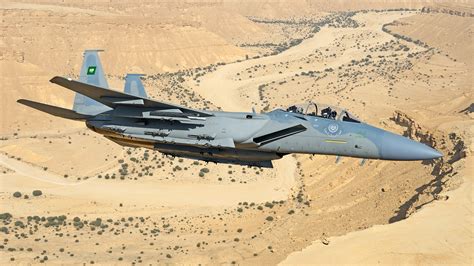
If completed, the agreement would mark the first time an Arab state operates America’s fifth-generation stealth fighter, cementing U.S.-Saudi defense ties for decades. With over $142 billion in U.S. arms already flowing to the Kingdom in 2025 alone, the F-35 sale would crown Riyadh’s ambitions to dominate regional airpower. But what should be a win for American defense exporters has instead triggered deep concern within the Pentagon and among U.S. intelligence circles.
The F-35: A Crown Jewel of U.S. Military Aviation
The aircraft under consideration — the F-35A Lightning II — is the cornerstone of modern U.S. airpower. It incorporates stealth shaping, radar-absorbing composites, and a suite of next-gen sensors that turn it into both a frontline fighter and an airborne command node. Features include:
- AN/APG-81 AESA radar capable of tracking air and ground targets with precision.
- Distributed Aperture System (DAS) providing full 360° infrared surveillance.
- Electro-Optical Targeting System (EOTS) embedded within the fuselage for enhanced targeting.
- Multifunction Advanced Datalink (MADL) for secure, stealthy communication with allied forces.
- Two internal bays and optional external pylons accommodating a wide range of ordnance.
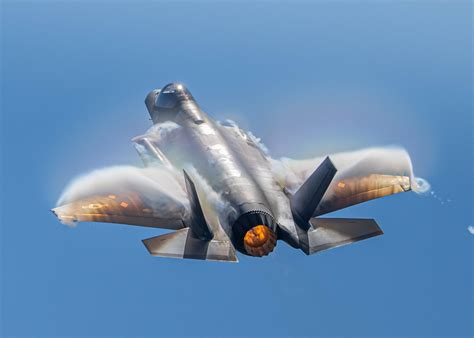
Powered by the Pratt & Whitney F135 engine, the jet delivers over 40,000 pounds of thrust and enables long-range missions across the Gulf region with a minimized radar and thermal footprint. For a Saudi Air Force currently built around F-15SA Eagles and Eurofighter Typhoons, this would represent a quantum leap in capability — particularly against threats like Iran’s layered air defenses and ballistic missile infrastructure.
The China Dilemma: Espionage by Osmosis
Despite Saudi Arabia’s strategic value, U.S. defense officials are grappling with an uncomfortable reality: China’s deepening presence in the Kingdom could offer a backdoor into the F-35’s secrets. A classified report by the Defense Intelligence Agency warns that Beijing could siphon sensitive data not through outright espionage, but via prolonged exposure — through joint ventures, industrial collaboration, and vulnerable digital networks.
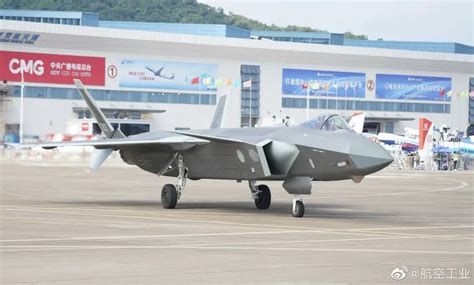
The stealth coatings, electronic warfare systems, mission-data libraries, and MADL communications suite are exactly the kinds of technologies that Chinese engineers need to bolster their J-20 and J-35 stealth fighter programs and long-range air-to-air missile designs like the PL-15 and PL-17.
Riyadh and Beijing: An Uneasy Convergence
Saudi-China defense ties are not theoretical. The Kingdom has:
- Purchased Chinese DF-3 ballistic missiles since the 1980s.
- Built solid-fuel missile production facilities near al-Dawadmi with Chinese guidance.
- Operated Chinese-built CH-4 and Wing Loong UAVs in combat environments.
- Formalized a strategic partnership that includes naval, special forces, and cyber exercises.
Xi Jinping’s 2022 visit to Riyadh resulted in $30 billion worth of bilateral agreements, including cloud services and digital infrastructure — most notably with Huawei, whose involvement in 5G networks has already derailed F-35 export plans to the UAE due to surveillance concerns.
The Israel Factor: Preserving the Qualitative Military Edge (QME)
U.S. law mandates that any arms sales in the Middle East must not erode Israel’s Qualitative Military Edge. Israel remains the sole operator of the F-35 in the region, with its domestically customized F-35I Adir squadrons.
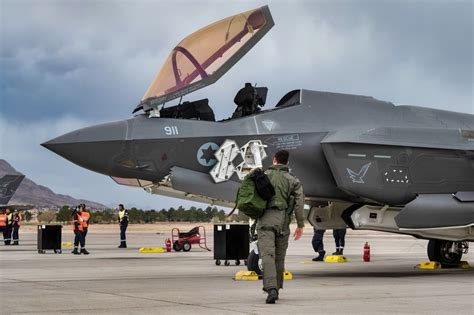
Congressional Research Service has previously emphasized that any sale to an Arab state must come with either:
- A technologically inferior configuration, or
- Additional compensatory advantages to Israel.
Israeli officials are unlikely to accept a large Saudi fleet, even with export controls, especially as Riyadh’s ties with Beijing continue to grow.
Operational Impact: A New Dimension to Gulf Airpower
Saudi Arabia’s acquisition of the F-35 would revolutionize its regional posture. The fighter would allow:
- Deep-penetration strikes into Iranian territory without triggering early radar detection.
- Precision attacks on nuclear, ballistic missile, and naval targets along the Gulf.
- Enhanced defense against drone and missile swarms, particularly from Yemen and Iraq.
- AI-driven threat prioritization, thanks to mission data files tailored for the Iranian order of battle.
Security Conditions and Industrial Headwinds
Even if Congress approves the deal, Washington is expected to impose rigorous end-use conditions, such as:
- Prohibiting Huawei or other Chinese telecom presence at F-35 bases.
- Physical segregation of data networks and secure facilities.
- Aggressive end-use monitoring by U.S. personnel.
- Restrictions on basing and maintenance to avoid third-party access.
Adding complexity is Saudi Arabia’s Vision 2030 initiative, which seeks to localize 50% of defense spending. Riyadh will likely demand industrial offsets, including local production, which U.S. officials fear could introduce Chinese engineers into secure supply chains.
Stalemate or Shift: The Fallback Option
With Lockheed Martin’s production lines already stretched to fulfill U.S., NATO, and Indo-Pacific orders, the practical window for Saudi delivery is narrow. An alternative package, possibly involving:
- F-15EX fighters
- Advanced precision munitions
- Integrated missile defense systems
…may emerge as a compromise that avoids the tech-transfer minefield while still enhancing Saudi capabilities.
The Saudi F-35 question thus sits at the intersection of military ambition, geopolitical rivalry, and intelligence risk. As Congress prepares to weigh in, and as U.S. agencies battle over where to draw red lines, one thing is certain: the decision will reverberate far beyond the skies of the Middle East.