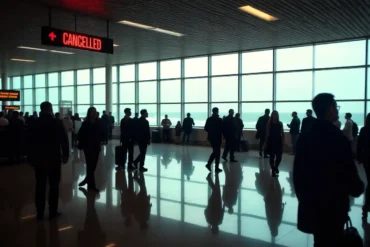
On June 18, 2025, a forecast by Ryo Tatsuki, a Japanese manga artist often dubbed the “New Baba Vanga,” caused a wave of panic across Japan and parts of Asia. This prediction, which had been reintroduced from a manga series originally published in 1999, warned of a tsunami or earthquake that was supposedly destined to strike on July 5. The prophecy immediately sparked widespread fear, leading to an overwhelming 83% drop in flight bookings from Hong Kong to Japan, as travelers sought to avoid the perceived danger. This surge of cancellations has had serious consequences for both the Japanese tourism sector and the country’s broader economy.
Airlines Confront Rising Anxiety
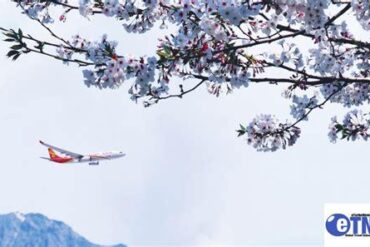
As the fear of the looming disaster intensified, Hong Kong Airlines took swift action, suspending flights to southern Japanese cities such as Kagoshima and Kumamoto for the months of July and August. These cities are prime tourist destinations, particularly in summer, and the suspension of flights had an immediate effect. Regional airlines also faced significant disruptions, with 15-20% more cancellations being reported, particularly on routes operated by Boeing aircraft. This shift in travel behavior showed just how deeply the fear had settled, with many travelers opting to cancel their plans entirely. The damage wasn’t limited to just short-term cancellations. The spring cherry blossom season and Easter holidays, two of the busiest travel periods, also saw a major decline in bookings. Greater Bay Airlines, which had expected high demand during these periods, revealed that their bookings had plummeted by 50% compared to the previous year. Hiroki Ito, the airline’s Japan country manager, stated that they had initially forecasted 80% seat occupancy, but in reality, only 40% of the seats had been reserved.

Economic Ramifications for Japan’s Tourism
The impact of this fear-driven behavior is being felt on a larger scale. Bloomberg Intelligence reported a 50% decline in bookings for flights to Japan between late June and early July, further deepening concerns about the country’s tourism industry. With Japan being heavily reliant on international tourism to fuel its economy, this surge of uncertainty over a prophecy has the potential to derail the ongoing recovery from the COVID-19 pandemic. The nation’s tourism sector, which contributes billions of yen to the national economy, is now facing an unpredictable future due to these psychological effects linked to Tatsuki’s predictions. As international travelers turn away from Japan in fear of the foretold disaster, the country’s local economies, which depend heavily on tourism, are suffering considerable losses. Major airports, hotels, and tour operators are all reporting a sharp revenue decline, and many are scrambling to adjust to the fallout from this panic. This is a significant setback for an industry that had only recently begun to recover from the effects of the global pandemic.
Government Reassurance and Scientific Pushback
Despite the escalating fears, Japanese officials and scientists have made a concerted effort to dispel the rumors and assure the public that there is no scientific basis for the July 5 prophecy. Yoshihiro Murai, the Governor of Miyagi Prefecture, publicly stated that although Tatsuki’s previous predictions had garnered some attention, there was no credible evidence to support the claims of an imminent disaster. Many scientists across the country have also strongly rejected the prediction, labeling it as speculative and unfounded. Tatsuki’s past predictions, such as the death of Princess Diana and the emergence of COVID-19, have added a layer of mystery and intrigue to her public persona. However, even with her past successes, many argue that the lack of scientific proof behind the July 5 prophecy makes it unworthy of serious consideration. Adding to the controversy, Tatsuki has also claimed that a more dangerous variant of COVID-19 will reappear in 2030, further fueling the superstitions surrounding her work.
The Global Impact on Travel
While the fear of a disaster in Japan is largely driven by superstition, it highlights a broader issue within the global travel market. The immediate effect of this panic has been the sharp downturn in travel to Japan, a situation that could have long-term consequences for the country’s already fragile tourism industry. This phenomenon may also affect the way future travelers approach destinations known for superstitions or uncertain events. For global travelers, the situation raises questions about the influence of predictions and public sentiment on travel decisions. Can a single viral prophecy cause widespread cancellations and disrupt the travel industry on a global scale? Japan’s case, while unique, may set a precedent for other destinations. Countries with rich cultural traditions and a strong reliance on folklore might also see similar reactions to future supernatural forecasts, which could shift how tourists plan their trips.
Moreover, the psychological impact of such rumors cannot be overlooked. As people grow uncertain about the safety of their chosen destinations, there may be a greater demand for stable and predictable travel options. This shift in behavior could prompt destinations to rethink how they market themselves, focusing more on reliability, safety, and scientific data to counteract the influence of superstition.
The Intersection of Science and Superstition
As Japan faces this growing crisis, the country finds itself at the intersection of science and superstition. With just days remaining before July 5, officials continue to urge the public to remain calm, urging them to rely on evidence-based information rather than fear-driven predictions. While there’s no concrete evidence to support the looming disaster, the psychological and economic impact of the panic is undeniable. This event serves as a cautionary tale for the global travel industry. The ripple effects of a prophecy, whether true or not, could lead to widespread cancellations and long-term market disruptions. This may prompt a shift in how destinations and travel companies approach marketing and crisis management in the future. If fear and beliefs continue to hold as much weight as hard facts, we may see a new era in the travel industry—one where the power of perception could be just as impactful as reality itself. As Japan navigates the aftermath of this prophecy, the global travel community is watching closely to see how fear-driven cancellations might reshape tourism for years to come.