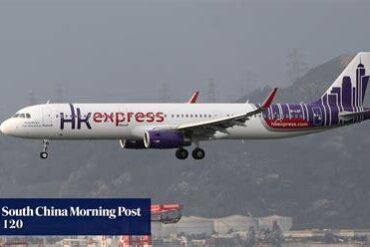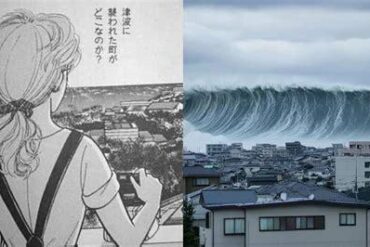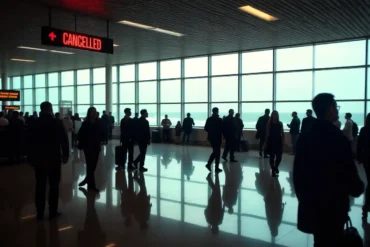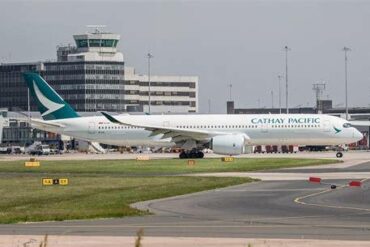
Hong Kong Airlines has made the surprising decision to suspend its flights to Kagoshima (KOJ) and Kumamoto (KMJ) in southern Japan for the months of July and August 2025. This suspension is attributed to a dramatic reduction in demand, largely fueled by a widely circulated yet unfounded rumor regarding an impending earthquake and tsunami. The source of this panic can be traced back to a Japanese manga titled The Future I Saw, which ominously warns of a catastrophic natural disaster expected to strike Japan in the summer of 2025.
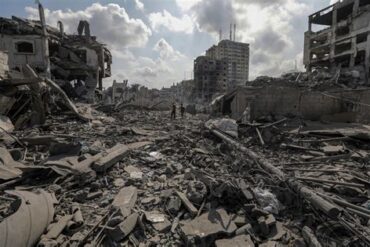
The manga, originally published in 1999 and reprinted in 2021, has garnered significant attention due to its author, Ryo Tatsuki, claiming that a massive earthquake will hit Japan on July 5, 2025. According to the narrative, a crack will form under the seabed between Japan and the Philippines, resulting in tsunami waves that could be three times larger than those from the devastating 2011 Tōhoku tsunami. Tatsuki’s earlier work had gained notoriety for predicting the 2011 disaster accurately, which has led some fans to regard her subsequent predictions with undue seriousness.
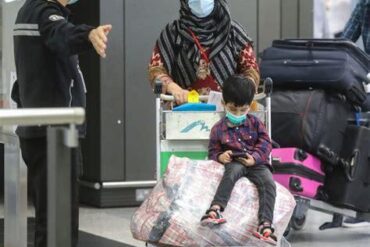
As the rumor spread across social media platforms, particularly among the East Asian audience, fear began to grip potential travelers from Hong Kong, leading to a significant decline in bookings for flights to Japan. This situation illustrates how misinformation, even when lacking any scientific foundation, can dramatically influence travel behavior.
The Impact of the Earthquake Rumor on Travel
Hong Kong Airlines had only resumed its Kagoshima route in the spring of 2024, after a four-year hiatus, due to previously strong demand. However, with the resurgence of the earthquake rumor, the airline witnessed a sharp decline in bookings. This led to the decision to suspend flights to both Kagoshima and Kumamoto, a response to the ongoing decrease in demand that started in May 2025. This phenomenon is not isolated to Hong Kong Airlines; other airlines operating between Hong Kong and Japan have also reported similar declines in bookings, especially for routes leading to southern Japan.
The ripple effect of this panic has extended beyond individual airlines, affecting the broader tourism industry in Japan. Businesses reliant on tourism have experienced a wave of cancellations and a lack of new reservations, further exacerbating the situation. Travel agencies report that many customers are either canceling or postponing their trips to Japan, with some opting for alternative destinations in East Asia, such as South Korea or Taiwan.
In response to the growing concern, the Japan National Tourism Organization (JNTO) has proactively addressed the issue, emphasizing that there is no scientific basis for the earthquake prediction circulating from the manga. The Japan Meteorological Agency has categorically stated that claims made in The Future I Saw are entirely unfounded, asserting that predicting the timing, location, or magnitude of an earthquake with such precision is impossible. They urge the public to rely on official channels and scientific research for accurate information regarding seismic activity.
Despite these reassurances, the damage inflicted on Japan’s tourism sector remains tangible. The JNTO and various government organizations are working tirelessly to combat the spread of these rumors while reassuring travelers that Japan is a safe and vibrant destination. They are encouraging potential visitors to base their travel decisions on facts rather than speculative fiction.
The Role of Media and Pop Culture in Shaping Public Perception
The suspension of Hong Kong Airlines’ routes serves as a striking example of how pop culture can exert a profound influence on public behavior. While it may seem irrational to treat a comic book as a credible source of information, the association of Tatsuki’s earlier accurate predictions with her current forecasts has led many to place undue faith in her abilities. This phenomenon underscores a broader trend where media predictions, folklore, and superstitions significantly impact human behavior.
In today’s digital age, the speed at which misinformation spreads is alarming. Social media platforms like WeChat, Facebook, and Twitter have facilitated the rapid dissemination of these rumors, transforming what was once a niche interest into a widespread fear affecting millions. Even with debunking efforts from government organizations and scientific communities, the initial panic continues to influence decision-making, particularly in the travel sector. This situation highlights the pressing need for media literacy and critical thinking skills in an era where misinformation can yield real-world consequences. Travelers must be encouraged to seek verified information from reputable sources rather than relying on sensationalized reports.
Hong Kong Airlines’ Response and Future Prospects
In light of the ongoing turmoil, Hong Kong Airlines is actively working to minimize disruption for its passengers. The airline has implemented flexible rebooking options and is offering full refunds to those affected by the route suspensions. Passengers who had planned visits to Kagoshima and Kumamoto during the summer months are being redirected to alternative routes within Japan or to other destinations in the region.
Furthermore, the airline has reassured the public of its commitment to monitoring the situation closely, with intentions to adjust services as necessary. Should there be a resurgence in demand for flights to Japan in the fall, Hong Kong Airlines has expressed willingness to consider resuming its services to these destinations.
Looking ahead, the travel industry in the region may continue to face challenges in the short term, as lingering fears surrounding the rumored disaster persist. However, as travelers return to more rational decision-making and the reality of the earthquake prediction is proven unfounded, it is anticipated that the situation will stabilize.
Conclusion: A Cautionary Tale of Misinformation
The suspension of Hong Kong Airlines’ routes to Kagoshima and Kumamoto stands as an unusual case, driven by a combination of unfounded rumors and widespread panic stemming from a fictional manga’s predictions. Although the claims made in The Future I Saw lack scientific grounding, their impact on Japan’s tourism and airline industry has been considerable. Efforts by the Japan National Tourism Organization and other governmental bodies aim to reassure travelers that Japan remains a safe and welcoming destination. Nonetheless, this incident serves as a poignant reminder of the power of media and pop culture in shaping public perception and the critical importance of making travel decisions based on verified information rather than speculation.