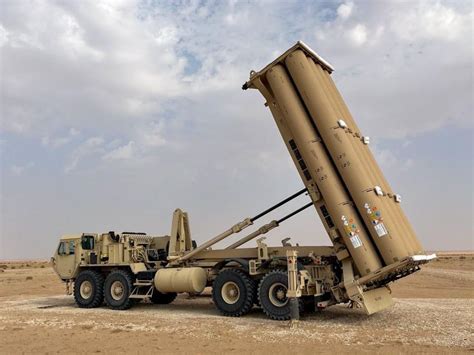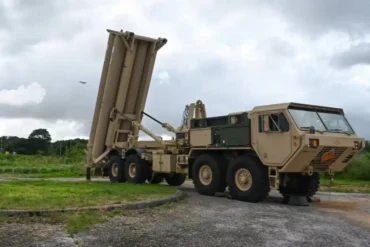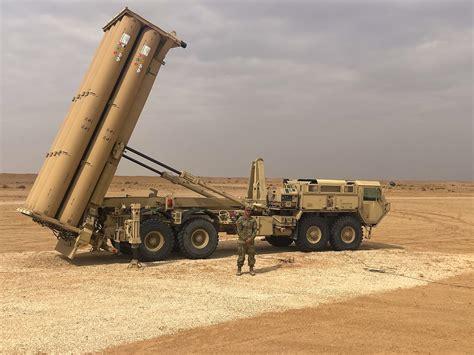
In the aftermath of the June 2025 Israel-Iran conflict, the U.S. Army has raised serious concerns about the sustainability of its THAAD (Terminal High Altitude Area Defense) interceptor stockpile. Over the course of just 12 days, more than 150 THAAD missiles were launched in support of Israel’s air defense, marking the most significant single deployment of the system in its operational history. This represented nearly 25% of the entire U.S.-funded stockpile to date and exposed systemic weaknesses in the supply chain, procurement strategy, and industrial production capacity that threaten future military readiness.
THAAD’s Strategic Role in U.S. and Allied Defense
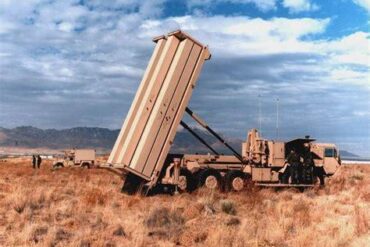
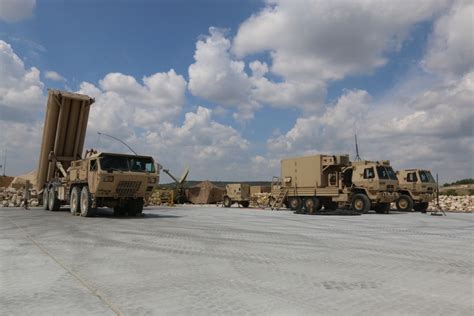
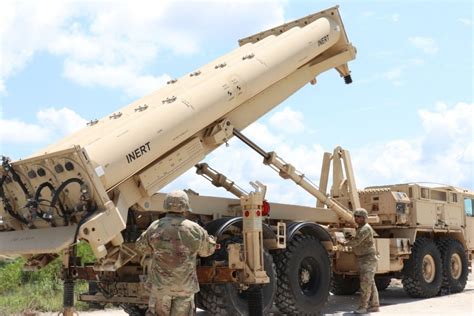
THAAD is designed to intercept and destroy short- to medium-range ballistic missiles during their terminal phase. It utilizes hit-to-kill technology guided by a high-resolution infrared seeker, and each interceptor, measuring 6.17 meters in length and weighing approximately 900 kilograms, can engage threats at altitudes of up to 150 kilometers. With a range of roughly 200 kilometers, it functions both inside and outside the atmosphere, making it one of the most capable assets in the U.S. missile defense portfolio.
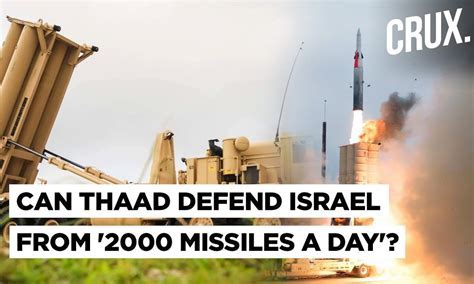
During the June 2025 conflict, two out of seven U.S. THAAD batteries were deployed in Israel. Coordinating with Israeli Iron Dome and David’s Sling systems, THAAD interceptors played a crucial role in neutralizing salvos of Iranian ballistic missiles, aimed at military and civilian targets. The combined defense efforts proved effective, but the rapid consumption of high-value interceptors sparked urgent questions about sustainability.
A Fragile Arsenal: By the Numbers
According to Pentagon budget documents, the United States has so far funded 646 THAAD interceptors, a figure that includes units used for testing, training, and active deployment. However, with more than 150 fired in a single regional conflict, the U.S. now faces a critical inventory deficit. The FY2026 budget request calls for the procurement of only 25 new interceptors, each at an estimated cost of $15.5 million. This number falls drastically short of the current operational demand.
At the present production rate, it could take up to four years to replace the expended missiles. The Missile Defense Agency (MDA) has projected delivery of the next production batch—the 13th lot—in early 2027, a full five years after the contract award. These timelines starkly illustrate the gap between military needs and industrial output.
Lockheed Martin’s Bottleneck and Industrial Limitations
Lockheed Martin, the THAAD system’s prime contractor, has acknowledged the strain and is reportedly in talks with the Department of Defense to expand production capacity. The goal is to eventually reach an annual output of 100 interceptors, but such a ramp-up will take several years. The process involves reconfiguring assembly lines, hiring and training skilled labor, and ensuring a stable supply chain for critical components—especially for the sophisticated infrared seekers and solid-fueled propulsion systems.
Until these changes are fully implemented, the U.S. remains vulnerable. The current manufacturing capability is simply incompatible with the high-intensity usage seen in modern conflicts. With each interceptor costing more than $15 million, budgetary constraints also limit how fast production can be scaled.
Geopolitical Implications and Diplomatic Tensions
The sudden depletion of THAAD stockpiles has ripple effects beyond U.S. borders. One of the more sensitive developments in June was a Pentagon proposal to divert THAAD interceptors originally earmarked for Saudi Arabia to replenish Israel’s supplies. Although this did not come to pass, the mere consideration highlights the severity of the shortage.
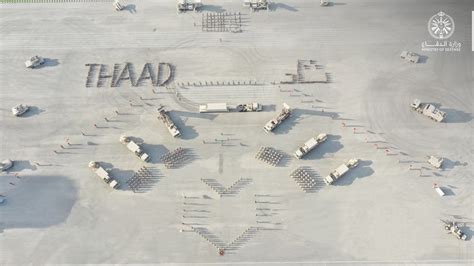
Saudi Arabia only recently received its first operational THAAD battery, under a 2017 contract valued at over $15 billion. The Kingdom views the system as a cornerstone of its regional defense posture, especially against Iranian ballistic threats. Diverting its munitions could have triggered a diplomatic backlash, undermining trust in U.S. defense commitments.
Similarly, the United Arab Emirates, which became the first country to use THAAD in combat during the 2022 Houthi missile attacks, has an active stake in continued access to interceptors. These dynamics place the U.S. in a delicate position—balancing strategic partnerships while managing its own defense shortages.
Strategic Consequences of High-End Munition Depletion
The mass usage of THAAD interceptors during a limited regional conflict underscores a much larger issue: the fragility of the U.S. high-end munition inventory. In addition to THAAD, the Navy’s SM-3 interceptors, another pillar of ballistic missile defense, are also in short supply. The concurrent demand for advanced munitions in Ukraine further compounds the problem.
With mounting concerns over potential flashpoints involving China in the Indo-Pacific, the current rate of replenishment leaves the U.S. vulnerable to supply exhaustion in the event of a broader conflict. Unlike cheaper munitions, THAAD cannot be mass-produced quickly. Its complexity, cost, and long lead times demand forward planning, diversified production, and sustained funding.
The reality is that American strategic depth is being hollowed out, one missile at a time. War planners are increasingly aware that missile defense cannot rely solely on technological superiority; it must be supported by robust logistical and industrial systems that can sustain extended campaigns.
Future Readiness and Procurement Challenges
The U.S. military and defense policymakers now face urgent decisions. To ensure readiness, the Department of Defense must:
- Accelerate THAAD interceptor production, potentially through emergency appropriations or Defense Production Act authorities.
- Expand the supplier base, reducing over-reliance on a single contractor.
- Invest in alternative and complementary missile defense systems, such as directed-energy weapons or interceptors with shorter production cycles.
- Improve real-time inventory tracking and adaptive logistics, so that deployments do not blindside resupply efforts.
These steps will require both legislative support and industrial coordination. The recent passing of the One Big Beautiful Bill Act, which unlocks emergency funds, may provide some relief. But without a cohesive long-term strategy, the risk of running dry in the next crisis remains unacceptably high.
Conclusion: The Fragility of a Superpower’s Shield
The use of over 150 THAAD interceptors in a span of less than two weeks is not just a technical data point—it is a wake-up call. For all its advanced capabilities, the U.S. missile defense architecture is only as strong as its resupply lines. The THAAD shortage illuminates a structural flaw: the lack of a rapid industrial response mechanism to match the tempo of modern warfare.
As the U.S. looks toward an increasingly volatile future—with potential escalations in the Middle East, Eastern Europe, and the Pacific—the ability to replenish high-end munitions like THAAD becomes not just a logistical issue, but a matter of national security strategy. Without decisive investment in missile stockpiles and industrial base expansion, the credibility of American deterrence may falter in the face of sustained threats.