On June 28, 2025, what was expected to be a standard transatlantic journey aboard Air France flight AF136 from Paris to Chicago abruptly devolved into a high-stakes mid-air drama. The Airbus A350-900, carrying passengers across the Atlantic, was forced to reverse course over the ocean due to an unforeseen clearance crisis—an extremely rare scenario in modern commercial aviation.
The Calm Before the Crisis
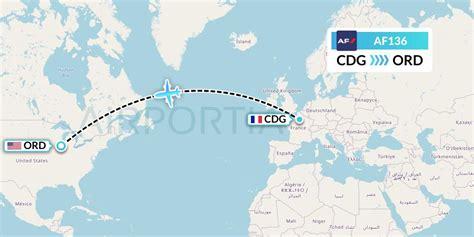
AF136 departed from Paris Charles de Gaulle Airport (CDG) at precisely 12:49 CEST, pushing back from gate M48 at Terminal 2E and lifting off from runway 26R. With the aircraft climbing smoothly to its cruising altitude of 38,000 feet, passengers settled in for the long-haul flight, expecting to touch down at Chicago O’Hare International Airport (ORD) after crossing the Atlantic.
All indications pointed toward a routine flight. The route took the aircraft northwest, flying over the United Kingdom, progressing toward the wide expanse of the North Atlantic. In-cabin service commenced, passengers watched movies, and the plane maintained steady progress.
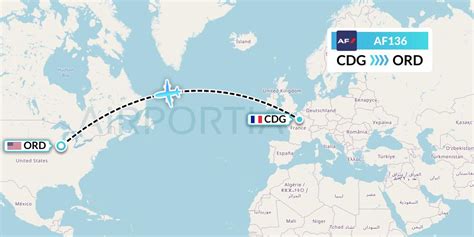
But just past the halfway mark—between Iceland and Greenland—everything changed. Around 16:30 CEST, the aircraft initiated a dramatic U-turn, pointing its nose back toward Europe. The captain’s announcement was subdued, citing an operational complication. But speculation erupted onboard.
The Unprecedented Clearance Denial
Air France later acknowledged that the aircraft was forced to return due to “operational reasons”, though deeper investigation pointed toward a failure to secure landing clearance at Chicago. In the vast machinery of international aviation, landing clearance is considered an inviolable requirement. Without it, an aircraft simply cannot enter controlled airspace or approach an airport.
These situations are extraordinarily uncommon. Landing slots and airport permissions are typically confirmed well in advance. Experts now suspect a critical breakdown in coordination—possibly involving U.S. airspace authorities, ground handlers at O’Hare, or real-time flight plan discrepancies that failed to satisfy FAA landing regulations.
In an era where post-pandemic complications still linger, even small gaps in regulatory compliance or coordination can trigger catastrophic operational ripple effects.
Emotional Turmoil at 38,000 Feet
Inside the aircraft, tension swelled. Travelers who had mentally prepared for their Chicago arrival were suddenly retracing their path toward Europe. Some passengers sat in silence, others whispered theories. The crew remained calm and professional, offering updates and refreshments, but the emotional toll was unmistakable.
Meanwhile, on the ground in Chicago, loved ones waited with growing concern. Flight tracking services revealed the aircraft’s odd path, but official updates were scarce.
By the time AF136 touched back down at CDG—landing on runway 27R—6 hours and 37 minutes had passed. The aircraft had never neared its original destination, but it had endured a full-length journey. For many, the psychological exhaustion matched the physical one.
Swift Damage Control by Air France
Realizing the scale of the disruption, Air France moved quickly. Stranded passengers were provided with overnight hotel accommodations in Paris and rebooked on a recovery flight, AF4080, scheduled to depart the following day at 14:20 CEST.
While this kind of passenger service recovery is standard, the consequences cascade rapidly. Rebooking one aircraft affects fleet rotations, crew scheduling, gate availability, and even international meal catering logistics. Furthermore, customer relations teams must address refunds, compensation, and logistical grievances, all while maintaining brand integrity.
The cost implications for the airline are significant. Each hotel room, meal voucher, and staff overtime hour translates into mounting financial strain, which can compound quickly when multiplied across a long-haul aircraft’s passenger manifest.
Aviation’s High-Wire Act of Logistics
This incident didn’t just inconvenience travelers. It illuminated a much deeper vulnerability: global aviation’s delicate dependency on operational timing, legal clearances, and inter-agency coordination. In 2025, international air travel is more complex than ever, juggling:
- Post-pandemic staffing imbalances
- Air traffic control constraints
- Evolving cross-border security mandates
- Increased airspace competition
- Tighter scheduling at mega-airports like O’Hare
Even a momentary delay in digital documentation or slot confirmation can throw off an entire transatlantic chain of operations.
Global Fallout: Industry Reactions and Traveler Backlash
The shockwaves from AF136’s reversal quickly spread. Travelers voiced frustration on social media, with some expressing doubts about flying long-haul on tight schedules in the future. Travel analysts warned that such incidents erode consumer trust, particularly among business travelers and high-value fliers.

In Chicago, some businesses awaiting incoming clients or shipments from Paris were left in the lurch. Meanwhile, Paris hotels—still battling summer tourist saturation—scrambled to absorb an influx of unexpected overnight guests.
Tourism authorities, airport operators, and airline alliances now watch closely, evaluating how such an error occurred, and whether similar breakdowns could follow in an increasingly complex aviation environment.
What Really Went Wrong?
Though Air France has withheld full details pending internal investigation, sources indicate that the airline may have miscommunicated or failed to confirm a revised landing slot or updated flight plan compliance requirement.
The U.S. aviation system, especially at major hubs like O’Hare, adheres to rigid traffic management initiatives (TMI). These systems prioritize safety and flow management, particularly during congested operational windows. A failure to align the flight’s parameters with Chicago’s current ATC demands may have resulted in a clearance denial that made further progress impossible.
Compounding the issue is the transatlantic timing: halfway across the ocean, diversion options become scarce. Iceland and Canada are fallback choices, but if landing clearance is denied for regulatory—not mechanical—reasons, returning to origin becomes the only viable choice.
Aviation’s Invisible Fragility
To the average traveler, international air travel may seem routine—jets glide across oceans daily. But behind the scenes, it’s a dance of data, permissions, and precision, and AF136 exposed how fragile that choreography truly is.
Pilots, dispatchers, ATC controllers, and regulatory entities must function as a synchronized machine. AF136’s saga shows that a single dropped baton—a delayed form, a misaligned slot, a failed system ping—can unravel the entire performance.
Future Safeguards and Policy Adjustments
In the aftermath, Air France is reportedly auditing all long-haul clearance procedures, particularly for high-traffic U.S. destinations. Similarly, FAA and EASA coordination protocols may see updates, ensuring that last-minute slot changes or digital clearance issues don’t strand aircraft in flight.
Airports may tighten inbound coordination requirements, while aviation authorities could introduce real-time clearance verification mandates. Such measures will be debated as industry leaders assess how to harden operational systems without slowing down international air travel’s pace.
A Lesson Etched in Blue Skies
The tale of Air France AF136 is not merely a disruption. It’s a warning flare fired across the skies—a signal that, despite all our technological advancement, aviation remains susceptible to human, technical, and procedural missteps.
For travelers, it’s a reminder to plan flexibly, purchase insurance, and remain informed. For the aviation industry, it’s a call to fortify coordination systems, to prevent a recurrence of such a high-profile, high-cost, and high-stakes error.
In the skies above the Atlantic, AF136’s reversal is now part of aviation’s modern canon. A flight that never reached its destination—but one that left behind a lasting impression on an industry that can’t afford to look away.