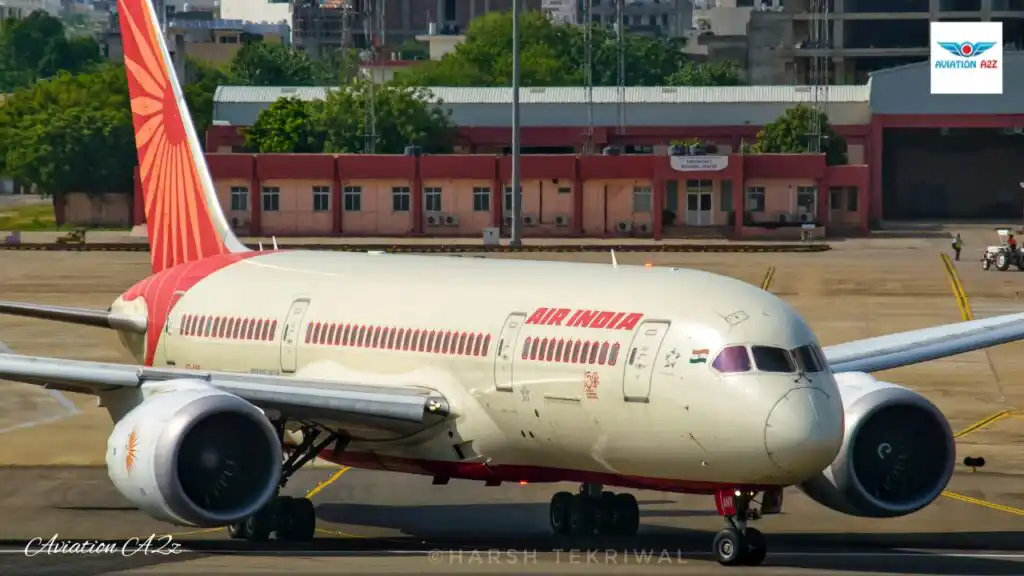
Passengers aboard an Air India Boeing 787-8 Dreamliner experienced a moment of unease on June 1, 2025, as strange door noises rattled the aircraft mid-flight from Delhi (DEL) to Hong Kong (HKG). Though the aircraft landed safely without diversion, the unsettling sounds — described as “shaking and hissing” — drew scrutiny toward the aircraft’s design and ongoing reliability concerns with the Boeing 787 model.
Unnerving Sounds at 35,000 Feet
About an hour after the late-night takeoff at 11:45 PM local time from Indira Gandhi International Airport, passengers noticed abnormal activity near one of the cabin doors. Eyewitness accounts shared on social media described the door as visibly shaking and emitting continuous hissing sounds, indicating a probable pressure anomaly at the seal.
One passenger wrote: “The door started shaking and making noises. It seemed the door seal came off due to air pressure.”
The cabin crew responded with remarkable calm. Flight attendants swiftly approached the affected area, reportedly using paper napkins to plug a visible gap in the door’s seal — an improvisational tactic to muffle the noise. Applying manual pressure against the door frame, they continued to monitor the situation throughout the journey.
Crew Response and In-Flight Assurance
Despite the anxiety among some travelers, Air India’s crew remained professional. They reassured passengers that there was no actual danger, emphasizing that the aircraft doors are pressurized and cannot be opened mid-flight under any circumstances.
The rest of the flight proceeded without any deviation or declared emergency. Upon safe landing at Hong Kong International Airport, Air India’s engineering team conducted a full inspection, finding no breach of airworthiness.
Official Airline Statement: No Compromise to Safety
Air India confirmed the incident and stated that “all standard operating protocols were followed.” The airline reiterated that although the noise was distressing, there was no real threat to passenger safety. The return flight to Delhi operated as scheduled, further validating the aircraft’s integrity after ground assessments.
This event adds to a growing list of door-related anomalies affecting the Boeing 787 fleet worldwide. While it didn’t escalate into an emergency, the implications are broader, considering the Dreamliner’s complex electronic systems and pressure mechanics.
The Mechanics Behind the Door Noise
Aviation specialists explain that plug-type doors on the Boeing 787 are designed to lock into place via cabin pressure. Unlike older aircraft where doors open outward or slide sideways, 787 doors use a system where internal air pressure seals the door shut — meaning it cannot be accidentally opened mid-flight.
However, when there’s a minor leak or seal degradation, air can escape through minuscule gaps, leading to sounds described as hissing, growling, or vibrating. The aircraft cabin is typically pressurized to simulate an altitude of around 6,000 to 8,000 feet, though the actual cruising altitude is closer to 35,000 to 40,000 feet. Any mismatch or wear in the seal creates a pressure differential that can generate these disturbing noises.
Similar Global Incidents on Boeing 787 Aircraft
This is not the first time a Boeing 787 has been at the center of such issues:
- In 2019, a Japan Airlines (JL) Dreamliner had to return to Tokyo Haneda (HND) after crew detected persistent door noises mid-air.
- In 2022, a TUI Airways flight reported similar door seal trouble, with abnormal growling noises resulting in a turnaround.
- The same year, an American Airlines 787 en route to Paris made a precautionary return due to suspected fumes linked to a door seal malfunction.
In each instance, ground inspections showed no structural weaknesses, only minor seal irregularities.
Why the Boeing 787 Remains Under Scrutiny
The Boeing 787, often lauded for its fuel efficiency and composite design, has nonetheless been the subject of ongoing safety evaluations. The aircraft’s composite fuselage and complex electronic systems demand highly precise maintenance standards. Even minor lapses — such as a door seal not properly replaced or cleaned — can result in sensory disturbances for passengers.
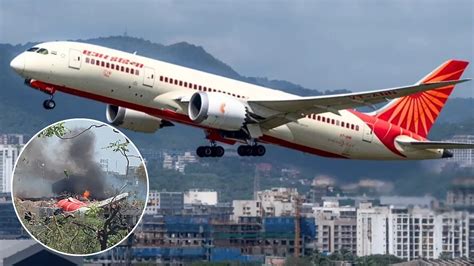
The public perception was further shaken by a recent tragedy in Ahmedabad, where a major Boeing 787 accident claimed 275 lives, though it was not door-related. That incident renewed global attention toward the Dreamliner’s structural integrity and operational reliability.
Aviation Experts Weigh In
According to aviation analysts cited by the Times of India, noises such as those heard on AI’s Delhi-Hong Kong flight typically result from wear-and-tear in the door seal lining, or minute misalignments that occur during repeated pressurization cycles. Though these issues can be unnerving, they do not warrant emergency landings unless accompanied by other warning indicators.
“The cabin pressure on modern jets like the Dreamliner is managed by advanced automation. If a seal degrades but the cabin pressure holds within safe margins, it’s more of an auditory concern than a physical hazard,” one expert noted.
Passenger Safety vs. Public Perception
Although the technical risk remains negligible, public response to such incidents is often magnified by sensory cues — especially in a closed environment like an aircraft at cruising altitude. Shaking doors and loud noises during flight can generate immediate panic, even if the cause is benign.
Airlines thus walk a fine line between engineering reality and passenger comfort. Flight crews are increasingly trained not just in emergency response, but in calming communications that maintain order during unexpected scenarios.
Engineering Review and Preventive Maintenance
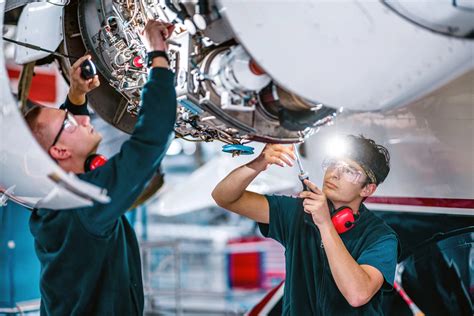
Following the incident, Air India reportedly conducted a full preventive maintenance review of the affected aircraft. This includes:
- Replacing or realigning the door seal gasket
- Reviewing pressure differentials recorded during the flight
- Performing stress tests on the door frame and electronic lock system
The airline has not released the aircraft’s registration number, but it’s believed to be one of the older units in Air India’s Dreamliner fleet, possibly delivered before the carrier’s acquisition by the Tata Group.
The Way Forward for Dreamliner Operations
As carriers continue to modernize fleets and operate longer routes with composite-bodied aircraft, recurring issues like this highlight the need for real-time diagnostics, better predictive maintenance, and proactive communication with passengers.
Boeing is already working with major airlines to roll out software upgrades for 787s, aimed at enhancing seal monitoring and pressurization alerts, ensuring that early signs of wear are detected well before they become audible or visual disturbances.
Conclusion: A Minor Flaw with Major Implications
Though no injury or damage occurred aboard Air India’s Delhi-Hong Kong Dreamliner, the incident underscores a broader reality: modern aviation is a balancing act between mechanical precision and human perception. Even a faint hissing noise, when amplified by altitude and fear, can spark concern far beyond its mechanical root.
The Boeing 787 continues to offer exceptional safety performance by global standards, but incidents like this remind the industry that passenger experience is shaped as much by sensation as by statistics.
Air India’s swift and composed response likely prevented a minor anomaly from becoming a major in-flight disruption. As the industry learns from such moments, passengers can expect quieter — and more reassuring — journeys in the skies ahead.