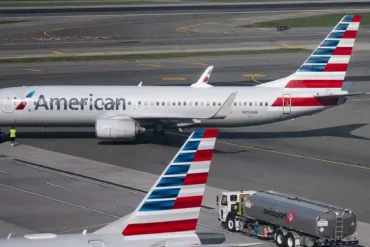
On July 26, 2025, a critical aviation emergency unfolded at Denver International Airport as American Airlines Flight 3023, a Boeing 737 MAX 8, aborted its takeoff amid mechanical failure. The aircraft, scheduled to fly to Miami, suffered a catastrophic landing gear malfunction, prompting an urgent evacuation and igniting renewed concerns over aviation safety standards in the United States.
A Terrifying Incident on the Runway
As the aircraft accelerated for takeoff, passengers noticed smoke billowing from beneath the plane. A tire system failure in the landing gear triggered intense friction and a small fire within the braking mechanism. With 173 passengers and six crew members on board, the situation escalated rapidly.
The cockpit crew reacted decisively, aborting the takeoff and initiating emergency evacuation procedures. Passengers deployed emergency slides and scrambled for safety, some carrying children or trying to retrieve luggage—an act that, according to aviation experts, could have proven deadly had the fire intensified.
Emergency Responders Prevent Catastrophe
Within moments, Denver Fire Department units arrived at the scene. The quick intervention prevented the flames from engulfing the aircraft. One passenger was hospitalized with a minor injury, while five others were treated on-site and released. The aircraft was immediately grounded for a comprehensive mechanical inspection.
The Federal Aviation Administration (FAA) initiated a full investigation, focusing on the failure of the tire and braking system. Their findings are expected to shape policy changes across airline fleets nationwide, reinforcing the seriousness with which this event is being treated.
Part of a Larger Pattern: 2025’s String of Aviation Incidents
This latest scare is only one in a disturbing series of air travel emergencies in 2025:
- March 13, 2025: Flight 1006, a Boeing 737-800 en route from Colorado Springs to Dallas, returned to Denver after engine vibrations signaled impending failure. After landing, the right engine caught fire. All passengers were evacuated, but 12 sustained minor injuries.
- April 15, 2025: Flight 3506, an Airbus A321neo, performed a hard landing in San Juan, Puerto Rico. A tire detached, leading to engine failure. Thanks to quick pilot decision-making, all 230 passengers were unharmed following a go-around and emergency landing.
These incidents highlight a growing mechanical vulnerability across modern fleets and question the reliability of safety protocols and maintenance procedures. The high profile of these events has put tremendous pressure on regulators, airlines, and aircraft manufacturers to act.
Passenger Behavior: A Crucial Variable in Emergency Response
One of the most pressing concerns raised by the Denver incident is the noncompliance of passengers during evacuation. Despite explicit instructions, several travelers attempted to carry personal belongings, causing bottlenecks and risking injury.
In any evacuation scenario, seconds matter. Attempting to retrieve luggage delays escape and increases the danger for others. Aviation authorities have consistently emphasized the importance of passenger awareness and compliance with cabin crew instructions.
FAA Investigations and Regulatory Action
In the aftermath of Flight 3023, the FAA has begun to scrutinize not only the specific aircraft involved but also broader systemic issues. The focus of the investigation includes:
- The manufacturing integrity of the Boeing 737 MAX 8’s landing gear components
- The frequency and scope of routine maintenance inspections
- The training standards for both flight and ground crews in handling tire and braking system emergencies
The FAA has the authority to impose mandatory technical directives, increase maintenance intervals, or even temporarily ground specific aircraft models if systemic defects are found. Its ultimate goal remains ensuring the highest level of air safety across U.S. carriers.
Aviation Industry Under Pressure to Rebuild Trust
As more passengers grow wary of the string of emergencies, airlines are compelled to invest heavily in safety upgrades, staff training, and communication transparency. Flight 3023’s relatively successful outcome—no fatalities and only one hospitalization—provided reassurance that existing safety measures can work effectively when executed correctly.
However, public confidence is fragile. In response, many airlines have initiated their own internal audits, doubling down on inspection protocols and reassessing older aircraft components. The cost of these enhancements is expected to run into the hundreds of millions, but is widely viewed as essential.
What Travelers Must Know About Flight Safety Protocols
As recent events have shown, passenger readiness is as critical as airline preparedness. Passengers are encouraged to:
- Listen carefully to pre-flight safety briefings—even frequent fliers should not tune them out.
- Locate the nearest exits and mentally rehearse the route to safety.
- Avoid bringing luggage during evacuation. Luggage delays escape, damages emergency slides, and can endanger lives.
- Wear appropriate footwear—slip-on shoes or high heels can hinder movement.
- Report concerns immediately, such as smoke, odd noises, or unusual vibrations during boarding or taxiing.
Safety onboard is a shared responsibility, and every traveler plays a role.
Airport and Airline Procedure Overhauls in Progress
In response to 2025’s emergencies, several airports, including Denver International, are evaluating new procedural changes:
- Enhanced pre-takeoff technical inspections, especially focusing on landing gear and braking systems
- Live readiness drills for flight crews and emergency responders
- Real-time passenger briefings delivered digitally via onboard apps
- Upgraded evacuation signage and lighting systems on select aircraft
Some carriers are considering automated warning systems for flight crews that can detect mechanical anomalies before takeoff, leveraging AI and machine learning.
Global Implications and Harmonized Safety Standards
U.S. aviation safety trends often shape global aviation policy. Regulators in Europe, Asia, and the Middle East are closely watching how the FAA responds. A multinational summit is expected later this year, where aviation leaders will discuss:
- Universal emergency response benchmarks
- Better cross-border incident reporting systems
- Alignment on maintenance record transparency among partner airlines
Such initiatives could lead to a global aviation safety treaty, enhancing protections for passengers worldwide and minimizing discrepancies between domestic and international carriers.
Psychological Shifts Among Passengers
Beyond procedures and policies, there’s a growing behavioral change among travelers. Many passengers now research aircraft types and airline safety records before booking. Travel forums are filled with discussions on plane models like the 737 MAX 8, as fliers seek peace of mind.
Insurance providers are also adjusting, offering higher premiums or policy exclusions for flights involving aircraft with a history of technical issues. This could pressure airlines to phase out older planes or upgrade components sooner than previously planned.
A Collective Path Toward Safer Skies
Flight 3023’s emergency landing has become more than an isolated incident—it is a symbolic turning point. It has reminded the industry and public alike that aviation safety cannot be taken for granted, no matter how advanced aircraft become.
From regulatory action and engineering innovation to crew training and passenger education, a multi-layered safety net is essential. Trust in air travel hinges on the assumption that every layer is solid.
As investigations proceed and reforms unfold, the aviation sector must remain transparent, responsive, and committed to excellence. Only through collective vigilance and continuous improvement can air travel retain its status as the safest mode of transportation in the world.
Passengers, regulators, airlines, and manufacturers all have roles to play—and the time to act is now.