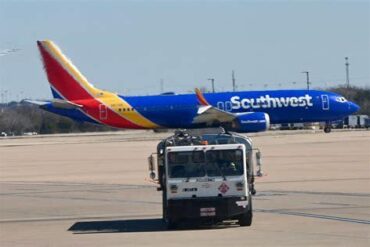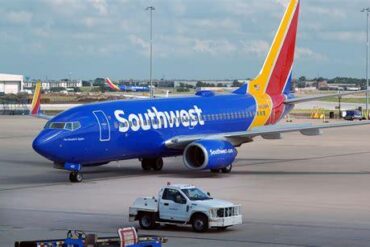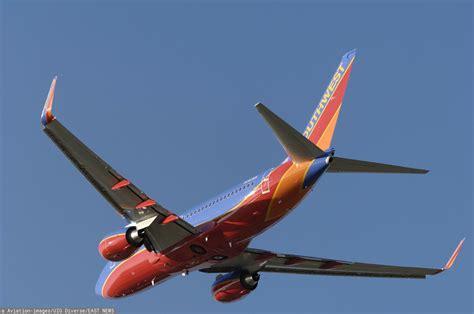
On a routine Friday afternoon flight from Burbank, California to Las Vegas, a harrowing incident aboard Southwest Airlines Flight 1496 triggered widespread concern across the aviation industry. What began as a short hop across the Southwest rapidly descended into chaos when the aircraft was forced to execute a sharp emergency maneuver to avoid a potential midair collision. This near-tragedy not only injured two crew members but also illuminated deep-rooted vulnerabilities in the current air traffic management infrastructure, prompting urgent calls for systemic reform.
A Terrifying Descent That Changed Everything
Shortly after takeoff, as the aircraft climbed to an altitude of 14,100 feet, pilots of Flight 1496 received a Traffic Collision Avoidance System (TCAS) alert—an automated safety system designed to prevent in-air collisions. According to data from Flightradar24, another aircraft had entered dangerously close proximity, with a horizontal distance of just 4.86 miles and a vertical gap of only 350 feet—far below the standard minimum separation.
Responding instantly, the flight crew performed a steep descent of 625 feet, bringing the aircraft down to 13,475 feet in a matter of minutes. Passengers described the sudden drop as a “free-fall” sensation. While no passengers were physically injured, two flight attendants were hurt during the turbulence caused by the abrupt maneuver and required medical assistance upon landing. The flight continued to Las Vegas and landed without further issue, but the Federal Aviation Administration (FAA) immediately launched a full investigation into the incident.
The Sky Is Too Crowded: A Modern Aviation Crisis
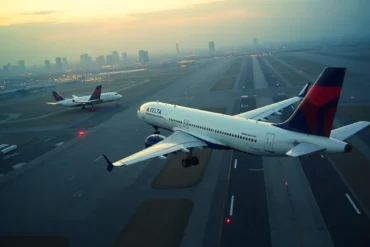
This disturbing event underscores a growing crisis in modern aviation: overcrowded airspace. With global travel rebounding and accelerating post-pandemic, thousands of flights now crisscross the skies simultaneously. The consequence is a dangerously saturated sky, especially around major hubs like Los Angeles, San Francisco, and Las Vegas, where aircraft are constantly entering and exiting controlled airspace.
Despite the implementation of advanced alert systems such as TCAS, the sheer volume of aircraft operating in shared airspace increases the likelihood of near-miss events. Pilots and air traffic controllers must make split-second decisions, relying on a mix of human judgment and technological tools that are increasingly being pushed to their limits.
In many cases, the pressure on these systems results in what experts call “proximity alerts”—situations in which two planes approach within unsafe distances due to delays in communication, outdated radar systems, or insufficient predictive analysis. In the case of Flight 1496, the pilots had just moments to react before a potentially catastrophic collision.
When Tech Isn’t Enough: The Limits of Current Safety Systems
Modern aircraft are equipped with collision-avoidance tools, but current systems are reactive rather than predictive. TCAS, for instance, alerts pilots once a threat is already imminent. While this system proved crucial in the Southwest incident, aviation experts argue that relying solely on reactive technology is no longer adequate in today’s hyper-dynamic airspace.
Compounding this issue is the fragmented nature of global air traffic control systems. While the U.S. has invested in upgrades through the FAA’s NextGen initiative, air traffic control remains a human-intensive operation. Controllers monitor hundreds of flights manually, using radar, voice communication, and flight plans to maintain order. Errors—while rare—can happen, and in congested skies, even the smallest mistake can prove deadly.
The Role of Artificial Intelligence in Preventing Future Incidents
The incident raises crucial questions about the potential role of Artificial Intelligence (AI) in managing flight paths and preventing midair threats. Experts believe that incorporating AI into air traffic systems could dramatically increase response speed and predictive capabilities.
AI could assess millions of variables—weather patterns, flight speeds, altitudes, trajectories—in real-time and generate automated rerouting instructions to aircraft at risk. Unlike TCAS, which warns of current dangers, AI-enhanced systems could predict conflicts before they materialize, allowing both pilots and controllers to make informed decisions well in advance.
Moreover, AI could serve as an augmentation tool for pilots. By continuously analyzing cockpit and flight data, an onboard AI system could advise pilots of the safest maneuvers during emergencies, minimizing panic and maximizing the efficiency of evasive actions.
Autonomous Aviation: Science Fiction or Imminent Reality?
The long-term solution may involve partially or fully autonomous aircraft systems. While the idea of pilotless planes still raises ethical and psychological concerns among passengers, the groundwork for automated decision-making systems is already being laid.
Future aircraft could feature systems capable of real-time autopilot intervention, allowing the plane to autonomously reroute, descend, or adjust altitude when imminent threats are detected. This would provide a valuable fail-safe in situations where human reaction times are insufficient.
Though such technologies are still under development, aviation experts believe hybrid autonomy, where AI supports but does not replace the pilot, could be deployed within the next decade. For now, however, the burden remains on human operators to make life-saving calls under extreme pressure.
Strengthening Human Factors: The Need for Next-Gen Pilot Training
Technology alone cannot safeguard air travel. The Southwest incident proved that pilot intuition and quick judgment were decisive in avoiding a tragedy. Therefore, pilot training must evolve alongside technological innovation.
Contemporary pilot programs must now focus on high-stress simulation training, proximity threat response, and interpretation of AI-generated data. As systems grow more complex, so too must the skillset of the human beings responsible for operating them.
Situational awareness, reaction timing, and seamless communication with air traffic control are no longer optional competencies—they are essential. Moreover, airlines must prioritize crew resource management (CRM) training, which emphasizes teamwork and communication under duress.
The FAA’s Response: Regulation, Reform, and Responsibility
In response to the near-miss, the FAA has launched an investigation into the incident, focusing on the timeline of the alerts, the proximity data, and the coordination between air traffic control and the flight crew. Preliminary findings are expected within weeks, and experts anticipate a review of separation standards, particularly in high-traffic airspaces such as the West Coast corridor.
The FAA may also mandate enhanced TCAS protocols, stricter flight path deconfliction procedures, or increased surveillance over air corridors with high congestion metrics. This could include a push toward NextGen upgrades—an initiative to modernize the national airspace system through satellite-based tracking and real-time digital communication.
A Wake-Up Call for the Aviation Industry
What happened aboard Flight 1496 wasn’t an isolated glitch—it was a symptom of deeper structural issues. As more flights enter the airspace, incidents like this one may become more common unless urgent action is taken.
The aviation industry must now grapple with key questions:
- How can technology be better leveraged to support human decision-making?
- What protocols are in place for emergency evasive maneuvers, and are they sufficient?
- Is the FAA’s current system of manual air traffic control sustainable for the future?
These aren’t rhetorical questions—they demand answers. And those answers must come through a combination of technological advancement, policy reform, and enhanced human training.
Looking Ahead: Building a Safer Sky
While Flight 1496 landed without fatalities, the message is clear: the current air travel infrastructure is under enormous pressure. If the industry continues to rely on systems designed for a past era, future incidents could result in far more severe consequences.
To prevent disaster, airlines, regulators, and tech developers must collaborate on implementing a multi-layered safety framework—one that balances cutting-edge automation with seasoned human judgment. Only then can we restore public confidence and ensure that a simple flight from California to Las Vegas doesn’t turn into a nightmare scenario.
As the FAA investigation unfolds and reforms take shape, Flight 1496 will likely be remembered not for what happened, but for what didn’t: a tragedy averted by a narrow margin, and a powerful reminder that the future of aviation hangs not just in the skies, but in our ability to adapt to them.