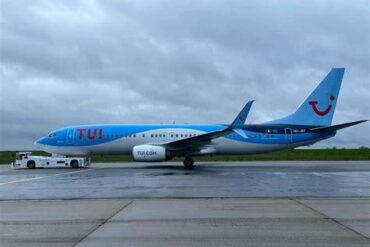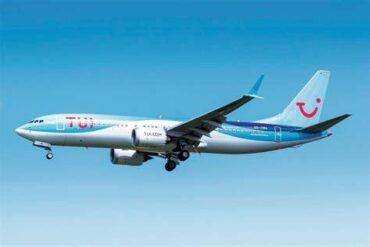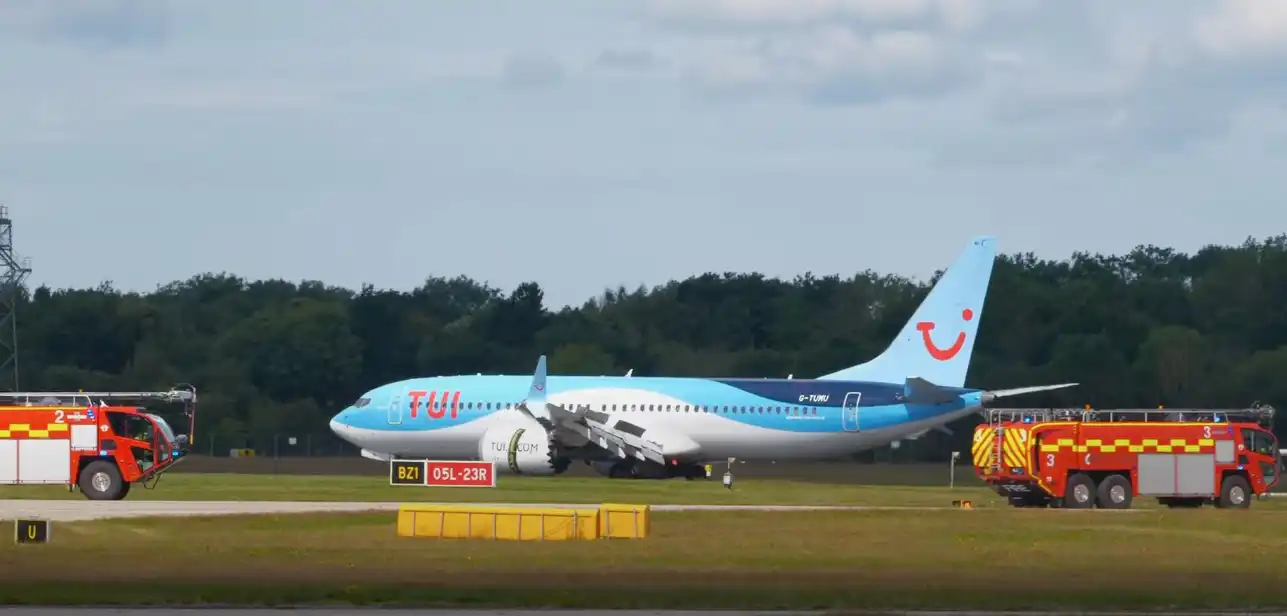
Chaos erupted at Manchester Airport on the morning of July 3, 2025, when TUI Airways flight BY366, operated by a Boeing 737 MAX 8, was forced into an emergency return less than an hour after takeoff. The incident, now under intense scrutiny, has rippled through the aviation industry, highlighting ongoing safety concerns, operational strain, and the fragility of Europe’s summer travel infrastructure.
Sudden Emergency Return Shocks Passengers and Airport Crew
The drama began shortly after 09:37 BST, when the aircraft, registered as G-TUMU, lifted off from runway 23L, destined for Rabil, Cape Verde. What was supposed to be a routine flight to a sun-drenched holiday destination swiftly turned into a high-alert situation. Roughly thirty minutes into the journey, while cruising at 29,000 feet, the aircraft made a sudden reversal, initiating an unscheduled return to Manchester.
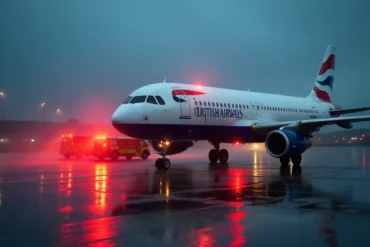
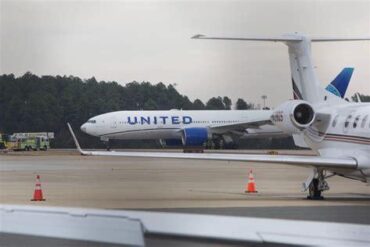
Upon final approach, the aircraft touched down safely on runway 23R. However, the tense atmosphere escalated when fire trucks and emergency response vehicles immediately surrounded the jet. Their mission: to assess and contain a potential hot brakes situation, which can lead to serious complications if not immediately addressed.
Hot brakes occur when excessive heat builds up within the aircraft’s braking system—often during takeoff or abnormal braking sequences—and if left unchecked, can compromise the landing gear integrity, potentially spark fires, or even escalate into inflight mechanical failures.
TUI and Boeing Under Renewed Scrutiny
While no injuries were reported, the incident cast a sharp spotlight back onto the Boeing 737 MAX series, a fleet already carrying a troubled legacy following its global grounding in 2019. The MAX 8, in particular, has been the subject of intense regulatory and public attention. Though the exact cause of the overheating remains under investigation, any operational glitch involving this model draws immediate industry-wide attention.
TUI Airways, a major player in Europe’s leisure aviation sector, now faces growing scrutiny. With a business model built around low-cost, high-volume tourist travel, the airline must now juggle fleet reliability, maintenance transparency, and customer reassurance—a trifecta of concerns that demand rapid and credible responses.
Summer Travel in Jeopardy Amid Operational Strain
This incident could not have come at a more critical time. Manchester Airport is experiencing one of its busiest seasons post-pandemic, with millions of travelers passing through its terminals, spurred by rebounding travel demand and renewed tourism confidence across the UK and Europe.
Yet, the aviation infrastructure is operating on a razor’s edge. Airlines and airports alike face persistent staffing shortages, logistical backlogs, and increased airspace congestion. One grounded aircraft, especially a short-to-mid haul workhorse like the 737 MAX 8, can send shockwaves across daily operations. Flights may be delayed or cancelled, backup aircraft repositioned, and schedules disrupted—all of which degrade the traveler experience.
Emotional Fallout and Passenger Trust
The sight of emergency crews flanking a commercial jet is not something passengers soon forget. For those aboard flight BY366, the event likely transformed a leisurely holiday departure into an unsettling ordeal. Though the aircraft landed safely and all 189 passengers were unharmed, the emotional toll—a mixture of confusion, fear, and frustration—was palpable.
Passenger accounts reflect a journey abruptly cut short, with minimal communication mid-air and rising anxiety as fire trucks moved into position upon landing. Social media channels quickly filled with images and reactions, amplifying the incident far beyond the tarmac.
For TUI and other airlines operating the MAX 8, this presents a dual challenge: not only must they ensure technical reliability, but they must also engage in strategic communication to restore and sustain customer confidence. Transparency and rapid updates are no longer optional—they’re essential.
Aviation Safety: The Industry’s Unyielding Priority
Though incidents like hot brakes are not uncommon, they always merit serious attention. The cause could range from a hydraulic system anomaly, excessive brake application during the climb-out phase, or underlying maintenance oversights. The MAX 8’s reputation makes even minor issues seem major in public perception.
Manchester Airport’s rapid deployment of emergency services reflects the robust safety culture embedded within the UK’s aviation system. Regulations require immediate response to any thermal anomaly in the braking system, ensuring passenger and crew safety remains paramount.
However, while technical protocols were followed precisely, perception lags reality. Public confidence, once shaken, is slow to recover. For an aircraft model with past tragedies linked to flight control systems, even tangential malfunctions stir up intense concern.
Broader Impacts: Tourism, Markets, and Regional Economics
Beyond immediate safety and operational concerns, the ripple effects are already being felt in the broader travel and tourism ecosystem. Cape Verde, the intended destination, is a rising jewel in the European holiday market, attracting thousands of visitors from the UK and Germany. Interruptions in direct flight access to these growing holiday hotspots can negatively affect local tourism revenue, hotel bookings, and seasonal employment.
On a corporate level, airline stock prices—particularly those heavily dependent on the MAX series—can be sensitive to any report of malfunction. TUI, balancing its dual roles as a travel operator and fleet manager, walks a tightrope. Even isolated operational hiccups may influence investor sentiment and provoke overreactions in financial markets.
Regulators and aviation authorities across Europe will likely pay close attention. While this incident alone may not trigger formal investigations, repeated technical anomalies across the MAX fleet—or delays in root-cause identification—could reignite regulatory interventions or additional aircraft inspections.
Flight BY366: Anatomy of the Incident
Here’s a precise timeline based on available flight and ATC data:
- 09:37 BST – BY366 departs Manchester runway 23L
- Approx. 10:05 BST – Aircraft begins return maneuver at cruising altitude
- 10:35 BST – Touches down safely on runway 23R
- 10:38 BST – Surrounded by emergency services
- 10:45 BST – Towed to stand with fire escort
Flight monitoring systems such as Flightradar24 noted a brief altitude hold before descent, a standard move when pilots assess flight status and coordinate with ATC for return. No communication indicating Mayday or PAN (priority emergency) was logged, suggesting the issue was urgent but not catastrophic.
A Cautionary Tale for the Peak Travel Season
This incident crystallizes several persistent challenges: aging aircraft fleets, public trust in Boeing’s engineering integrity, and the fragility of airline schedules during demand surges. As Europe barrels into what’s predicted to be a record-breaking travel season, even isolated mechanical faults can send tremors throughout the system.
For airlines, the task is twofold: prevent mechanical incidents through rigorous maintenance and pre-flight checks, and communicate decisively with travelers when disruptions occur. For passengers, the imperative is clear—travel insurance, real-time alerts, and mental preparedness are now essentials, not luxuries.
Ultimately, the safe landing of flight BY366 is a victory for aviation safety protocols. Yet it also serves as a powerful reminder that aviation, even in its most routine form, is an intricate ballet of engineering, logistics, and human trust.
The skies are open, but as Manchester has shown, they’re never without risk.