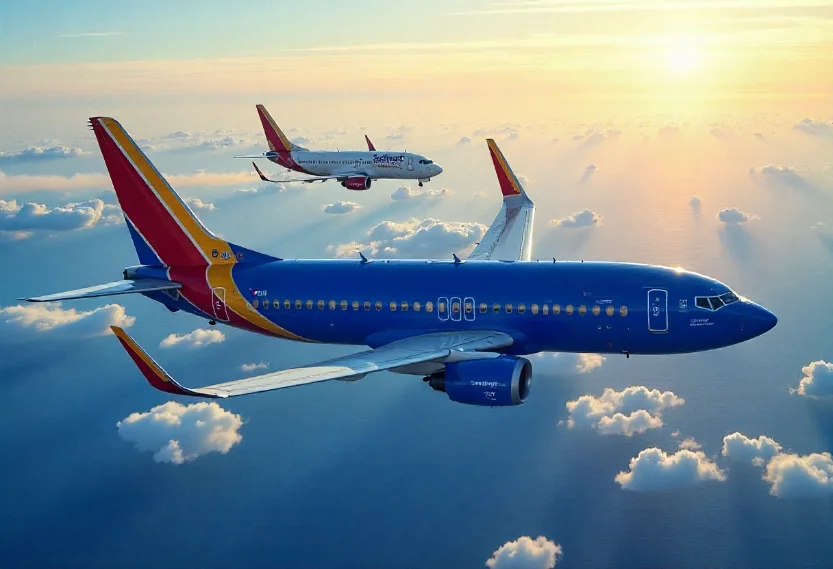
On a fateful Tuesday morning, Southwest Airlines Flight 1496 experienced a harrowing incident that sent shockwaves through the aviation community and left passengers grappling with fear. The flight, which was en route from Hollywood Burbank Airport to Las Vegas, plunged dramatically for a terrifying five minutes after a warning alerted the pilot about another aircraft in proximity. This near miss not only rattled those on board but also has sparked a broader conversation about aviation safety standards and protocols in light of increasing air traffic.
As the Boeing 737 took off, the atmosphere in the cabin was typical for a flight heading to a popular destination. Passengers were settled in, some engrossed in their devices, while others were looking forward to the trip ahead. However, this tranquility was abruptly shattered as the plane encountered a situation that could have turned catastrophic. Caitlin Burdi, one of the passengers, vividly recounted the moment of panic, stating, “We really did think we were nosediving into a plane crash.” The sheer terror of those moments was palpable as the aircraft descended sharply, sending a wave of anxiety rippling through the cabin.
The drama unfolded as the pilot received an onboard warning regarding the nearby aircraft. According to the Federal Aviation Administration (FAA), the swift reaction of the crew was crucial in averting disaster. The flight was responding to two separate alerts from the cabin pressurization alert system, prompting the pilot to execute an emergency climb followed by a rapid descent. Thankfully, despite the tense moments, the aircraft landed safely in Las Vegas, albeit with shaken passengers who had just escaped what could have been a tragic accident.
The implications of this incident are far-reaching. Aviation experts are now scrutinizing the effectiveness of existing air traffic management systems, especially in light of a recent increase in air travel. With the skies becoming increasingly crowded, the need for improved safety measures has never been more pressing. The FAA’s ongoing investigation seeks to ascertain whether the warning systems functioned correctly and if there were lapses in communication between air traffic control and the pilots.
The close encounter involving Southwest Airlines Flight 1496 raises serious questions about the broader landscape of air safety. Just last summer, a collision in Washington, D.C., tragically claimed the lives of 67 people, highlighting the urgent need for robust safety protocols. As air traffic surges globally, the aviation industry finds itself at a crossroads, where the demand for efficiency must be balanced with uncompromising safety standards.
In the aftermath of this near miss, American Airlines Flight 3023, which was also involved in the incident, had its own set of challenges. The aircraft, which had already faced mechanical issues during its first attempted takeoff, encountered further complications. A spokesman for Imam Khomeini International Airport confirmed that the American Airlines flight was evacuated without incident, and the passengers were subsequently accommodated on a new flight to Miami. The airline expressed gratitude toward its crew for their professionalism and extended apologies to passengers for the inconvenience.
As investigations continue, the aviation community is bracing itself for an examination of current safety protocols. The FAA is expected to release detailed findings regarding how these two flights came perilously close to colliding in midair. With many questions left unanswered, the focus remains on ensuring that such incidents do not repeat in the future.
The aviation industry must confront the reality that incidents like the one involving Southwest Airlines Flight 1496 are not isolated events. They serve as stark reminders of the potential dangers of flying and the critical importance of stringent safety measures. The collaboration between airlines, regulatory bodies, and air traffic control is essential to enhance safety protocols and ensure that every flight operates without incident.
The implications of this incident stretch beyond mere statistics; they resonate deeply within the hearts of those who travel. Each passenger entrusts their life to the systems in place, believing that their safety is paramount. Therefore, as the FAA delves into this incident, the call for action is clear: a commitment to refining safety measures is not just necessary—it is imperative.
In conclusion, the Southwest Airlines episode serves as a poignant reminder of the persistent perils associated with air travel. It underscores the urgent need for continuous vigilance in air safety protocols and the necessity for airlines and regulatory agencies to work collaboratively to prevent similar occurrences. As the industry evolves, the focus must remain on protecting the safety and well-being of every passenger and crew member, ensuring that the skies remain safe for all.