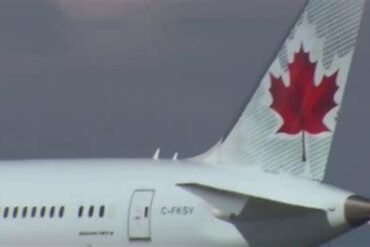
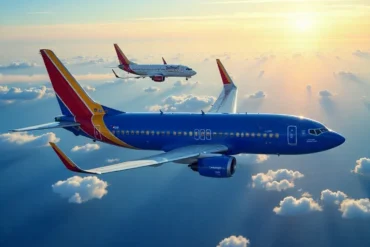
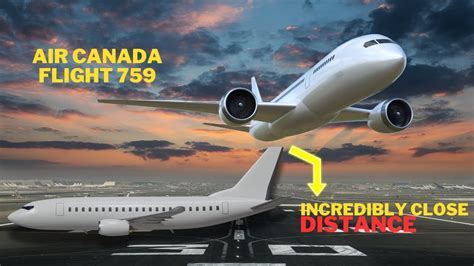
On the night of July 7, 2017, an event unfolded at San Francisco International Airport (SFO) that would later be described as one of the closest calls in commercial aviation history. Air Canada Flight 759, an Airbus A320-200 en route from Toronto, was on final approach to what the crew believed was Runway 28R. In reality, the aircraft was descending toward Taxiway C, where four fully loaded passenger jets were waiting in line for takeoff. The potential catastrophe was averted at the last moment — but the near miss rattled the entire aviation industry, prompting sweeping introspection and reform.
The National Transportation Safety Board (NTSB) labeled the incident as having the potential for the worst aviation accident in history. With hundreds of lives at stake, a combination of pilot misjudgment, insufficient rest, and systemic surveillance weaknesses were all thrust under scrutiny.
The Anatomy of a Near Catastrophe
The crew of Air Canada 759 had mistakenly aligned their aircraft with Taxiway C, misled by the unusual runway lighting situation at the airport that night. Runway 28L was closed and its lights were turned off, while the lights on Taxiway C remained on and deceptively similar to those on a runway. Compounding the issue was the crew’s inability to reach air traffic control for confirmation, due in part to radio frequency congestion.
In the final seconds, as the aircraft passed less than 60 feet above a United Airlines 787 and within feet of three other aircraft, a United pilot alerted the tower. Air traffic control immediately ordered the Air Canada crew to go around. Disaster was narrowly avoided, but the questions raised in its aftermath would linger for years.
Pilot Fatigue: A Silent Risk Factor
One of the central factors scrutinized was pilot fatigue. The NTSB revealed that the captain of Flight 759 had been awake for over 19 hours at the time of the incident. While legally compliant with Canadian duty-time regulations, such prolonged wakefulness dramatically reduces cognitive ability, mimicking blood alcohol levels of 0.05% or higher. The first officer had flown the majority of the trip, but the fatigued captain was responsible for the landing.
Canadian fatigue rules at the time were far more lenient than those in the U.S. and the European Union. The incident served as a catalyst for the Canadian government and Transport Canada to finally reform pilot rest policies, which were seen as outdated and vulnerable to operational abuse.
Ground Surveillance Blind Spots
Perhaps even more alarming than pilot error was the revelation of serious surveillance gaps at SFO. Although the airport was equipped with ASDE-X — a ground radar system designed to alert controllers to runway incursions — the system had a critical flaw. It was not configured to detect aircraft on final approach mistakenly targeting a taxiway instead of a runway.
The NTSB criticized both the FAA and SFO’s operational configurations. Since the incident, airports across the U.S. have re-evaluated ASDE-X parameters, and airports such as SFO have implemented software patches and procedural changes to detect and prevent similar misalignments in the future. Still, critics argue these measures came dangerously late.
Pilot Training Standards Under Fire
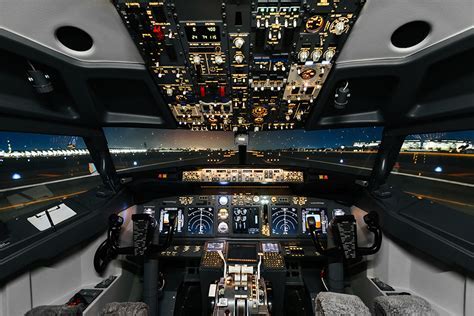
The incident also raised sharp questions about training procedures for rare but high-risk situations. Pilots undergo simulator training for a variety of emergencies — engine failures, bird strikes, hydraulic loss — but visual approaches at night with atypical lighting configurations are not always covered in depth. Flight 759 was cleared for a visual approach, not an instrument one, a decision made by both the controller and accepted by the crew.
Post-incident reports revealed that Air Canada had no mandatory simulator scenario replicating a night visual approach into SFO with one runway closed and taxiways fully lit. In response, both Air Canada and other international carriers have incorporated more contextual situational awareness training into their curriculums.
Regulatory Inertia and International Misalignment
The divide between U.S. and Canadian aviation regulation became a point of contention. While the FAA has long mandated stringent rest periods and recurrent training scenarios, Canada had lagged behind. The Flight 759 near-miss made it impossible to ignore the regulatory asymmetry.
In the months following the incident, Transport Canada launched a review of its fatigue management systems, ultimately culminating in a new set of rules that came into force in 2020. These rules introduced flight duty period limits based on time of day, and fatigue risk management systems (FRMS) for airlines with more complex schedules.
However, adoption remains uneven. While large carriers like Air Canada and WestJet have integrated the new standards, smaller regional airlines have been given extensions, raising concerns about uniform enforcement.
ATC Communications: The Congestion Crisis
Another dimension of the incident was the communication overload at SFO Tower. During the approach of Flight 759, controllers were engaged in multiple simultaneous conversations — some of them non-urgent — on the same frequency. This made it nearly impossible for the Air Canada pilots to reach the tower and confirm the position of their intended runway.
This communication congestion is not unique to SFO. Major airports across the globe face similar issues, and aviation safety experts are calling for modernization of radio protocols. Ideas under consideration include:
- Dedicated approach frequencies for congested hours
- Voice recognition assistance to monitor radio traffic
- AI-powered filtering systems to highlight critical transmissions
Lessons Unlearned from History
What makes the Air Canada 759 incident especially disturbing is that similar mistakes have occurred in the past — and were not properly heeded. In 2006, a Comair CRJ-100 attempted to take off from the wrong runway in Lexington, Kentucky, killing 49 people. In 2000, a Singapore Airlines 747 crashed in Taiwan during takeoff on a closed runway, killing 83.
Despite these tragedies, the structural factors that led to the Air Canada incident — poor lighting cues, controller overload, surveillance gaps, and pilot fatigue — had not been adequately addressed. This incident served as an inflection point, reigniting calls for proactive, rather than reactive, aviation safety culture.
Public Trust and Industry Transparency
Air Canada faced heavy public criticism for its lack of immediate transparency following the incident. It took days for a full account to emerge, largely due to independent investigations rather than corporate disclosures. In contrast, United Airlines’ pilots were hailed for their role in preventing the accident, further amplifying scrutiny of Air Canada’s internal procedures.
In the wake of the event, Air Canada has overhauled internal reporting systems, encouraging more immediate communication between cockpit crews and operations control when unusual incidents occur. The airline also expanded its threat and error management (TEM) training, empowering pilots to identify latent risks before they materialize.
Where the Industry Stands Now
Since the 2017 scare, the aviation industry has implemented several key changes, including:
- Recalibration of ASDE-X and similar ground surveillance systems to detect taxiway landings
- Introduction of fatigue risk models based on scientific research rather than legacy duty-time tables
- Simulator updates that include abnormal lighting environments and closed-runway scenarios
- Improved cross-border regulatory alignment between the FAA and Transport Canada
However, experts warn that progress must not breed complacency. With increasing air traffic, the margin for error is shrinking. The Flight 759 incident remains a powerful reminder that even the smallest oversight can have potentially catastrophic consequences.
Conclusion: A Wake-Up Call, Not Just a Lucky Escape
Air Canada Flight 759 was not just a near miss — it was a systemic alarm bell. From cockpit fatigue to flawed airport surveillance systems, from regulatory inertia to communication breakdowns, the incident exposed a mosaic of vulnerabilities that demanded immediate correction. That no lives were lost was not due to foolproof systems, but sheer luck and a vigilant United Airlines pilot who spoke up in time.
The aviation industry has responded, but whether these reforms are enough — or whether they will endure beyond the news cycle — remains to be seen. Flight 759 should be remembered not as a miracle, but as a mandate: Safety must never rest on luck.