The escalating standoff between the United States and Canada over aircraft certification has moved beyond trade friction and into the sensitive heart of global aviation safety. What began as a dispute over regulatory timelines for new Gulfstream business jets has rapidly evolved into a political confrontation with implications far wider than tariffs or market access. At stake is the fragile international trust system that allows aircraft certified in one country to operate safely across the world.
President Donald Trump’s threat to decertify Canadian-made aircraft and impose a 50% tariff on planes built north of the border sent shockwaves through the aviation industry. The Federal Aviation Administration’s public alignment with this position intensified those concerns, raising an uncomfortable question: can global aviation safety standards remain intact when certification decisions are pulled into geopolitical combat?
Aviation safety depends on predictability, consistency, and technical rigor. Aircraft certification is deliberately insulated from politics because even the perception of political interference can undermine confidence among regulators, manufacturers, airlines, and passengers. Once that confidence fractures, the consequences ripple across borders, fleets, and economies.
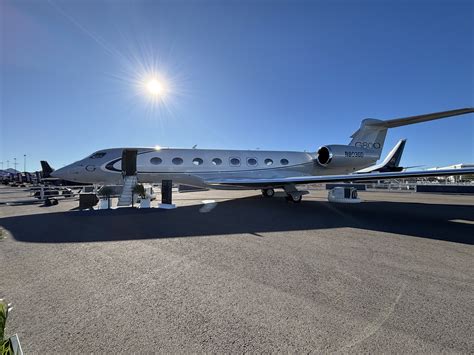
The immediate trigger for the dispute lies in Canada’s delay in validating the FAA certification of the Gulfstream G700 and G800, two long-range business jets positioned at the high end of the market. While the FAA approved both aircraft last year, Transport Canada has yet to grant validation, citing unresolved technical concerns. What might normally be a routine regulatory disagreement has instead become a flashpoint in a broader trade confrontation.
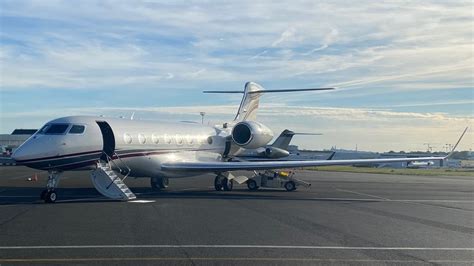
At the center of the controversy is fuel-system icing, a known but complex engineering challenge. At high altitudes, dissolved water in jet fuel can freeze, forming ice crystals capable of obstructing fuel lines or filters. In extreme cases, this can lead to power loss or engine failure. The FAA acknowledged this risk during certification but granted Gulfstream a temporary exemption, allowing deliveries to proceed while full-scale icing tests continue through 2026.
Transport Canada has taken a firmer stance. Canadian regulators argue that the country’s colder operating environment demands stricter proof that the fuel system performs safely under worst-case conditions. Rather than accepting exemptions, they have required physical testing to validate performance when fuel systems are saturated with water and exposed to freezing temperatures. From a purely technical standpoint, this position aligns with Canada’s historical emphasis on conservative certification standards.
Supporters of the Trump administration argue that Canada is exploiting the validation process to protect Bombardier, its domestic aircraft manufacturer and a direct competitor in the business jet market. Critics counter that Transport Canada is doing precisely what aviation authorities are supposed to do: independently verify safety claims before approving aircraft for their registry. The disagreement itself is not unusual; what is unusual is the political escalation surrounding it.
The FAA’s intervention has proven especially controversial. Speaking at the Changi Aviation Summit in Singapore, FAA Administrator Bryan Bedford stated that the agency expects other regulators to accept FAA certifications and questioned whether U.S. products are receiving equal regulatory resources abroad. While framed as a call for fairness, the remarks landed poorly among international regulators already sensitive to perceptions of U.S. political pressure.
Global aviation certification rests on bilateral and multilateral agreements designed to avoid redundant testing while preserving safety oversight. The FAA, the European Union Aviation Safety Agency, and Transport Canada form the backbone of this system. Each authority conducts primary certification for domestic manufacturers, while others validate those findings through agreed procedures. The system works because it is grounded in mutual trust and technical independence, not coercion.
That trust was badly damaged after the Boeing 737 MAX disasters, when investigations revealed shortcomings in FAA oversight and excessive reliance on manufacturer self-certification. Since then, regulators worldwide have been more cautious, more skeptical, and less willing to rubber-stamp approvals. In this context, Canada’s insistence on additional testing looks less like obstruction and more like institutional learning.
Trump’s threat to decertify Canadian-built aircraft operating in the United States crossed a line that alarmed even seasoned industry observers. More than 5,000 Canadian-made aircraft currently fly in U.S. airspace, forming the backbone of many regional airline networks. Sudden decertification would ground fleets overnight, trigger mass cancellations, and destabilize an already fragile travel sector. White House officials quickly walked back the idea, limiting any action to future certifications, but the damage was done.
The mere suggestion that safety certification could be weaponized for trade leverage undermines the foundational principle that safety decisions are apolitical. If regulators begin to fear retaliation for unfavorable technical findings, the incentive structure shifts dangerously. Safety margins erode not because engineers are careless, but because institutions are pressured to compromise.
Manufacturers are caught in the middle. Gulfstream argues that the G700 and G800 fuel systems are evolutionarily similar to earlier models that have accumulated over 750,000 flight hours without serious incident. From an engineering perspective, that track record matters. From a regulatory perspective, precedent does not replace proof, especially when new performance envelopes and operating profiles are involved.
The economic dimensions further complicate the picture. Bombardier employs thousands of workers in the United States and relies on an extensive American supplier network. Punitive measures against Canadian aircraft would inevitably harm U.S. jobs and businesses, contradicting the administration’s stated industrial priorities. History offers a cautionary tale: the earlier tariff battle over the Bombardier C Series ended with Airbus acquiring the program and rebranding it as the A220, an outcome that reshaped the competitive landscape in ways few policymakers anticipated.
What emerges from this episode is a stark reminder of how delicate the global aviation ecosystem really is. Certification is not merely a bureaucratic hurdle; it is the invisible architecture that keeps millions of passengers safe every day. Once politics intrudes, that architecture weakens.
The likely outcome is de-escalation rather than rupture. Legal constraints make broad decertification improbable, and the economic fallout of sustained conflict would be severe for both countries. Transport Canada is unlikely to abandon its testing requirements, and the FAA is unlikely to formally revoke its exemptions without new data. Behind closed doors, technical teams will continue the slow, methodical work of resolving the fuel-icing issue.
Yet the precedent lingers. The episode has introduced uncertainty into a system that depends on stability. International regulators will watch future FAA decisions more closely, not out of hostility, but out of caution. Trust, once questioned, takes time to rebuild.
Global aviation safety standards are resilient, forged through decades of cooperation and hard-earned lessons. They can withstand political noise, but only if regulators reaffirm their independence and recommit to evidence-based decision-making. The real risk is not that one aircraft will be delayed, but that the world forgets why safety certification was separated from politics in the first place.