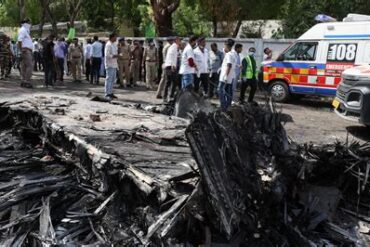
India has embarked on a transformative journey alongside the United States, Myanmar, Kazakhstan, and South Korea to revamp its aviation sector, spurred by a series of tragic air incidents that have shaken public trust. In the wake of the devastating Air India crash in Ahmedabad, which claimed numerous lives, including a former Chief Minister of Gujarat, the Indian government is compelled to confront pressing safety issues within its aviation framework. This collaboration signifies a concerted effort among nations to enhance flight safety protocols, ensuring that the skies are safer for all travelers.
The recent Air India disaster, occurring shortly after takeoff on June 12, has triggered a nationwide examination of aviation safety standards. The Civil Aviation Ministry has responded with urgency, launching a comprehensive review of airline safety protocols and operational readiness across India. This initiative not only addresses the immediate concerns raised by the tragedy but also marks a pivotal moment in the evolution of Indian aviation—a commitment to accountability and enhanced passenger safety.
In a high-level virtual meeting led by Civil Aviation Minister K Rammohan Naidu, airport directors from various regions were convened to discuss critical action points aimed at improving ground-level preparedness and passenger facilitation. The ministry’s primary objective is to strengthen the entire air travel system amid rising pressures from aircraft shortages and geopolitical airspace closures. Monitoring is now more stringent than ever, focusing on ground services, airport logistics, wildlife hazard control, and airline response times. This systemic overhaul aims to foster a safer and more efficient air travel environment, resilient against both human errors and global uncertainties.
As Air India grapples with fleet constraints and complex scheduling challenges, it has initiated a temporary scale-down of operations. The airline faces a confluence of factors, including Europe’s night flying restrictions, the Middle East’s volatile airspace, and intensified safety audits. Consequently, this restructuring entails cancellations, rebookings, and altered schedules in the upcoming days. Affected passengers will be offered full refunds or alternative routes, while the ministry has mandated Air India to enhance communication transparency and ground support coordination. This operational reshuffle reflects the broader strain on aircraft availability as Indian airlines navigate unprecedented challenges in the global aviation landscape.
For travelers, the urgency of improving the overall experience is paramount. The ministry has ordered that essential amenities, such as food, water, and seating, be readily accessible during delays, particularly in congested hubs like Mumbai, Delhi, Bengaluru, and Hyderabad. With the aim of preventing passenger dissatisfaction, airports must deploy additional personnel at critical touchpoints to address grievances swiftly and empathetically. The recent history of long queues and inadequate updates has prompted authorities to act decisively to avert further discontent among travelers. Airlines have also been instructed to enhance their customer service training, ensuring that frontline staff are equipped to respond effectively and emotionally during crisis situations.
Safety has now taken center stage in the national dialogue surrounding aviation. Following the Ahmedabad tragedy, the Aircraft Accident Investigation Bureau (AAIB) has launched a formal inquiry, with the retrieval of black box data already underway. However, the ministry is not waiting for the investigation results to take action. There is an intensified focus on wildlife hazard management to mitigate risks posed by birds and stray animals near runways—historically a vulnerability for Indian airports. All airports are now under heightened scrutiny; any safety oversights will no longer be tolerated.
Beyond Air India, the entire airline industry is under a microscope. SpiceJet, IndiGo, and Akasa Air have all come under review, with the aviation ministry conducting meetings with senior management to discuss fleet performance, passenger experience, and communication strategies. Airlines are advised to prepare for potential turbulence due to scheduling pressures, weather-related disruptions, and an increasingly informed traveler demographic. Maintaining consistent service standards amidst these dynamic conditions is crucial for preserving passenger trust. Given India’s burgeoning middle class and rapid urbanization, air travel has become essential for domestic mobility, making the prioritization of safety and service quality imperative.
Geopolitical tensions further complicate the aviation landscape. The ministry has acknowledged that recent developments in the Middle East, alongside the European Union’s night flight restrictions, have profoundly impacted Indian carriers. The rerouting of flight paths, longer travel times, and escalating fuel costs are compounding logistical hurdles. As global airspace tightens and international flight routes grow increasingly volatile, Indian aviation must embrace resilience-first operations. Airlines may need to revisit their fleet acquisition strategies, pilot rotations, and layover planning to ensure adaptability in a changing environment. Travelers are encouraged to stay informed about airline announcements, as route changes and departure windows may shift unexpectedly due to these evolving dynamics.
The implications of this aviation shake-up extend far beyond the confines of airports. Tourism operators, hotel chains, and event organizers are preparing for shifts in travel behavior. With safety now at the forefront of travelers’ minds, there may be alterations in destination preferences, travel times, and even carrier selections. For international tourists arriving from Europe, Canada, and the U.S., India’s commitment to transparency and enhanced passenger care could serve as a reassuring signal. However, the success of this initiative will hinge on the ability to deliver on these promises, ultimately shaping the pace of recovery and growth in an increasingly competitive global travel market.
In conclusion, the recent events represent a watershed moment for Indian aviation. The tragic Air India crash served as a catalyst for change, propelling the industry toward stronger safety measures, improved service quality, and sustained oversight. The Civil Aviation Ministry has conveyed that the era of fragmented responses is over, and the coming months will test the resilience and efficacy of India’s aviation system like never before. For every flyer, whether domestic or international, this transformation signals a commitment to a safer and more transparent future in the skies.