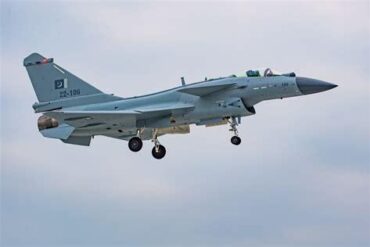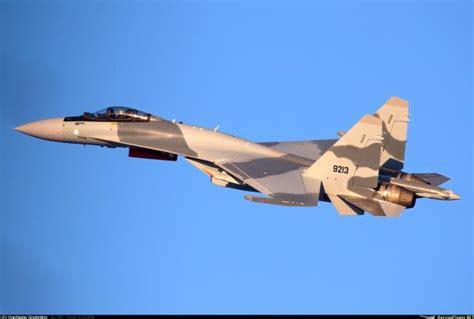
After the dust settled on the brutal 12-day conflict between Israel and Iran, the strategic consequences are coming into focus. Iran, reeling from a sophisticated aerial assault that gutted key infrastructure and exposed deep vulnerabilities in its air defense, is now aggressively exploring options to modernize its decrepit fighter fleet. At the center of this rearmament effort stands a complex geopolitical and technological triangle: China’s J-10C Vigorous Dragon, Russia’s Su-35 Flanker-E, and Iran’s battered air force—a force largely stuck in the Cold War era.
The war, which began on June 13, 2025, with Israeli pre-emptive strikes that assassinated high-ranking Iranian military leaders and nuclear scientists, saw massive retaliations from Tehran, including a series of ballistic missile launches. But the overwhelming air superiority demonstrated by Israel Defense Forces (IDF) left the Iranian Air Force largely impotent. Despite Iran’s prowess in drone warfare and missile systems, its fighter jets—primarily aging American F-14 Tomcats—were no match for Israel’s F-15s, F-16s, and F-35I Adirs.
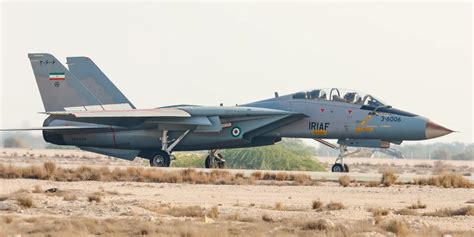
Several F-14s were reportedly destroyed or rendered inoperable during the Israeli air campaign. Their inability to intercept or deter the heavy wave of Israeli and American aerial operations, including the devastating U.S. bunker buster strikes on Iran’s nuclear facilities on June 21, underscored Tehran’s need for a modernized fighter fleet.
Iran’s Strategic Pivot Toward China: J-10C Enters the Equation
On June 26, just a day after the ceasefire took hold, Iranian Defense Minister Aziz Nasirzadeh visited China to attend the Shanghai Cooperation Organization (SCO) defense ministers’ meeting. This diplomatic engagement, coming on the heels of military devastation, was widely interpreted as more than symbolic. It was likely part of a procurement mission. Nasirzadeh was hosted aboard the PLA Navy’s Type 052D destroyer Kaifeng by Chinese Defense Minister Dong Jun, further underscoring the high-level nature of this interaction.
Iran’s request for military hardware support, particularly in the fighter aircraft domain, is believed to include the J-10C, a highly capable 4.5-generation multirole fighter. According to leaks from insiders close to Iran’s defense procurement network, the cost, delivery timelines, and even technology transfer terms were on the table.
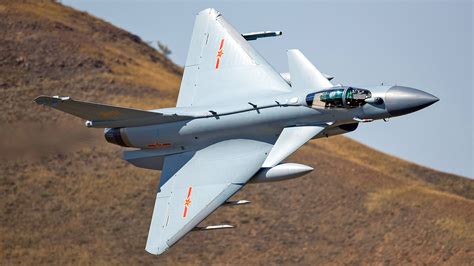
Iranian interest in the J-10C is not new. Back in November 2024, Iran’s Air Force Commander Brig. Gen. Hamid Vahedi visited the Zhuhai Air Show and inspected the aircraft up close. The J-10C, with its sleek airframe, AESA radar, PL-15 air-to-air missiles, and indigenous WS-10B engine, was said to have impressed Iranian observers, many of whom considered it superior to the U.S. F-16 in weaponry and performance.
Chinese J-10C: The Technological Edge
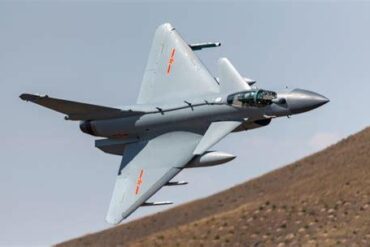
The Chengdu J-10C, widely dubbed the Vigorous Dragon, represents China’s answer to Western 4th-gen fighters. Equipped with a fully digitized glass cockpit, electronic warfare suites, infrared search and track (IRST) capabilities, and satellite-guided precision munitions, it is designed for beyond-visual-range (BVR) dominance and precision strikes.
Its armament includes:
- PL-15E long-range air-to-air missile with active radar guidance
- PL-10 imaging infrared (IIR) short-range missile
- A wide array of laser and satellite-guided air-to-ground munitions
Its internal systems mirror those of modern Western aircraft, including fly-by-wire control, an integrated avionics suite, and forward-looking infrared targeting pods for enhanced precision.
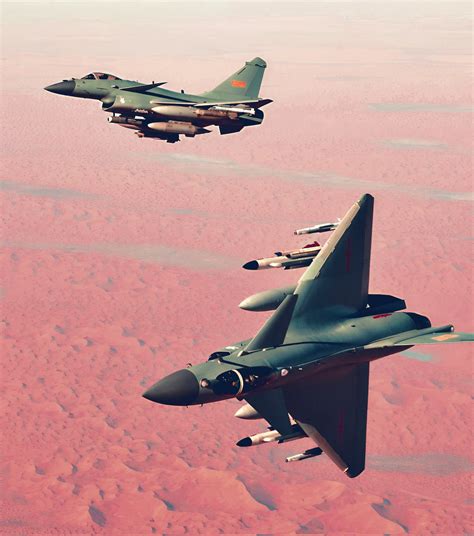
Iranian observers view this aircraft as a cost-effective solution. With an estimated unit price of $40 million, acquiring 100 J-10Cs would cost around $4 billion—far cheaper than Western counterparts like the Rafale, Eurofighter Typhoon, or F-16V. For a sanctions-ridden economy, this level of affordability without compromising on performance makes it especially appealing.
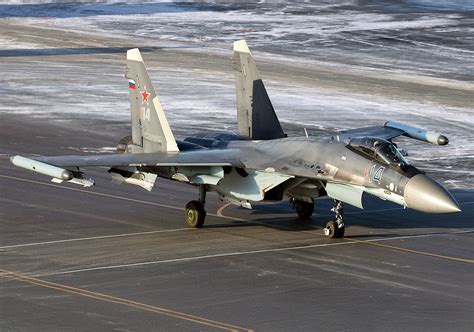
Russia’s Su-35 Flanker-E: A Lingering Question Mark
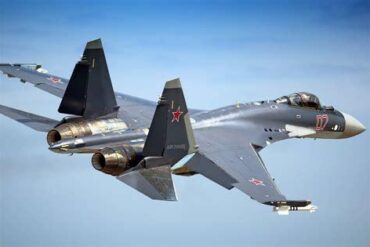
Iran had earlier reached a landmark deal with Russia in 2023 to acquire 24 Su-35 jets, a twin-engine air superiority fighter renowned for its maneuverability and long-range strike capabilities. Despite assurances from the Islamic Revolutionary Guard Corps (IRGC) that the deal was intact, the jets have yet to arrive in Iran. Delays have sparked speculation over Western pressure, Russian prioritization of its own war needs, or Iran’s inability to meet payment terms.
Unlike the J-10C, the Su-35 is a heavy twin-engine multirole fighter, equipped with an Irbis-E PESA radar, Khibiny electronic countermeasure suite, and a massive payload capacity. It’s optimized for long-range interceptions and deep strike missions, with a combat radius exceeding 1,500 km without refueling.
But logistical hurdles abound. The Su-35 requires complex maintenance infrastructure, substantial pilot retraining, and longer delivery cycles. It also lacks an AESA radar, a key feature in modern BVR engagements, which gives the J-10C a crucial electronic edge.
The Case for the J-10C: Realpolitik and Urgency
Iran’s war with Israel proved that air superiority remains the decisive factor in 21st-century conflicts. Tehran’s legacy fleet—cobbled together from aging U.S. and Soviet jets—simply cannot withstand modern stealth fighters or precision bombers.
Iran’s drones and missiles managed to cause damage and retaliate symbolically, but they couldn’t prevent the destruction of strategic assets. If Iran had deployed either the Su-35 or the J-10C, the narrative could have been different.
However, between the two, the J-10C may be the more realistic option:
- Lower cost and faster availability
- Technological parity with adversaries’ platforms
- Chinese willingness to barter oil and gas for arms
- Modular logistics and lower operating cost
Moreover, a fleet of J-10Cs could be supported by Iran’s existing Chinese systems, including radars, SAMs, and airbase infrastructure, which were already upgraded in previous Chinese military collaborations.
Risks of Alienating Russia: Strategic Balancing Act
Choosing the J-10C over the Su-35 could jeopardize Iran’s strategic alliance with Russia, a vital geopolitical relationship that spans energy, arms, and shared resistance to Western hegemony. Moscow, already bogged down in its Ukraine campaign, may interpret an Iranian pivot toward Chinese defense platforms as a diplomatic slight or loss of influence.
But from Tehran’s perspective, the stakes are existential. Another Israeli air raid could decimate its command structure and eliminate strategic deterrence altogether. Time is not on Iran’s side, and Beijing may offer a faster path to modernization.
Conclusion: Toward a New Axis of Airpower?
The post-war environment has catalyzed a critical inflection point in Iran’s military doctrine. It must now evolve from a reliance on drones and missiles into an integrated airpower capable of deterring and responding to real-time threats. Both the Chinese J-10C and Russian Su-35 offer solutions—but only one may be feasible in the immediate future.
For now, signs point toward accelerated J-10C acquisition talks, possibly involving barter deals for Iranian energy exports and deeper defense cooperation with China. If formalized, the deal would not only transform Iran’s Air Force but also signal the emergence of a new Beijing-Tehran military axis, poised to challenge U.S.-Israeli air dominance in the region.
The question is no longer if Iran will modernize, but how fast and through whom.