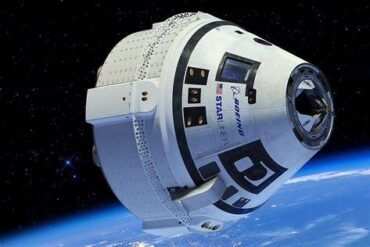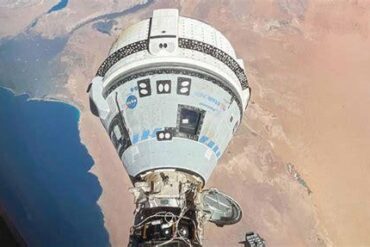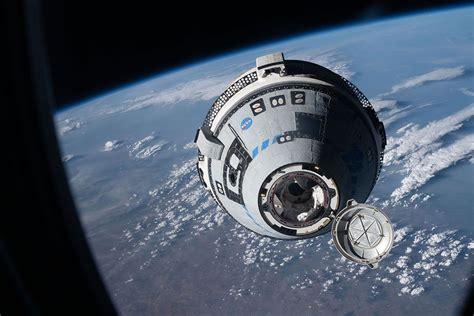
In a move that underscores the evolving landscape of commercial spaceflight, NASA has officially revised its crew transport contract with Boeing, specifically affecting the future of the Starliner spacecraft. The decision arrives after a turbulent 2024 crewed test flight that, while successful in reaching the International Space Station, highlighted multiple in-flight issues significant enough to reshape NASA’s mission roadmap. We examine the updated mission framework, the reasons behind NASA’s recalibration, and the long-term implications for the United States’ commercial crew ecosystem.
NASA originally awarded Boeing a lucrative contract in 2014 to ferry astronauts to and from the ISS, signaling confidence in a dual-provider model that would ensure redundancy and resilience for future spaceflight operations. However, after recent propulsion and docking concerns, both NASA and Boeing mutually agreed to refine the mission sequence. The adjustment reduces total planned Starliner flights from six to four missions, with two future optional launches contingent upon readiness and certification benchmarks.
The revised operational path is deliberate rather than reactionary. NASA confirmed that the next scheduled Starliner mission — known as Starliner-1 — will be a cargo-only flight targeted for no earlier than April 2026. This pivot aims to remove crew risk variables while engineers implement refined thruster technology, helium system containment improvements, and software corrections first exposed during Starliner’s most recent demonstration.
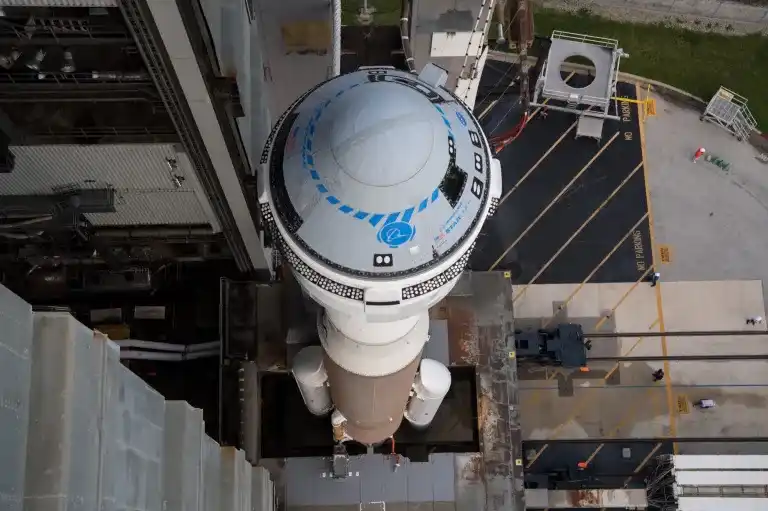
Why NASA Modified the Starliner Mission Structure
The 2024 Starliner test carried NASA astronauts Sunita Williams and Butch Wilmore to orbit, achieving what Boeing characterized as a milestone moment. Yet beneath the celebration lay the mission’s complexities. Thruster malfunctions forced NASA to reassess return logistics, ultimately requiring a SpaceX Crew Dragon vehicle to bring the crew safely home. Williams and Wilmore spent far longer in orbit than intended — not due to crew health or ISS readiness, but because Starliner simply wasn’t certified to make a safe descent.
These complications were not isolated incidents. Boeing’s initial 2019 uncrewed flight failed to reach the ISS due to a software synchronization fault. A second uncrewed mission in 2022 corrected those errors and successfully completed docking, renewing optimism and paving the way for last year’s crewed test. But the 2024 problems reintroduced certification hurdles, including helium leaks and propulsion anomalies serious enough to echo previous NASA safety flashpoints. While no lives were lost, the situation became the agency’s most consequential human flight safety challenge since 2003.
NASA’s shift, therefore, is about preventative prudence. Boeing and NASA engineers now have a technical runway to methodically diagnose, upgrade, and validate the spacecraft without the pressure of immediate crew rotation demands. The agency states confidently that once Starliner completes its unmanned demonstration and passes flight readiness assessments, it could support up to three full crew rotation missions to the ISS — a streamlined yet strategically optimized result.
What This Means for U.S. Commercial Spaceflight
This contract redesign unfolds during a wider resurgence in American space ambition. Human deep-space exploration is accelerating again, with NASA targeting the first crewed lunar mission in more than half a century. Maintaining multiple certified transport vehicles is fundamental for that future. SpaceX presently leads commercial crew operations with high mission success rates, Pentagon launch partnerships, and robust certification history. Boeing’s path will now hinge on performance, not projection.
Success could bring redemption and expand NASA’s launch capacity, distributing risk across two providers instead of one. Failure would concentrate future reliance on SpaceX until new entrants — such as future commercial station initiatives — become flight-ready. Boeing’s next steps must therefore deliver not just functionality, but trust.
The Starliner story is still being written. Engineering refinement, certification rigor, and cautious risk management will dictate its trajectory in 2026 and beyond. When Starliner eventually returns to orbit with astronauts aboard, it will do so under sharper oversight, deeper testing heritage, and renewed purpose.
The mission adjustment isn’t a setback. It is an investment in reliability — the cornerstone of spaceflight that carries human lives beyond the sky.