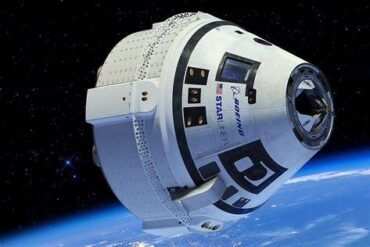
Boeing’s Starliner program was supposed to symbolize reliability, competition, and renewed confidence in American crewed spaceflight. Instead, its most recent test flight has become a lingering reminder of how fragile that vision remains. What began as a long-delayed demonstration mission evolved into one of NASA’s most uncomfortable operational failures in years, leaving two astronauts stranded aboard the International Space Station far longer than planned and raising fundamental questions about risk management, transparency, and contractor accountability. The incident did not merely reveal technical flaws; it exposed systemic weaknesses that NASA can no longer afford to ignore.
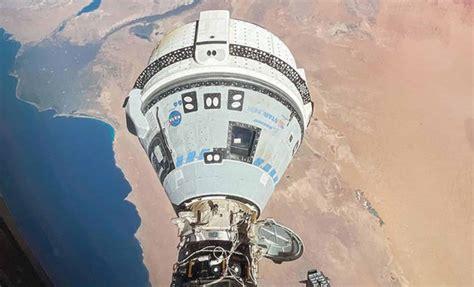
The Starliner spacecraft finally launched with astronauts Butch Wilmore and Suni Williams aboard after years of delays, redesigns, and budget overruns. Early warnings were already present, including persistent helium leaks within the propulsion system. Despite those red flags, NASA cleared the vehicle for flight, confident that the anomalies were manageable. Starliner successfully reached orbit and docked with the ISS, creating a brief sense of vindication for Boeing and the agency alike. That optimism evaporated once the time came to return home.
As Starliner’s systems were reassessed for reentry, engineers realized the helium leaks were more severe than initially believed. The leaks directly affected the spacecraft’s reaction control system, leading to the failure of four out of twenty-eight critical thrusters. The loss dramatically reduced redundancy and pushed the vehicle dangerously close to a loss-of-control scenario. With one additional failure, Starliner would have been unable to maneuver safely, a catastrophic risk when operating near a crewed orbital station.
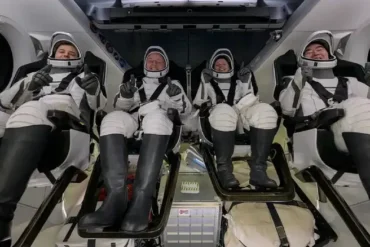
The astronauts were left aboard the ISS for nine months instead of the planned two weeks, a decision made quietly while NASA evaluated alternatives. During that period, Wilmore and Williams were reportedly not given full visibility into the severity of the propulsion failures. This lack of immediate disclosure later became a focal point for critics, who argued that withholding such information undermines astronaut trust and compromises informed decision-making in high-risk environments.
Technical Failures That Nearly Became a Catastrophe
The helium leaks were not simply minor engineering nuisances. Helium is essential for pressurizing propellant systems, and uncontrolled loss can cripple thruster performance. Starliner’s design left little margin for sustained leakage, meaning that each escaping molecule eroded the spacecraft’s ability to respond to commands. NASA’s initial framing of the issue as tolerable now appears dangerously optimistic.
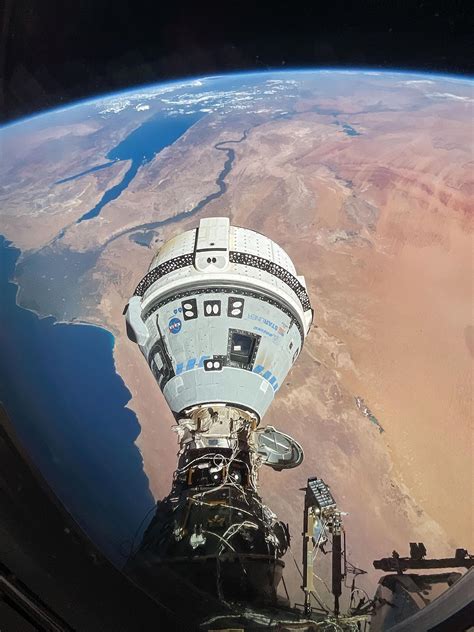
Losing four thrusters may sound survivable, but spacecraft safety depends on layers of redundancy. Orbital operations require precise attitude control, particularly during docking and undocking maneuvers. A single miscalculation can lead to collision, debris generation, or station damage. The fact that Starliner came within one failure of total control loss highlights how narrow the safety margins truly were.
NASA’s Transparency Problem Comes Under Fire
Following the mission, an independent safety panel scrutinized NASA’s handling of the incident. Their conclusions were blunt. The panel argued that NASA failed to formally declare the situation as a “close call,” a classification that would have triggered immediate escalation within the agency’s safety apparatus. Instead, leadership opted for ambiguous language, stating they were working to “prove” Starliner safe rather than acknowledging it was unsafe to fly.
Panel member Mark Sirangelo emphasized that wording matters in safety culture. Declaring a vehicle unsafe forces decisive action, while attempting to validate safety mid-crisis invites rationalization and delay. According to the panel, this mindset could have resulted in the loss of both astronauts and potentially endangered everyone aboard the ISS. The criticism echoes past tragedies where normalization of risk preceded disaster.
Why Starliner’s Future Remains Uncertain
In response, NASA has elected to fly Starliner’s next mission without a crew, a tacit admission that confidence in the spacecraft has been shaken. While the agency insists it remains committed to Boeing’s vehicle, skepticism has grown within the aerospace community. Starliner was intended to complement SpaceX’s Crew Dragon, ensuring redundancy in U.S. crew transport. Instead, it has become a liability that consumes resources and attention.
Analysts now question whether continued investment is justified. Every additional test requires funding, oversight, and risk exposure. Meanwhile, Crew Dragon has established a record of operational reliability, making Starliner’s struggles more conspicuous. The concern is not only about astronaut safety but also about orbital congestion. A malfunctioning spacecraft can generate debris that threatens satellites, scientific missions, and the ISS itself.
Astronaut Confidence Versus Engineering Reality
Interestingly, Wilmore and Williams have publicly stated they would fly aboard Starliner again. Their confidence speaks to astronaut professionalism and trust in corrective engineering. However, courage cannot substitute for rigorous systems validation. History has shown that experienced crews often accept risks that organizations must objectively mitigate.
Boeing’s ongoing difficulties mirror broader concerns about its engineering culture, especially in light of high-profile commercial aviation issues. Whether those challenges share common roots remains speculative, but the pattern has intensified scrutiny. For NASA, the lesson is clear: technical ambition must never outpace transparency and accountability. Starliner’s failed test flight is not just a setback; it is a warning that safety, once compromised, demands uncompromising honesty and decisive action.