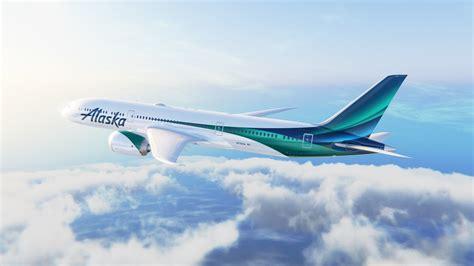
Alaska Airlines has entered a new era of global aviation with the arrival of its first Alaska-branded Boeing 787-9 Dreamliner. The aircraft represents one of the most significant transformations in the airline’s history, moving a carrier long associated with domestic and short-haul flying into the competitive world of international long-haul operations. Yet despite the excitement surrounding its transatlantic ambitions, the aircraft arrives with one important weakness: it is missing the premium cabin product that Alaska Airlines’ own leadership recognizes as increasingly essential.
The introduction of the Boeing 787-9 marks a dramatic strategic shift for Alaska Airlines. For decades, the airline built its reputation around an extensive North American network, especially from its Seattle hub. While it became one of the largest airlines at Seattle-Tacoma International Airport, it lacked the widebody aircraft and long-range network needed to compete directly with global carriers.
That changed after Alaska Airlines acquired Hawaiian Airlines and inherited a fleet of Boeing 787-9 Dreamliners. These aircraft have allowed Alaska to launch nonstop flights to major international destinations, including Rome, London, and Seoul, while laying the foundation for an ambitious expansion strategy.
Alaska Airlines’ Boeing 787-9 Fleet Launches a New International Era
The Boeing 787-9 is more than just another aircraft type for Alaska Airlines. It represents the airline’s first true step into the global long-haul market. Before the Dreamliner entered service, Alaska Airlines operated an almost entirely narrowbody fleet, relying on Boeing 737 aircraft to connect cities across North America.
The arrival of the 787 changes that competitive equation. The aircraft gives Alaska the ability to challenge larger network airlines on routes that require extended range, premium cabins, and international partnerships.
The first Alaska-branded Boeing 787-9 service began between Seattle and Rome in April 2026, creating a milestone moment for the airline. The carrier later expanded Dreamliner operations to London and began using the aircraft on Seoul flights, which were previously operated under Hawaiian Airlines branding.
Alaska Airlines plans to build a fleet of 17 Boeing 787 Dreamliners, including both the 787-9 and the larger 787-10 variants. These aircraft will become the backbone of its international growth strategy, allowing the airline to compete more aggressively against rivals such as Delta Air Lines.
The timing is especially important because Seattle has become one of the most contested aviation markets in the United States. Delta spent more than a decade developing Seattle into a major international hub, using long-haul flights as a key advantage. Alaska Airlines remained the dominant domestic carrier in the market, but Delta gained influence among travelers seeking nonstop international connections.
With the Boeing 787, Alaska Airlines is now closing that gap.
The Boeing 787-9 Cabin Configuration Has One Major Missing Feature
Although Alaska Airlines’ Dreamliner expansion is impressive, the aircraft’s interior configuration creates a challenge. The Boeing 787-9s inherited from Hawaiian Airlines were designed before Alaska’s current international strategy took shape.
Hawaiian Airlines originally ordered these aircraft for a different mission. The planes were intended to support Honolulu-based operations, including routes to destinations such as Sydney and New York. They were also designed to complement Hawaiian’s Airbus A330 fleet rather than become the centerpiece of a major global network.
When Alaska Airlines acquired Hawaiian Airlines, it retained the existing Dreamliner interiors. The result is an aircraft that provides a strong foundation but lacks one cabin category that has become increasingly important in modern aviation: true premium economy.
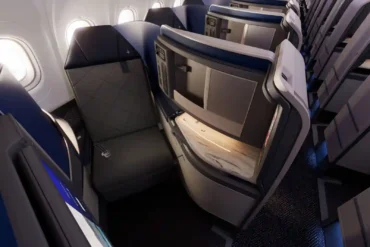
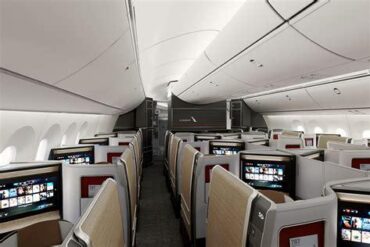
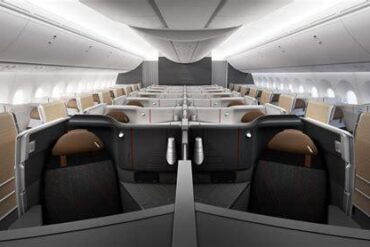
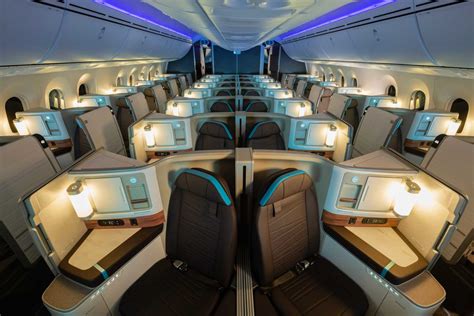
The Alaska Airlines Boeing 787-9 features 34 business class seats using the highly regarded Elevate Ascent reverse herringbone suite design. The cabin provides direct aisle access and a competitive long-haul business-class experience.
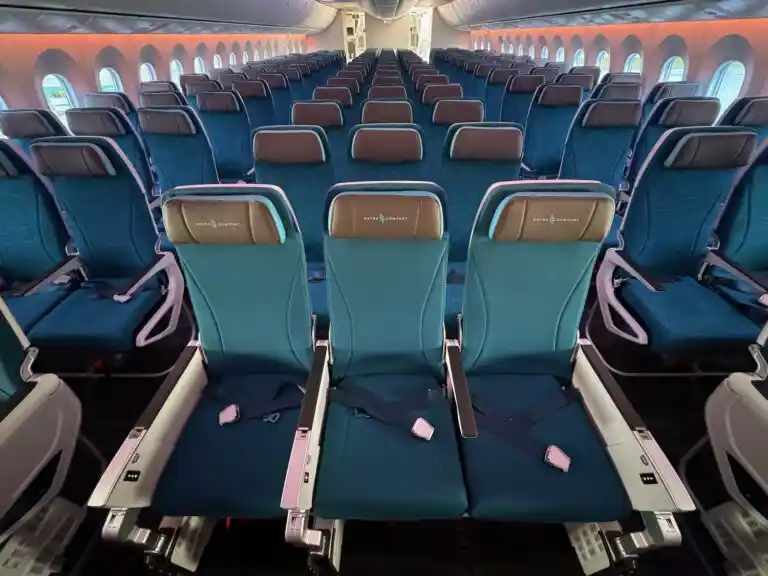
Behind business class, however, the aircraft only offers economy and Premium Class seating.
The aircraft contains 266 economy seats, including 79 Premium Class seats. While Premium Class provides additional legroom, improved catering, complimentary alcoholic beverages, and an amenity kit, it is still fundamentally an upgraded economy product rather than a dedicated premium economy cabin.
Why Premium Economy Matters More Than Ever for Long-Haul Airlines
The absence of premium economy is becoming increasingly noticeable as international travel patterns change. Airlines around the world have discovered that many passengers are willing to pay significantly more for additional comfort but do not want to purchase a full business-class ticket.
This middle segment has become one of the strongest areas of airline revenue growth.
Premium economy attracts multiple types of travelers. Business passengers often choose it when their company travel policy does not allow business class. Meanwhile, premium leisure travelers are increasingly willing to spend more on long-distance vacations, especially on flights lasting eight hours or longer.
For airlines, premium economy is also attractive because it delivers strong financial returns. These seats require only slightly more cabin space than economy seats but can generate significantly higher fares. Many carriers have found that premium economy produces some of the highest revenue per square foot of any cabin category.
This creates a missed opportunity for Alaska Airlines.
The airline’s Boeing 787-9 aircraft will initially operate some of its most important international routes, including flights connecting Seattle with Europe and Asia. These are exactly the markets where premium economy demand is strongest.
A traveler flying from Seattle to Rome, London, Seoul, or Tokyo may not want to spend thousands of dollars for business class but may happily pay several hundred dollars more for a wider seat, better service, and an improved dining experience.
Without a dedicated premium economy cabin, Alaska Airlines risks losing this valuable segment.
Alaska Airlines Recognizes the Problem With Future Boeing 787 Retrofits
The airline appears aware of the limitation and has already announced plans to upgrade its widebody interiors.
Beginning in 2028, Alaska Airlines plans to retrofit its Boeing 787-9 fleet with a true premium economy product. The new cabin is expected to feature larger recliner-style seats, a seven-abreast configuration, and an improved onboard experience.
While Alaska has not released all details, the premium economy cabin is expected to include multiple rows of dedicated seating. This would place Alaska closer to competitors such as Delta, American Airlines, and United Airlines, all of which already operate premium economy products on many international aircraft.
Until those modifications arrive, Premium Class will remain Alaska’s substitute for premium economy. The product provides a better experience than standard economy but does not offer the privacy, space, and upgraded design that international travelers increasingly expect.
The retrofit will also be part of a broader widebody modernization strategy. Alaska Airlines plans to update Hawaiian Airlines’ Airbus A330-200 aircraft beginning in 2028, adding premium economy, upgraded business-class seats, and improved entertainment systems.
Alaska Airlines’ International Expansion Targets Delta Air Lines
The Boeing 787 is not only about adding destinations. It is also a strategic weapon in Alaska Airlines’ competition with Delta Air Lines.
Seattle has long been Alaska’s strongest market, with the airline holding roughly half of the airport’s passenger share. However, Delta successfully positioned itself as Seattle’s international carrier by adding routes to Europe and Asia.
Delta’s long-haul network helped it attract corporate travelers and strengthen its brand among passengers who valued global connectivity.
Alaska Airlines historically lacked the aircraft needed to respond. The airline could dominate domestic routes but could not match Delta’s international reach.
The Hawaiian Airlines acquisition changed that.
By adding widebody aircraft, Alaska gained the ability to compete directly in markets where Delta previously held an advantage. The airline can now offer international connectivity while also benefiting from its membership in the oneworld alliance, which includes partners such as British Airways, Japan Airlines, Qatar Airways, and Qantas.
This partnership network could play a major role in future expansion. Alaska Airlines has indicated that it wants to operate at least 12 long-haul routes from Seattle by 2030, creating a much broader international footprint.
The carrier’s future destinations will likely depend on passenger demand, aircraft availability, and partnership opportunities.
The Boeing 787 Gives Alaska Airlines New Growth Potential
Despite the missing premium economy cabin, the Boeing 787-9 remains a powerful addition to Alaska Airlines’ fleet. The aircraft provides the range, efficiency, and passenger capacity needed to compete in international markets.
The Dreamliner’s fuel efficiency is especially valuable as airlines continue managing rising operational costs. Its composite structure, advanced engines, and passenger-focused design make it one of the most important long-range aircraft currently operating worldwide.
For Alaska Airlines, the challenge is not whether the Boeing 787 can succeed. The aircraft is clearly capable of supporting the airline’s international ambitions. The challenge is ensuring that the onboard product matches the expectations of global travelers.
Modern international passengers increasingly view premium seating as an essential part of the journey rather than a luxury reserved only for business-class customers.
Alaska Airlines’ first Boeing 787-9 has opened the door to a new competitive era, but the missing premium economy cabin shows that the airline’s transformation is still underway. Once the planned retrofit arrives, Alaska will have a much stronger product to support its global ambitions.
The Dreamliner has already changed what Alaska Airlines can do. The next step is making sure it delivers the premium experience that international passengers are willing to pay for.