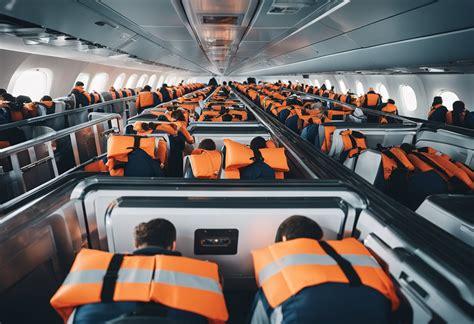
Commercial aviation still maintains one of the strongest safety records in modern transportation, yet a growing number of incidents across the world are exposing a deeply uncomfortable reality inside the industry: emergency evacuations are no longer functioning the way regulators originally intended. The problem is not limited to aircraft technology, aging fleets, or isolated crew mistakes. Instead, it is becoming increasingly clear that modern cabin layouts, passenger behavior, and outdated certification standards are colliding in ways that could eventually produce catastrophic consequences.
The issue exploded back into public view after the National Transportation Safety Board released its findings regarding the February 2025 evacuation of a United Airlines Airbus A319 at Houston’s George Bush Intercontinental Airport. What initially appeared to be a routine rejected takeoff after an engine malfunction quickly evolved into a case study of how fragile evacuation procedures have become under real-world pressure.
For decades, airlines and regulators have reassured passengers that aircraft can be fully evacuated within 90 seconds using only half the available exits. That benchmark has long been treated as one of the cornerstones of modern aviation safety. But recent incidents suggest the industry may be relying on assumptions that no longer reflect how people actually behave during emergencies in 2026.
The troubling part is not simply that evacuations are becoming slower. It is that they are becoming chaotic, unpredictable, and increasingly vulnerable to human panic.
After years of focusing on fuel efficiency, premium seating, ancillary revenue, and maximum cabin density, airlines are now confronting a question they would rather avoid publicly: what happens when a fully packed modern airliner must evacuate hundreds of frightened passengers in smoke, darkness, confusion, or fire?
The United Airlines A319 Incident Exposed A Dangerous Weakness
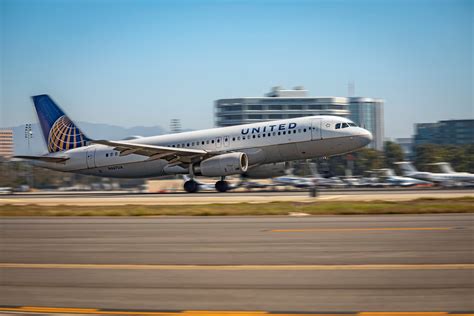
The February 2025 incident involving United Airlines Flight UA1382 offered an unusually detailed look into the hidden weaknesses of evacuation systems. The Airbus A319, registered as N837UA, suffered an engine failure during its takeoff roll at approximately 115 knots while departing Houston for New York LaGuardia.
Pilots rejected the takeoff and requested emergency responders immediately. Inside the cabin, however, confusion escalated rapidly.
Passengers reportedly began shouting that the right engine was on fire. Fear spread almost instantly through the cabin, even though investigators later determined there was no actual fire. In aviation emergencies, perception often becomes more dangerous than reality. Once passengers believe they are in immediate danger, orderly evacuation procedures can collapse within seconds.
According to the NTSB report, cabin crew initiated an evacuation without fully coordinating with the flight deck. Critically, the evacuation alarm was never activated, and the pilots were not properly informed that passengers had begun exiting the aircraft. As a result, the left engine remained running during the evacuation process.
That detail stunned many aviation safety analysts. A running turbofan engine creates lethal hazards during evacuation, including jet blast, debris ingestion, and the possibility of passengers being pulled toward the engine inlet. Under ideal procedures, both engines should be shut down completely before evacuation routes near them are used.
Yet the situation deteriorated even further.
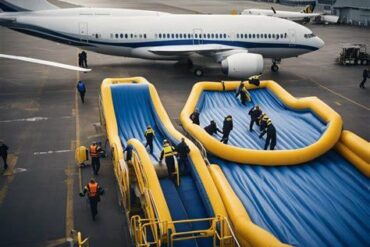
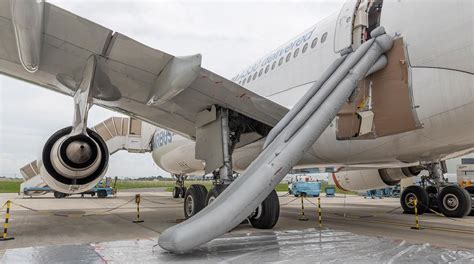
Several passengers ignored crew instructions and attempted to retrieve carry-on luggage from overhead bins. Three passengers reportedly pushed past a flight attendant and jumped onto an emergency slide before it had fully deployed, causing the slide to partially deflate and become unusable.
That single act potentially removed one of the aircraft’s primary evacuation routes.
The incident ended without fatalities or serious injuries, but aviation experts quietly acknowledged how close the situation came to spiraling out of control.
The 90-Second Evacuation Rule Was Designed For Another Era
The aviation industry still bases aircraft certification on the famous 90-second evacuation standard. Under current regulations, manufacturers must demonstrate that passengers can evacuate an aircraft within 90 seconds while using only half of the available exits.
The rule sounds reassuring. In practice, however, many critics argue the standard has become dangerously outdated.
The regulation was originally developed decades ago when aircraft cabins were less densely packed, passengers carried less hand luggage, and demographics aboard commercial flights looked dramatically different from today’s passenger population.
Modern aircraft interiors have evolved into highly optimized revenue environments. Airlines now routinely reduce seat pitch, narrow aisles, add more rows, and maximize passenger counts to improve profitability. While these changes increase revenue efficiency, they also reduce physical movement space during emergencies.
A crowded narrowbody aircraft in 2026 bears little resemblance to the aircraft cabins used during many original evacuation certification tests.
Low-cost carriers have pushed densification particularly aggressively. Ryanair’s Boeing 737 MAX 8-200 configuration demonstrates how modern evacuation mathematics influence cabin design. By adding additional emergency exits, the aircraft can legally carry up to 210 passengers instead of the traditional 189-seat configuration found on standard 737 MAX 8 aircraft.
Technically, the aircraft still complies with evacuation rules.
Realistically, evacuating 210 panicked passengers through narrow aisles during a smoke-filled emergency presents a far more complicated challenge than certification simulations may suggest.
Passenger Behavior Has Become The Industry’s Biggest Wild Card
One of the most alarming trends in recent evacuations is the repeated refusal of passengers to follow basic safety instructions.
Airlines across the world have reported incidents in which travelers stop during evacuations to collect backpacks, laptops, shopping bags, and rolling suitcases. Videos from multiple emergencies over recent years have shown passengers exiting burning or smoke-filled aircraft while still carrying full-sized cabin baggage.
To aviation professionals, the behavior is almost incomprehensible.
Emergency evacuations operate on a razor-thin margin of time. A delay of even a few seconds inside a single aisle can create bottlenecks that trap dozens of people behind blocked exits. On narrowbody aircraft like the Airbus A320 or Boeing 737 family, where only one main aisle serves most passengers, congestion can become fatal extremely quickly.
Psychologists studying evacuation behavior note that passengers often enter a “normalcy bias” during crises. Instead of immediately recognizing danger, many subconsciously attempt to preserve routine behavior, including collecting possessions before leaving. Others panic and lose situational awareness entirely.
The result is a dangerous contradiction inside modern aviation safety.
Aircraft technology has become extraordinarily sophisticated, yet evacuation success increasingly depends on whether frightened passengers obey instructions under extreme stress.
That variable is becoming harder to predict every year.
Social media may also be contributing to the problem. Some investigators have observed passengers recording emergencies on phones instead of immediately evacuating. Others appear reluctant to abandon expensive electronics, luxury purchases, or travel documents during emergencies.
In many cases, passengers likely underestimate how rapidly cabin conditions can deteriorate after smoke or fire begins spreading.
An aircraft cabin can become unsurvivable in remarkably little time.
Aircraft Door Design Quietly Determines Survival Odds
Behind the scenes, aircraft evacuation capability is heavily influenced by something most passengers never notice: door category ratings.
Every aircraft exit is certified according to specific dimensional requirements that determine how many passengers it can safely support during evacuation. Larger exits permit higher passenger capacities. Smaller exits restrict them.
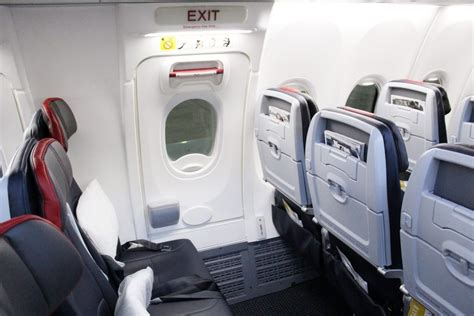
Widebody aircraft typically use Category A or A+ doors, capable of supporting very large passenger flows. Narrowbody aircraft often rely on Category C exits, while overwing exits on aircraft like the Airbus A320 and Boeing 737 fall into Category III classifications.
The mathematics behind these door ratings directly influence airline seating density.
Manufacturers and airlines continuously balance exit capability against profitability. More exits allow higher passenger counts, but also add structural complexity, maintenance costs, and weight penalties.
The Airbus A350’s large Category A+ exits are among the most advanced in commercial aviation, allowing exceptional evacuation flow rates for high-capacity operations. Yet even advanced exits cannot fully compensate for human panic, luggage retrieval, or blocked aisles.
The United Airlines incident demonstrated this perfectly. Despite the aircraft having multiple usable exits, a prematurely used evacuation slide became compromised almost immediately because passengers ignored crew instructions.
In theory, certification standards assume passengers behave rationally.
Real emergencies rarely unfold that way.
Aging Passengers And Reduced Mobility Are Changing Evacuation Dynamics
Another factor reshaping evacuation performance is demographic change.
Passengers today are older, more diverse in mobility capability, and increasingly reliant on medical or accessibility assistance compared to previous decades. FAA studies examining evacuation performance among passengers over 60 produced deeply concerning results.
In one evacuation trial, evacuation time reached 141 seconds — exceeding certification standards by 51 seconds.
That difference could become deadly in a post-crash fire scenario.
Modern evacuations must now account for elderly travelers, passengers with reduced mobility, families traveling with young children, and increasingly complex accessibility needs. While airlines have improved inclusivity dramatically, evacuation modeling has struggled to keep pace with changing passenger realities.
At the same time, seat spacing has continued shrinking.
The contradiction is becoming impossible to ignore. Airlines are accommodating more passengers with increasingly varied mobility profiles inside tighter cabin environments while still relying on evacuation assumptions developed decades ago.
Safety experts are beginning to question whether current certification tests adequately represent real-world passenger populations at all.
Cabin Density Is Quietly Undermining Emergency Escape Routes
Airline economics have transformed the passenger cabin into one of the industry’s most aggressively optimized revenue spaces.
Every inch matters financially.
Over the past two decades, many carriers have gradually reduced seat pitch while increasing seat counts, especially in economy class. Ultra-low-cost carriers have taken densification even further, maximizing occupancy within regulatory limits.
The changes may appear minor during routine flights. During evacuations, however, small reductions in movement space can have enormous consequences.
Passengers move slower through narrow aisles. Evacuation queues form faster. Carry-on bags become larger obstacles. Crew members have less room to manage crowd flow.
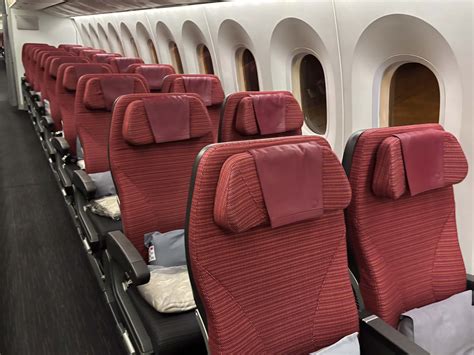
Japan Airlines offers one notable contrast to the trend. On some aircraft, the carrier intentionally configures economy cabins with fewer seats per row than competing airlines. While the approach improves passenger comfort, it also creates additional evacuation movement space throughout the cabin.
That extra space may significantly improve survival odds during emergencies.
The industry rarely markets cabin layouts as safety features, but evacuation specialists increasingly argue they should.
The FAA Is Quietly Re-Evaluating Emergency Evacuation Standards
Regulators are no longer ignoring the warning signs.
Following a series of evacuation incidents and near-disasters, the Federal Aviation Administration has reportedly instructed airlines to reassess evacuation procedures, crew coordination standards, and passenger management protocols.
The concern extends beyond isolated accidents.
Investigators are increasingly worried that evacuation certification demonstrations may not accurately reflect modern flying conditions. Many certification tests use carefully selected participants, controlled environments, and idealized conditions that differ sharply from genuine emergencies involving smoke, fear, darkness, injuries, or confusion.
Real-world evacuations are messy.
Passengers freeze. Others panic. Some refuse instructions. Bottlenecks emerge unexpectedly. Communication breaks down. Cabin crew must make split-second decisions under enormous pressure.
The United Airlines A319 incident revealed how even trained professionals can encounter coordination failures during fast-moving emergencies.
Aviation regulators now face a difficult challenge. Updating evacuation rules could force expensive cabin redesigns, reduced seating capacities, or stricter passenger behavior enforcement. Airlines are unlikely to welcome changes that threaten profitability.
Yet the alternative may be worse.
Every successful evacuation reinforces confidence in the system. Every chaotic evacuation raises deeper concerns about whether current standards remain sufficient for modern aviation realities.
The uncomfortable truth emerging in 2026 is that emergency evacuation systems may still work well enough most of the time — but “most of the time” is not the standard aviation safety was built upon.
Commercial aviation achieved its extraordinary safety reputation by aggressively correcting weaknesses before disasters became routine. Emergency evacuation procedures now appear to be approaching exactly that kind of turning point.
The next major aviation safety battle may not involve engines, software, or pilot automation.
It may involve something far simpler, far more human, and far harder to control: getting hundreds of terrified passengers off an airplane before time runs out.