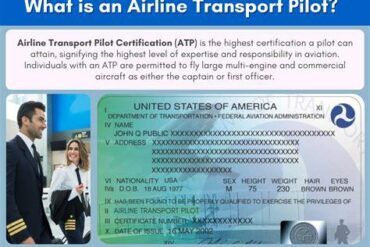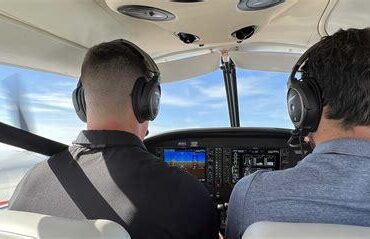
The Airline Transport Pilot (ATP) Certification is the ultimate goal for pilots who aspire to command commercial airliners. As the highest level of pilot certification available, achieving an ATP is not just a mark of professional skill, but also a key to unlocking career opportunities with airlines, corporate aviation, and private air carriers. This certification is an essential prerequisite for those aiming to hold the prestigious title of an airline captain. While it represents the pinnacle of a pilot’s training journey, obtaining an ATP certificate involves a rigorous and detailed process that demands both time and dedication.
Understanding the Importance of an ATP Certification
For most aspiring airline pilots, the ATP certificate is the final step before launching a career with major commercial airlines. The Airline Transport Pilot certificate is a mandatory qualification for pilots flying for airlines, ensuring that they possess the advanced skills required for commanding complex aircraft. Without this certification, even the most experienced commercial pilots cannot meet the requirements set by airlines and aviation regulators.
Pilots with an ATP certification are not just eligible to fly for commercial airlines, but they also meet the minimum hiring standards of most regional airlines. Furthermore, ATP certification opens the door to a broader range of job opportunities with various corporate aviation services, such as private jet companies and charter services. Instructors with an ATP can also train and endorse other pilots for flight operations and flight training programs, elevating their role in the industry.
Key Requirements for Obtaining an ATP Certificate
Becoming an ATP-certified pilot requires meeting specific eligibility criteria, which include a combination of age, flight hours, and other certifications. These prerequisites ensure that only highly skilled and experienced pilots are eligible for the ATP. The following are the essential requirements for aspiring pilots:
- Minimum Age: Pilots must be at least 23 years old to apply for the ATP certificate. However, those with military flight experience can apply at 21 years old, making it a slightly more accessible option for qualified military pilots.
- Commercial Pilot Certificate: Candidates must hold a valid commercial pilot certificate with an instrument rating. This indicates that the pilot has already completed a significant amount of flight training and has been tested for basic piloting skills.
- Medical Certification: Pilots must hold a first-class medical certificate to act as pilot-in-command and a second-class medical certificate for acting as second-in-command.
- Flight Hours: A total of 1500 flight hours are required to be eligible for the ATP certification. These hours must include cross-country, night flight, and instrument training hours.
The experience and training required for an ATP certification ensures that pilots are equipped with the necessary skills to safely operate large, complex aircraft under various conditions.
The ATP Certification Training Program (ATP CTP)
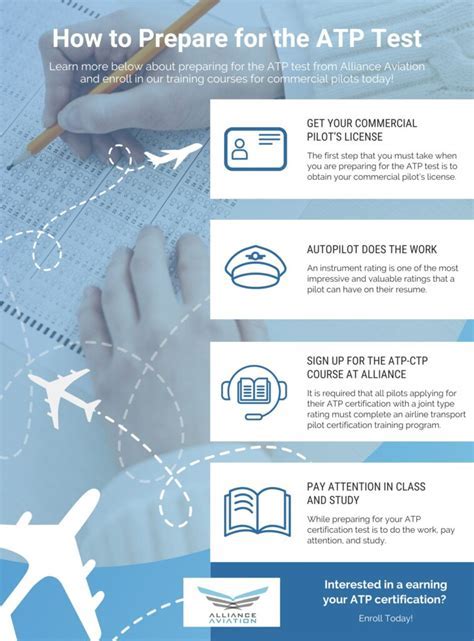
To ensure that pilots are fully prepared for the responsibilities of operating commercial aircraft, the ATP Certification Training Program (ATP CTP) was introduced. This course is a mandatory part of the certification process for all pilots applying for an ATP certificate with a multi-engine class rating or a type rating. It is also required for those applying after July 31, 2014.
The ATP CTP is a comprehensive program designed to give pilots an in-depth understanding of the aviation industry and its operations, along with practical training using state-of-the-art simulation equipment. The training consists of the following key components:
- 30 Hours of Ground Instruction: Pilots receive ground training on topics such as aerodynamics, weather patterns, air carrier operations, and other advanced aviation subjects.
- 10 Hours of Simulator Training: Pilots also participate in simulator training to gain hands-on experience in a realistic airline environment, using full-motion flight simulators that closely mimic actual aircraft operations.
After completing the ATP CTP, candidates must pass the ATP knowledge test, which covers everything from aircraft systems to flight procedures. This test ensures that pilots have absorbed the critical information required for the safe and efficient operation of commercial flights.
Flight Hours and Aeronautical Experience for ATP Certification
The path to obtaining an ATP certificate requires meeting specific flight hour requirements, as laid out by federal regulations. These requirements are designed to ensure that pilots have a comprehensive range of flying experience in various conditions and types of flight operations.
The breakdown of the necessary flight hours is as follows:
- Total Flight Time: 1500 hours of flight time must be logged, with at least 250 hours as Pilot-in-Command (PIC).
- Night Flight: A minimum of 100 hours of night flight time is required. This experience is essential to ensure that pilots can safely operate aircraft during low-visibility conditions.
- Cross-Country Flight: Pilots must log 500 hours of cross-country flight, which involves traveling long distances to airports that are far from the pilot’s base of operations.
- Instrument Flight: 75 hours of instrument flight time are necessary, providing experience in flying solely by reference to instruments, without relying on visual cues.
These flight hour requirements ensure that pilots have the skills and experience to safely handle various flight scenarios. Additionally, there are some allowances for specific conditions, such as night landings, where pilots can gain additional night flight time through actual takeoffs and landings.

Restricted ATP (R-ATP) Certification
In certain situations, pilots may pursue a Restricted ATP (R-ATP) certificate, which allows them to fly as co-pilots before meeting the full 1500 hours required for an unrestricted ATP. The R-ATP offers a pathway for younger pilots or those with military experience or specific college degrees to begin their careers as commercial pilots while still accumulating the flight hours necessary for full certification.
There are two primary paths to qualifying for an R-ATP certificate:
- Military Experience: A pilot with military flight experience can qualify for the R-ATP with just 750 flight hours. The military must provide a record confirming the pilot’s eligibility, and the pilot must meet the rest of the requirements for commercial flight.
- College Experience: Pilots with a bachelor’s degree in aviation or an associate’s degree with significant aviation coursework can qualify for the R-ATP with as little as 1000 to 1250 hours of flight time, depending on the degree type.
While the R-ATP limits a pilot’s role to serving as a co-pilot, it offers an important career stepping stone. Once a pilot logs the required 1500 flight hours, they can upgrade to the full ATP certification.
How Long Does It Take to Earn an ATP Certificate?
For motivated and dedicated pilots, the process of earning an ATP certificate can take as little as two and a half years. This timeframe assumes that the pilot is already working toward meeting the required flight hours, including the commercial pilot certificate and instrument rating.
However, the path to an ATP certificate can be longer depending on the individual’s prior flying experience, training schedule, and access to flight time. Some pilots may take longer to accumulate the necessary hours or may need to attend additional training courses before applying for the ATP.
In any case, the path to the ATP certificate is one of the most rewarding in aviation. The rigorous training and the extensive flight hours required ensure that pilots are equipped with the skills and knowledge needed for commercial aviation careers.

Career Opportunities After Earning an ATP Certification
The ATP certification opens a wide array of career opportunities for pilots, not only within the airline industry but also in other sectors of aviation. After earning the ATP, pilots are eligible to apply for positions as captains with major and regional airlines. In addition to these traditional airline jobs, ATP-certified pilots can also explore opportunities in corporate aviation, flying private jets or managing charter flights.
Moreover, ATP certification allows pilots to take on a more active role in the aviation community by becoming flight instructors, where they can share their expertise with the next generation of pilots. These positions allow experienced pilots to remain engaged with the aviation industry while passing on their knowledge.
Conclusion
Achieving an Airline Transport Pilot (ATP) certification is the ultimate goal for any serious aviation professional. It requires dedication, hard work, and significant flight experience. The process can take several years to complete, but it ultimately opens doors to a wealth of career opportunities within the aviation industry. Whether you aspire to fly for major airlines, corporate flight departments, or start a career as a flight instructor, the ATP certification is an essential milestone on the road to success in aviation.