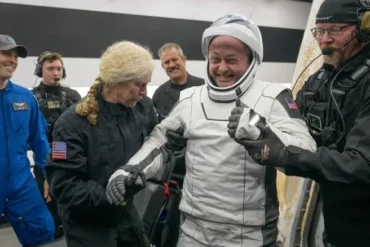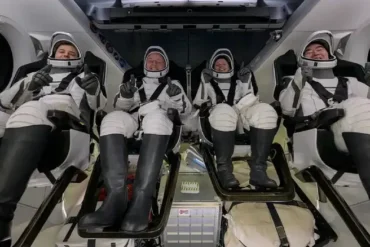
NASA has abruptly ended the Crew-11 mission aboard the International Space Station (ISS), marking the first-ever medical evacuation in the orbiting laboratory’s 25-year operational history. The decision follows an undisclosed medical issue affecting one of the four astronauts currently aboard the ISS, triggering swift action and raising critical questions about health risks in long-duration spaceflight.
Unprecedented Medical Evacuation Disrupts ISS Operations
On January 8, 2026, NASA postponed a scheduled spacewalk involving astronauts Zena Cardman and Michael Fincke, citing a “medical concern with a crew member that arose aboard the orbital complex.” While the agency has not revealed the identity of the affected astronaut, it underscored the severity by calling off the operation and reassessing the entire mission timeline.
The official email update from NASA emphasized that “safely conducting our missions is our highest priority,” with active evaluations underway, including the possibility of ending the mission earlier than planned. Hours later, NASA Administrator Jared Isaacman confirmed in a press conference that Crew-11 will return to Earth within days, cutting their near six-month stay short.
Crew-11, which includes Cardman, Fincke, Japanese astronaut Kimiya Yui, and Roscosmos cosmonaut Oleg Platanov, launched to the ISS in August 2025. Their mission was originally set to conclude in early February 2026. The emergency evacuation, however, has hastened their departure by nearly a month.
Health Risks in Space: Silent Threats to Astronauts
The cancellation of a mission segment due to a medical issue, while rare, is not wholly unexpected given the demanding physical and psychological environment of space. Even short stints in orbit can initiate cognitive decline, muscle atrophy, and immune system dysregulation. More alarmingly, recent bloodwork from astronauts has revealed DNA mutations—though still below clinical concern thresholds—that hint at potential long-term impacts on astronaut health.
This latest incident, however, seems to surpass standard risk parameters. While NASA has cited privacy as a reason for withholding the specifics of the ailment, the fact that the entire crew is being evacuated implies a precautionary protocol rather than multiple illnesses. NASA’s practice is to maintain fewer ISS residents than available return capsule seats, prompting the recall of all four crew members.
A History of In-Flight Medical Events
Although this marks the first medically driven evacuation, it is not the first health incident aboard the ISS. In 2020, a potentially dangerous blood clot was discovered in an astronaut, who was treated remotely with assistance from a ground-based doctor. These instances reveal just how critical remote diagnostics and intervention systems are becoming in space missions.
Moreover, recent years have seen an uptick in orbital challenges. In 2025, Boeing’s Starliner spacecraft experienced complications, stranding astronauts aboard the ISS for an extended duration. Similarly, Chinese astronauts faced a tense return when their capsule was struck by space debris, though they were ultimately unharmed. The mounting complexity of modern space operations seems to be increasing the frequency of in-mission anomalies.
ISS Will Remain Occupied Despite Crew-11’s Departure
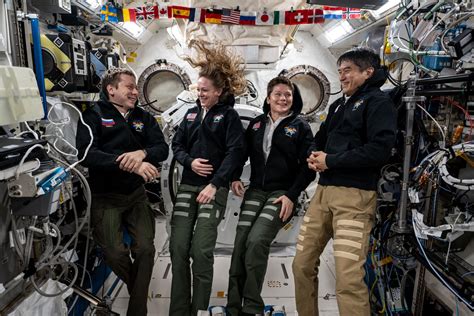
Even with the accelerated return of Crew-11, the ISS will not be left unoccupied. Three astronauts—NASA’s Chris Williams, and Roscosmos cosmonauts Sergei Mikayev and Sergei Kud-Sverchkov—remain aboard the station to ensure continued operations. This careful orchestration reflects NASA and its partners’ deep commitment to mission continuity and safety.
NASA has promised further updates within the next 24 hours, but this event has already reshaped discussions around emergency preparedness in extraterrestrial environments. As space agencies and private companies push for longer missions—to the Moon, Mars, and beyond—the need for robust medical contingency plans becomes not just important, but vital.
Looking Ahead: Human Fragility in the Face of Space Expansion
The early termination of Crew-11’s mission highlights an uncomfortable truth: human biology remains a fragile constant amid the vast unknowns of space. As ambitions escalate toward deeper and more prolonged voyages, health systems, diagnostics, and evacuation protocols must evolve just as swiftly as propulsion and life-support technologies.
NASA’s decision, though sudden, underscores a profound priority: no scientific advancement is worth more than the well-being of the astronauts who make it possible. This milestone moment will undoubtedly influence policy, spacecraft design, and crew training in future ISS rotations and interplanetary missions alike.