The International Space Station has long been celebrated as a triumph of engineering, diplomacy, and endurance. Orbiting roughly 400 kilometers above Earth, the ISS is a self-contained laboratory the size of a football field, continuously inhabited for over two decades. Yet even this marvel of preparation and precision cannot eliminate one stubborn variable: the fragility of the human body. When astronaut Mike Fincke experienced a medical emergency aboard the ISS on January 7, it became more than an isolated incident. It became a stark reminder that a Mars mission magnifies every medical risk beyond our current comfort zone.
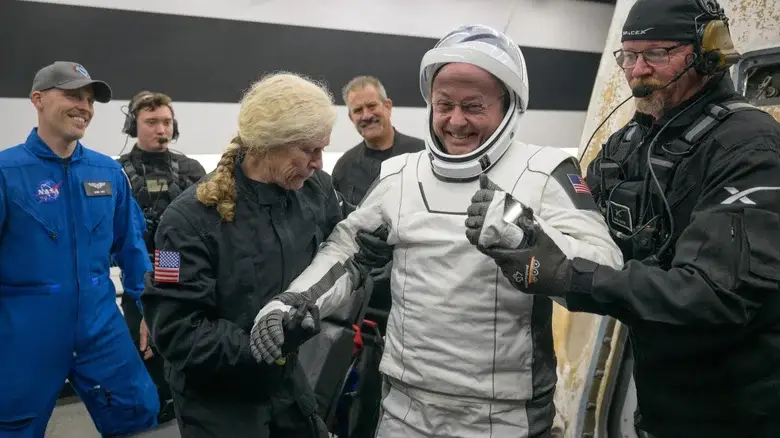
NASA confirmed that the emergency required “immediate attention,” prompting the postponement of a scheduled spacewalk that same day due to a “medical concern with a crewmember.” Days later, Fincke returned to Earth earlier than planned, splashing down on January 15. According to major outlets, this marked the first time a NASA astronaut cut short an ISS mission due to medical reasons. That detail alone reframes the event from routine anomaly to historical precedent.
Space agencies are meticulous about astronaut health screening. Candidates undergo exhaustive cardiovascular testing, neurological evaluations, imaging scans, and psychological assessments. They are arguably among the healthiest humans on Earth. And yet, unpredictability remains undefeated. The body is a biochemical system, not a mechanical part. Cells mutate. Organs inflame. Tiny infections escalate. In orbit, there is no emergency room down the hall.
Why a Medical Emergency in Low Earth Orbit Matters for a Mars Mission
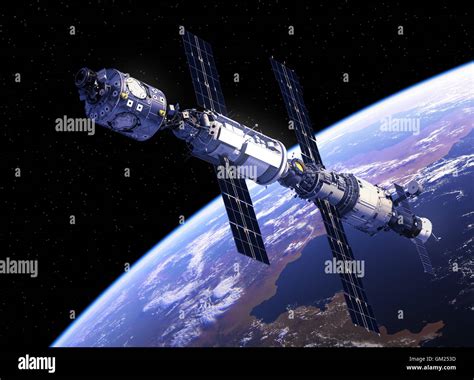
Low Earth orbit provides one crucial advantage: proximity. If something goes wrong aboard the ISS, astronauts can typically return to Earth within hours or days. A Soyuz or Crew Dragon capsule serves as an escape vehicle. Fincke benefited from that safety net.
A Mars mission erases that option entirely.
Travel to Mars using current propulsion systems takes approximately seven months. During transit, astronauts would be confined to a spacecraft the size of a small apartment. Once on the Martian surface, planetary alignment could prevent a return trip for over a year. In practical terms, a serious medical emergency would have to be handled on-site with limited tools, limited expertise, and no evacuation.
Consider appendicitis. On Earth, it is a routine surgical emergency. In deep space, it becomes a potentially fatal crisis. Microgravity complicates fluid distribution in the body, which can mask symptoms or alter disease progression. Radiation exposure increases cancer risks and may impair immune function. Even minor wounds heal more slowly in space due to altered cellular behavior.
The ISS crew deals daily with bone density loss, muscle atrophy, and vestibular disorientation. They exercise for two hours per day to counteract microgravity’s effects. They monitor blood chemistry. They follow strict protocols. Yet none of that guarantees immunity from spontaneous illness.
The Human Body as the Weakest Link in Interplanetary Exploration
Technology can be hardened. Hulls can be reinforced. Redundant systems can be built. But the human organism evolved for Earth, not for vacuum, radiation, and confinement. Long-duration missions amplify small biological vulnerabilities.
If a mission-critical crew member — a surgeon, pilot, or engineer — becomes incapacitated, the operational consequences multiply. In the tight ecosystem of a Mars expedition, every astronaut is both specialist and generalist. Losing one is not merely emotional; it is structural.
NASA and other agencies are researching in-space medical autonomy. Concepts include compact surgical tools, AI-assisted diagnostics, 3D bioprinting of tissues, and advanced telemedicine. But communication delays between Earth and Mars can stretch up to 22 minutes one way. Real-time guidance is impossible. Crews must operate independently.
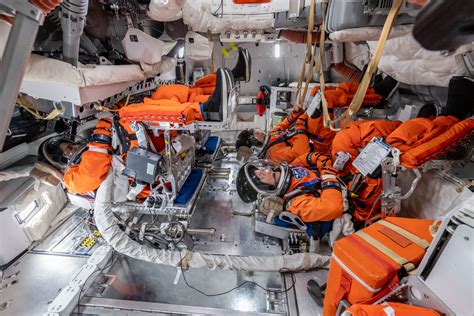
Fincke’s emergency, though resolved safely, acts as a controlled burn in our awareness. It demonstrates that even the most screened and prepared individuals are biologically unpredictable. In orbit, that unpredictability is manageable. In deep space, it becomes existential.
Mars Ambitions Confront Biological Reality
Plans for crewed Mars missions in the 2030s often focus on propulsion systems, landing technologies, and habitat construction. These are solvable engineering problems given time and resources. The more elusive challenge is medical resilience.
Can a crew perform emergency surgery in microgravity or partial gravity? Can they manage sepsis, stroke, or traumatic injury without advanced imaging or a full surgical suite? Can psychological strain be contained over years of isolation? These are not cinematic hypotheticals; they are operational questions.
Humanity’s push toward Mars is bold and intellectually thrilling. Exploration has always involved risk. But events like Mike Fincke’s ISS medical emergency sharpen the conversation. The question is no longer whether we can reach Mars. The deeper question is whether we can survive the journey when the unpredictable machinery of biology decides to malfunction millions of kilometers from home.
Space does not forgive oversight. And Mars will demand that we solve medicine as rigorously as we have solved rocketry.