Air cargo has always been a game of economics, timing, and aircraft size. For decades, the Boeing 737 Classic freighter family—particularly the 737-300SF and 737-400F—has dominated regional cargo networks. These converted narrowbody jets offered strong payload capability and dependable performance, making them a logical choice for operators needing fast and reliable lift.
But a quiet shift is underway in global cargo logistics. E-commerce growth, decentralized distribution networks, and thinner regional routes are changing the economics of air freight. Cargo operators are increasingly discovering that the biggest aircraft is not always the most profitable one. Instead, right-sizing capacity to match demand is becoming the decisive factor.
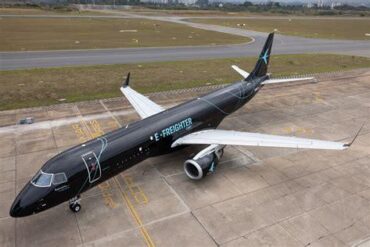
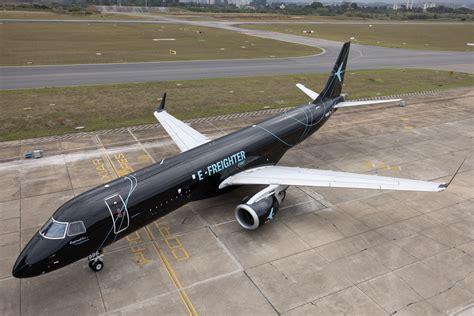
Into this changing market steps Embraer’s E190F E-Freighter, a converted regional jet specifically designed to fill a critical gap between turboprop cargo aircraft and larger narrowbody freighters. By targeting routes that are too long or too time-sensitive for turboprops but too thin for a 737, Embraer may have introduced one of the most strategically disruptive cargo aircraft of the decade.
A Cargo Aircraft Built for the “Middle Market”
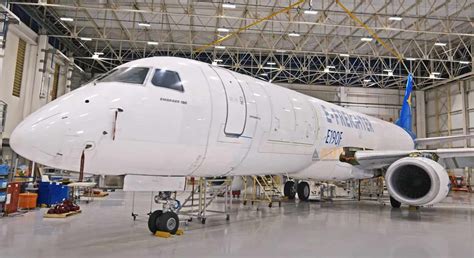
The Embraer E190F is based on the widely used E190 regional jet, a platform known for efficiency, reliability, and strong short-to-medium-range performance. Rather than designing an entirely new aircraft, Embraer developed a passenger-to-freighter (P2F) conversion program tailored specifically for the fast-growing express cargo sector.
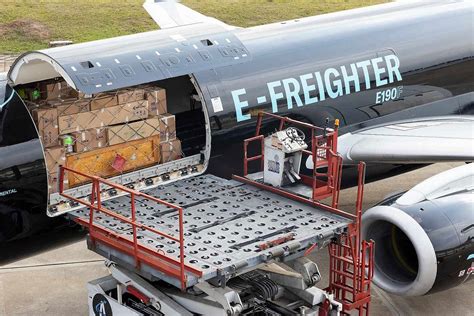
The design focuses on maximizing usable cargo space while maintaining the inherent efficiency of the E-Jet platform. The aircraft features both main-deck cargo capacity and underfloor cargo holds, allowing operators to fully utilize the available volume. The result is a freighter that delivers substantial payload capability without the operational cost structure of larger narrowbody jets.
What makes this aircraft particularly compelling is that it has already moved beyond concept status. The E190F program has secured certification from aviation regulators in Brazil, the United States, and Europe, clearing the path for global operations. With regulatory approval secured, operators can now integrate the aircraft into regional cargo networks with minimal barriers.
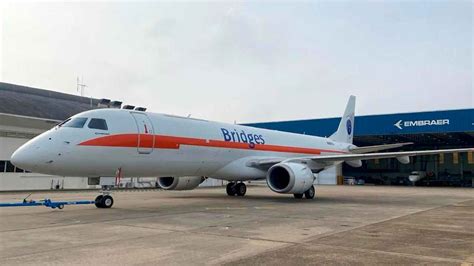
Early operations are already demonstrating its real-world potential. Bridges Air Cargo has introduced the aircraft on express freight services connecting Cologne and Larnaca, linking major logistics hubs across Europe, the Middle East, and Africa. These routes represent exactly the kind of mid-density markets that often struggle to justify larger freighters.
Performance That Targets a Very Specific Gap
The real strength of the E190F lies not in raw size or payload, but in strategic balance. Embraer designed the aircraft to offer significantly greater capacity than turboprop freighters while remaining far more economical than traditional narrowbody cargo jets.
According to Embraer, the aircraft delivers approximately 40% more cargo volume than large cargo turboprops, which currently dominate short-haul overnight logistics networks. At the same time, it offers jet-level speed and a dramatically longer operational range.
The aircraft’s specifications highlight why it occupies such an interesting niche:
- Maximum Payload: 13,500 kg (29,760 lbs)
- Range: 3,700 km (2,300 miles)
These numbers place the aircraft squarely in a unique operational category. The range allows operators to connect secondary cargo hubs across entire regions, while the payload is sufficient for high-value freight such as parcels, express shipments, and e-commerce packages.
Equally important is the economic equation. Embraer claims the E190F can deliver up to 30% lower operating costs than larger narrowbody freighters. For cargo operators operating on tight margins, those cost savings can transform marginal routes into profitable ones.
Why E-Commerce Logistics Favors Smaller Jets
Air cargo networks have evolved dramatically in the past decade. The rise of online retail and next-day delivery expectations has forced logistics companies to rethink traditional hub-and-spoke cargo operations.
Instead of concentrating shipments into large hubs before distributing them on large aircraft, many logistics networks now operate multi-node distribution systems. These decentralized networks require frequent flights between secondary cities and regional logistics centers.
This structural shift plays directly into the strengths of the E190F.
A 737 Classic freighter may offer greater payload capacity, but on thinner routes that capacity often goes unused. Flying a large aircraft with partially empty cargo holds increases operating costs while generating no additional revenue.
The E190F attacks that inefficiency directly. By offering lower capacity with similar jet speed and respectable range, it allows operators to match aircraft size with actual freight demand. For express carriers, this can dramatically improve route profitability and scheduling flexibility.
In other words, the aircraft is not designed to dominate large cargo routes. Its purpose is to make previously uneconomical routes viable.
The Boeing 737 Classic’s Emerging Competition
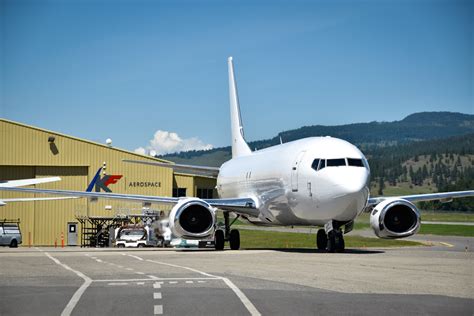
For decades, the Boeing 737 Classic freighter has been one of the most reliable workhorses in global cargo aviation. Converted 737-300SF and 737-400F aircraft remain widely used by cargo airlines and express operators around the world.
These aircraft offer substantially higher payload capacity than the E190F, making them well suited for dense regional cargo corridors. In high-volume markets, the 737 Classic still maintains a strong advantage.
However, the market reality is shifting. Many regional routes simply do not generate enough daily cargo volume to fully utilize a 737 freighter. When that happens, airlines are essentially paying to operate unused capacity.
This is where the E190F becomes a genuine competitor.
Rather than replacing the 737 Classic outright, Embraer’s freighter threatens to capture the thinner segments of the market. Routes that once required a 737 due to lack of alternatives may now be served more efficiently by a smaller jet.
Cargo operators evaluating fleet renewal strategies are likely to notice the difference. The choice is no longer limited to large narrowbody jets or slow turboprops. The E190F introduces a third option: a right-sized jet freighter capable of balancing speed, range, and operating cost.
A Strategic Shift in Regional Air Cargo
The long-term significance of the E190F may extend far beyond its specifications. The aircraft represents a broader shift toward right-sized cargo aviation, where fleet planning focuses on matching aircraft capacity precisely to market demand.
This philosophy mirrors trends already seen in passenger aviation, where airlines increasingly deploy smaller, more efficient aircraft on point-to-point routes rather than relying exclusively on larger jets.
In cargo operations, the same principle applies. As logistics networks become more distributed and time-sensitive, aircraft that can efficiently connect smaller markets gain strategic value.
The Embraer E190F E-Freighter embodies this concept perfectly. It may not carry the largest payload in the sky, but it delivers something far more valuable for many operators: efficiency on routes where every kilogram of unused capacity matters.
For the Boeing 737 Classic, the threat is subtle but real. The E190F is unlikely to replace the legendary freighter across all missions. Instead, it may steadily erode the market segments where the larger aircraft is simply too big.
In the economics-driven world of cargo aviation, that kind of precision can reshape an entire market. And in the quiet battle for regional air freight dominance, Embraer’s right-sized freighter may prove to be one of the most strategically disruptive aircraft in modern cargo aviation.