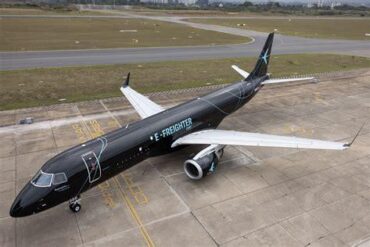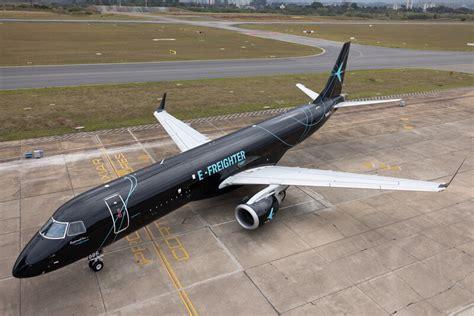
Bridges Air Cargo has taken a bold leap into the future of regional air logistics by becoming the launch customer for the Embraer E190F E-Freighter, the Brazilian manufacturer’s first passenger-to-freighter (P2F) converted aircraft based on its widely successful E-Jet platform. Announced on June 18, 2025, at the Paris Air Show, this strategic move positions Bridges Air Cargo at the cutting edge of an evolving cargo market driven by e-commerce, time-critical logistics, and the pressing need for sustainable operations.
E190F: A Purpose-Built Solution for a Changing Air Cargo Landscape
The Embraer E190F is not merely a retrofit of a passenger aircraft—it’s a deliberate answer to a gap in the air cargo industry. As aging turboprops and inefficient narrowbody freighters grow increasingly obsolete, Embraer identified a clear market opening for a medium-capacity, fuel-efficient freighter capable of flying faster and farther than traditional options. This is particularly crucial in the era of e-commerce and decentralized logistics, where delivery to secondary and tertiary markets has become as critical as hub-to-hub routes.
The E190F conversion offers impressive metrics:
- Over 40% more volume capacity than legacy regional freighters.
- Three times the range of large cargo turboprops.
- Up to 30% lower operating costs compared to larger narrowbodies like the Boeing 737 Classic or Airbus A321P2F.
These numbers signal more than just marginal gains—they represent a transformation in regional cargo economics, especially for carriers focused on fast-cycle, time-sensitive delivery models.
Bridges Air Cargo: Strategic Vision and Market Leadership
Guy Bridges, Managing Director of Bridges Air Cargo, underlined the importance of this acquisition in celebrating the company’s 35th anniversary, noting that the E190F’s size and range offer “a unique and under-served space in the cargo segment.” This decision is not just about adding a new aircraft; it’s about redefining the company’s ability to serve high-growth markets with greater agility and efficiency.
“The aircraft’s size fills a unique and under-served space in the cargo segment. It strengthens our operational capability and paves the way for the development of promising new routes,” Bridges said during the announcement.
The move also reaffirms Bridges Air Cargo’s position as a solutions-first logistics provider. As part of Bridges Worldwide, the company has longstanding partnerships with global giants like FedEx, DHL, and UPS, supporting their most urgent, time-critical network demands. Incorporating the E190F into its fleet enhances the company’s ability to meet these expectations with precision and reliability.
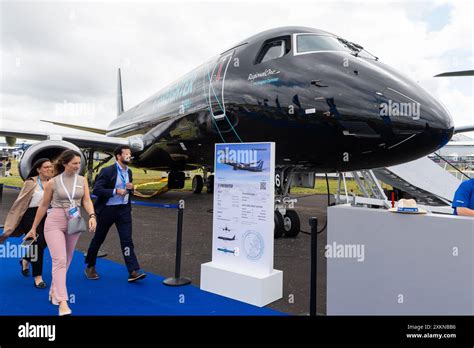
The E-Freighter Conversion Program: Backed by Regional One
Crucial to this launch is Regional One, a Miami-based lessor that supplies both aircraft and technical support across the globe. The company has partnered with Embraer to facilitate the P2F conversion process, providing the backbone for broader adoption of the E-Freighter program.
Embraer’s decision to partner with a trusted lessor like Regional One streamlines the entry-into-service timeline, allowing customers like Bridges to benefit from ready-to-operate freighters backed by full maintenance and service support. The E190F is expected to enter operational service in 2026.
Technology Meets Sustainability: A Cleaner Logistics Future
The E190F isn’t just a step forward in efficiency—it’s a leap in sustainability. By converting existing E190 airframes into freighters, Embraer reduces the environmental impact associated with manufacturing new aircraft. This upcycling approach complements the aircraft’s already lean fuel burn, making it one of the greenest freighters in its class.
At a time when regulators and customers alike are demanding lower carbon footprints across the supply chain, the E190F is perfectly positioned to deliver. It allows operators to replace outdated aircraft with a cleaner, quieter alternative, aligning operational excellence with ESG commitments.
Operational Advantages Over Legacy Aircraft
Bridges Air Cargo’s selection of the E190F also reflects a shift in thinking about fleet composition. Traditionally, operators have relied on aging turboprops like the ATR 72 or converted Boeing 737-300/400 aircraft. While these planes have served well, they are increasingly unfit for modern logistics standards.
The E190F offers:
- Cruise speeds of 0.78 Mach, significantly faster than turboprops.
- Maximum payload of over 23,600 lbs (10,700 kg).
- Main deck cargo volume of 260 cubic meters (9,200 cubic feet).
- Lower noise and emissions than aircraft built in the 1980s and 90s.
These metrics translate to faster turnarounds, longer range point-to-point delivery, and greater schedule reliability—all key metrics in the modern express logistics chain.
Strengthening Regional Networks Through Strategic Deployment
For Bridges Air Cargo, the E190F offers an opportunity to expand network connectivity beyond major hubs. With the aircraft’s range and speed, the company can begin serving underserved Tier 2 and Tier 3 cities directly, bypassing congested airports and enabling end-to-end control of package flow.
This aligns closely with e-commerce platform strategies that increasingly rely on decentralized warehousing and localized inventory placement. The E190F is agile enough to land at smaller airfields, yet capable of handling enough cargo volume to make frequent service economically viable. This is a game changer in the express delivery model.
Bridges Worldwide’s Ecosystem: Amplifying E190F’s Impact
As a division of Bridges Worldwide, Bridges Air Cargo isn’t operating in isolation. The parent company brings a robust infrastructure of international logistics expertise, including last-mile delivery, customs handling, and digital cargo tracking platforms. This ecosystem allows the E190F to operate at full potential, integrated into a network that is already optimized for responsiveness and reliability.
With logistics partners like FedEx, UPS, and DHL in its portfolio, Bridges Worldwide can now offer these major players even greater flexibility by injecting the E190F into routes that require both speed and reach.
What This Means for Embraer’s Market Prospects
This launch sets the stage for Embraer’s emergence as a serious player in the freighter aircraft segment. Traditionally focused on commercial and executive aviation, Embraer’s pivot into cargo with the E-Freighter represents a strategic evolution. The company’s long-standing reputation for reliability, maintainability, and low operational costs will serve it well in this new vertical.
The success of this launch, backed by the high visibility of a client like Bridges Air Cargo, is likely to spur further orders from regional carriers, integrators, and fleet modernization programs in Latin America, Asia, and Africa—regions where cargo growth is strong but infrastructure may be limited.

Conclusion: A Defining Moment for Regional Cargo Aviation
The partnership between Bridges Air Cargo, Embraer, and Regional One signals more than just the delivery of a new aircraft—it marks a paradigm shift in how regional cargo will be conducted in the 2020s and beyond. The E190F E-Freighter is a response to the new world of logistics, one that demands speed, sustainability, and adaptability in equal measure.
By taking the lead as the launch customer, Bridges Air Cargo has positioned itself not just as a user of modern aircraft, but as a pioneer shaping the trajectory of air freight innovation. With its efficient profile, environmental performance, and market-ready advantages, the E190F is poised to redefine what’s possible for operators around the world.
This is not just a new chapter for Bridges—it is a milestone for regional aviation.