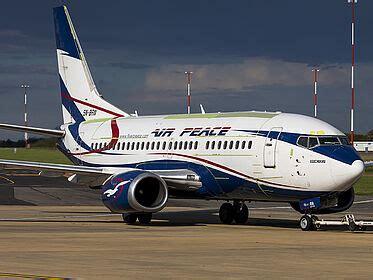
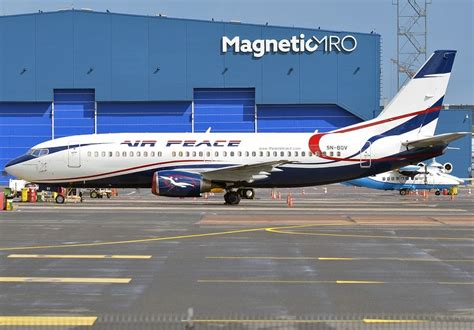
Nigeria’s largest airline is preparing to close a significant chapter in African commercial aviation. Air Peace, long known for operating a diverse fleet across domestic and regional markets, is moving toward retiring its ageing Boeing 737 Classic aircraft, a decision that reflects broader industry pressures reshaping fleets worldwide.
The Lagos-based carrier currently operates a small but increasingly costly collection of Boeing 737-300s and 737-500s, aircraft that once formed the backbone of short-haul aviation across multiple continents. With average fleet ages nearing three decades, the economics of continuing operations have become progressively harder to justify in an environment defined by volatile fuel prices, maintenance inflation, and tightening operational standards.
Air Peace’s transition marks another milestone in the gradual disappearance of the Boeing 737 Classic family from mainstream passenger service. For decades, the aircraft symbolized reliability, accessibility, and versatility. Today, only a shrinking group of airlines continues flying the type, mostly in niche markets where acquisition costs remain more important than fuel efficiency.
The retirement plan also signals the rapid modernization of African airline fleets, where carriers increasingly seek newer-generation aircraft capable of reducing operating expenses while improving passenger comfort and environmental performance.
Air Peace Accelerates Fleet Renewal Strategy
Air Peace has steadily diversified its fleet in recent years, moving beyond older Boeing narrowbodies toward newer regional and medium-haul aircraft. The airline already operates Embraer ERJ-145s, Embraer E190s, E195-E2s, and Boeing 737 Next Generation aircraft, creating a more flexible fleet structure better suited to varying route demands across Nigeria and West Africa.
Industry reports and aircraft tracking data indicate that some of the carrier’s older Boeing 737 Classics have already been withdrawn or transferred out of active service. At least one aircraft has reportedly been re-registered in Southern Africa, further reinforcing expectations that the retirement process is already underway.
For Air Peace, the timing is hardly surprising. Nigeria’s aviation sector continues facing severe operational pressures, including currency instability, high fuel costs, infrastructure challenges, and limited access to aircraft parts. Older aircraft types amplify those problems considerably because maintenance schedules become more intensive as fleets age.
The Boeing 737 Classic family remains dependable in many operational environments, but maintaining thirty-year-old aircraft is increasingly expensive. Spare parts are becoming scarcer, specialized engineering support is narrowing, and fuel efficiency now lags far behind modern alternatives such as the Boeing 737 MAX or Airbus A320neo families.
The Boeing 737 Classic’s Long Global Legacy
Introduced during the 1980s, the Boeing 737 Classic series represented a major technological leap over the original Boeing 737 models. The family included the 737-300, 737-400, and 737-500 variants, each designed to improve operational efficiency while increasing passenger capacity and range.
The aircraft introduced CFM56 turbofan engines, upgraded avionics, quieter performance, and better economics compared with earlier Boeing narrowbodies. Those improvements helped transform the 737 Classic into one of the most successful short-haul aircraft families ever produced.
For airlines throughout the 1990s and early 2000s, the 737 Classic became a workhorse capable of serving dense domestic routes, regional connections, and secondary international markets. Its operational flexibility made it especially attractive for developing aviation sectors where reliability and affordability were critical.
One of the aircraft’s most recognizable features emerged from an engineering compromise. Because the Boeing 737’s original design sat relatively low to the ground, integrating the larger CFM56 engines required Boeing engineers to flatten the underside of the engine nacelles to maintain sufficient clearance. The resulting shape became an instantly recognizable characteristic of the Classic generation.

Which Airlines Still Operate Boeing 737 Classics in 2026?
While major global airlines retired the Boeing 737 Classic years ago, several operators continue relying on the aircraft in specialized environments and lower-yield markets.
Among the most visible remaining operators is UK leisure airline Jet2, which still uses Boeing 737-300 aircraft from Leeds Bradford Airport. The airline has become one of Europe’s last significant passenger carriers operating the variant, even as it rapidly modernizes with Airbus A321neo aircraft.
In North Africa, Air Algérie continues flying Boeing 737-400 aircraft on regional and European services, including routes into London Stansted. Russia’s UTair also maintains one of the world’s larger surviving 737 Classic fleets, operating both 737-400 and 737-500 variants across its extensive domestic network.
Across Latin America, Boliviana de Aviación and Venezuela’s Estelar still operate Boeing 737-300s on regional passenger services. Economic conditions and fleet acquisition costs continue making older aircraft financially viable in some markets despite higher fuel consumption.
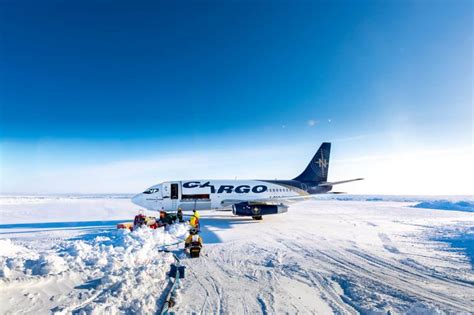
Canada remains one of the most fascinating strongholds for ageing Boeing narrowbodies. Airlines such as Air North and Canadian North continue using Boeing 737-500 aircraft in demanding Arctic environments where rugged performance and operational familiarity matter more than cutting-edge efficiency.
Meanwhile, charter specialist Nolinor Aviation continues flying not only Boeing 737-300s and 737-400s but also much older Boeing 737-200 gravel-kit aircraft capable of operating from remote, unpaved runways in northern Canada.
Why Some Airlines Still Depend on the Boeing 737 Classic
The continued survival of the Boeing 737 Classic is largely driven by economics. Although fuel consumption is significantly higher than newer aircraft generations, acquisition costs for ageing aircraft remain extremely low. For smaller airlines or operators in remote markets, purchasing older aircraft outright can be financially preferable to leasing newer jets with higher monthly costs.
The aircraft also benefits from decades of operational familiarity. Pilots, engineers, and maintenance crews across multiple regions possess extensive experience with the type, reducing training and transition challenges.
In isolated environments such as northern Canada or remote regional markets, operational reliability can outweigh fuel penalties. Airlines serving those areas often prioritize aircraft robustness and field supportability over maximum efficiency.
Still, the balance is changing rapidly. Fuel costs continue climbing, emissions regulations are tightening, and maintenance cycles for older aircraft are becoming increasingly complex. As the global Boeing 737 Classic fleet shrinks further, sourcing components and maintaining technical support networks will only become harder.
The Final Years of an Aviation Icon
The Boeing 737 Classic once dominated airports worldwide, carrying millions of passengers daily across short- and medium-haul routes. Today, the aircraft is entering the closing phase of its commercial passenger career.
Air Peace’s planned retirement underscores how rapidly aviation economics are evolving, particularly in emerging markets where airlines must balance affordability against operational sustainability. The shift toward newer aircraft is no longer simply about modernization or passenger appeal. It has become essential for long-term competitiveness.
Although the Boeing 737 Classic is gradually disappearing from mainstream airline service, its legacy remains immense. The aircraft bridged the gap between Boeing’s original 737 family and the hugely successful Next Generation series that followed. For decades, it connected cities, supported growing airlines, and helped shape modern short-haul aviation.
Its presence may soon fade from major passenger networks, but the Boeing 737 Classic’s impact on global aviation history remains firmly secured.