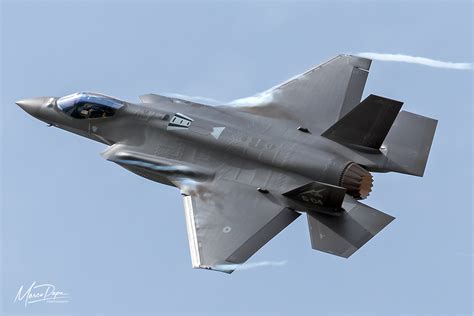
Japan’s deployment of the F-35 Lightning II stealth fighters marks a pivotal moment in its post-war military trajectory. As of April 2025, Japan and the United States have integrated the F-35 into a cohesive deterrent architecture in Northeast Asia, positioning these fifth-generation aircraft at the heart of their regional strategy. This development is not merely a procurement milestone—it represents a deliberate shift toward multidomain readiness, with the F-35 platform symbolizing air-sea integration, expeditionary capability, and alliance interoperability.
The strategic calculus driving this program hinges on the evolving threat environment in the Indo-Pacific, spearheaded by China’s rapid military modernization and North Korea’s ballistic missile proliferation. Against this backdrop, the F-35’s deployment across key Japanese bases serves as both a practical enhancement of Japan’s self-defense capability and a symbolic demonstration of alliance solidarity.
U.S. Marine Corps F-35B Deployment in Japan
Iwakuni Air Base: The Indo-Pacific Pivot Point
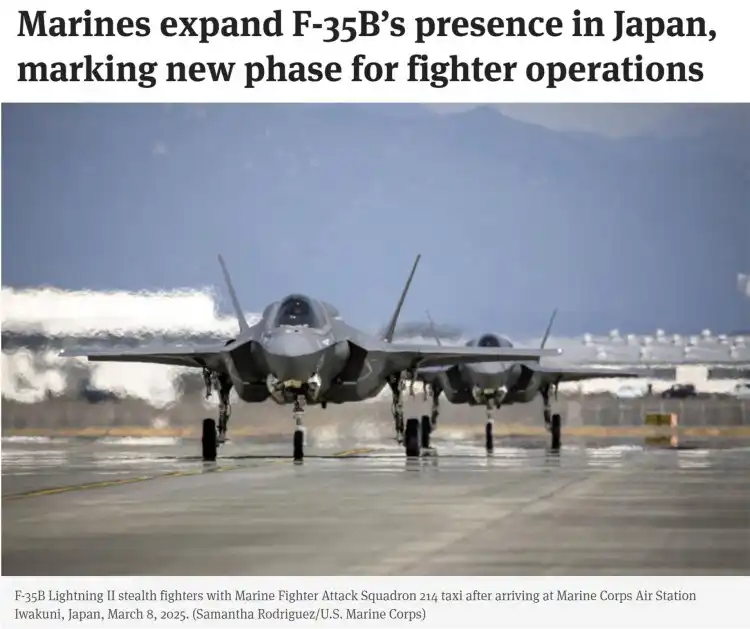
The Marine Corps Air Station Iwakuni, located in Yamaguchi Prefecture, has emerged as the epicenter of U.S. F-35B operations in Japan. In March 2025, the arrival of the Marine Fighter Attack Squadron 214 (VMFA-214 “Black Sheep”) brought a reinforced squadron of F-35B short takeoff and vertical landing (STOVL) aircraft into the region. Iwakuni’s strategic location enables immediate reach into the Korean Peninsula, East China Sea, and Sea of Japan, allowing rapid response options in scenarios ranging from deterrence patrols to conflict escalation.
Crucially, Iwakuni supports aerial refueling operations via KC-130J tankers, extending the F-35B’s operational reach far beyond its base radius. The synergy between fixed-wing assets and amphibious assault platforms like USS America class ships allows for the “Expeditionary Advanced Base Operations (EABO)” doctrine to be realized in full—a mobile, dispersed, and survivable deployment concept designed specifically for the contested Indo-Pacific battlespace.
Rotational Deployment and Strategic Signaling
Under the Unit Deployment Program (UDP), the U.S. maintains a flexible, rotational presence in Japan without establishing permanent squadrons. This approach ensures persistent engagement without triggering regional arms race dynamics, yet the constant rotation of F-35Bs makes clear Washington’s commitment to maintaining air dominance. The deployment of over 30 F-35Bs to Iwakuni as of 2025 also underlines the shift from legacy 4th-generation aircraft to a stealth-first, network-centric fleet.
Japan’s F-35 Program: Expanding Air Power and Naval Aviation
F-35A in the Japan Air Self-Defense Force (JASDF)
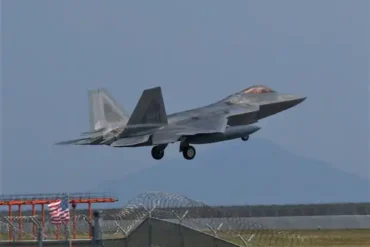
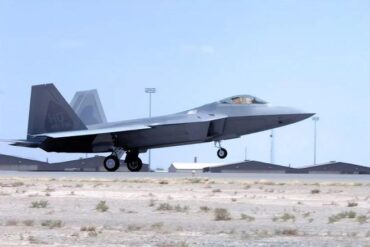
Japan’s procurement of the F-35A began as an initiative to modernize the Japan Air Self-Defense Force’s (JASDF) aging F-4EJ and F-15J fleets. As of April 2025, 39 F-35As remain in service out of the 40 originally delivered, with one lost in a 2019 crash. The aircraft are currently stationed at two key hubs: Misawa Air Base in Aomori Prefecture and Komatsu Air Base in Ishikawa Prefecture.
The strategic positioning of these aircraft is not coincidental. Komatsu AB allows JASDF to project power across the Tsushima Strait, Yellow Sea, and parts of the East China Sea, directly addressing Chinese and North Korean threats. The combination of stealth, sensor fusion, and precision strike capacity offers a leap in capability, even as Japan’s integrated command-and-control systems remain a work in progress.
F-35B and the Birth of Japan’s “Quasi-Carriers”
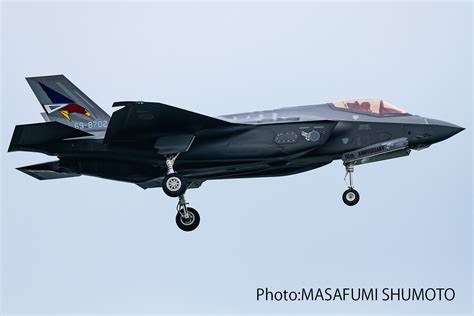
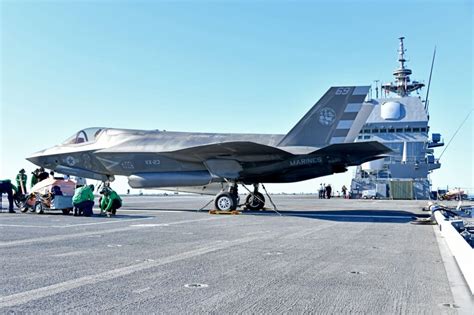
The arrival of the first Japanese F-35B squadron at Nyutabaru Air Base in Kyushu in March 2025 marks a transformational shift. Initially set to host 14 F-35Bs, the base will serve as a forward launch pad for carrier-capable operations, supported by the refitted JS Kaga, a former Izumo-class helicopter destroyer. These conversions reflect Japan’s growing embrace of air-sea integrated operations, effectively transforming Japan’s Maritime Self-Defense Force into a de facto carrier navy without breaching constitutional limits.
By 2031, Japan plans to field 42 F-35Bs, paired with two modified Izumo-class carriers, enabling rapid deployment across the First Island Chain. This represents a strategic counterweight to China’s growing blue-water ambitions, particularly with the emergence of the Type 003 carrier Fujian and J-35 carrier-based stealth fighter under development.
Technological Synergy and Industrial Strategy
Local Assembly and Engine Maintenance Hub
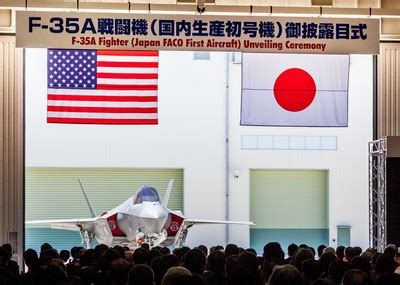
Japan has gone beyond mere acquisition by actively localizing the production and sustainment of the F-35. Mitsubishi Heavy Industries (MHI) plays a central role in assembling F-35A units at its Nagoya Final Assembly and Check-Out (FACO) facility. Additionally, the establishment of a regional F135 engine maintenance depot at Mizuho, Tokyo, makes Japan the only F-35 engine sustainment hub in Asia, serving fleets from South Korea, Australia, and the United States.
This maintenance ecosystem has drastically reduced turnaround times from 7–10 days to just 3–5 days, offering operational readiness advantages in conflict scenarios where sortie rates determine air superiority. It also signals Tokyo’s push for defense industrial autonomy, even as it remains technologically dependent on U.S. software and components.
Dependence on U.S. Systems and Delays
Despite industrial participation, Japan faces limitations. The Technical Refresh 3 (TR-3) upgrade—a crucial software and avionics package that unlocks Block 4 capabilities—has been delayed, affecting delivery timelines. These delays have stalled Japan’s ability to fully field its second F-35B squadron and affected planning for long-range missile integration and AI-enhanced threat identification.
The control over software and mission data files remains centralized in the U.S., reinforcing a hierarchical relationship in which Japan operates as a high-level user but not an independent developer. This gap may become critical as electronic warfare and data-link fusion increasingly define modern airpower supremacy.
Geopolitical Pressures and Operational Challenges
Balancing Against China’s J-20 and North Korea’s Missile Threat
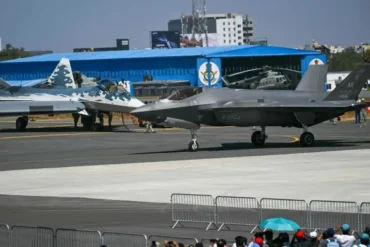
Tokyo considers the F-35 an indispensable tool for countering the PLAAF’s J-20 Mighty Dragon, a twin-engine stealth interceptor capable of cruising at Mach 2.4 with supercruise capabilities. While the F-35 excels in situational awareness, sensor fusion, and network warfare, it trails the J-20 in speed and range. Moreover, Japan still lacks a comprehensive early warning and electronic countermeasures network, reducing the F-35’s survivability in contested environments.
On the Korean front, the F-35’s stealth profile makes it an ideal platform for preemptive strike and critical infrastructure surveillance. However, the North’s growing missile arsenal—including solid-fuel IRBMs—requires round-the-clock readiness that pushes the F-35 fleet’s maintenance and alert thresholds to the edge.
Public Opposition and Safety Record
Despite strategic necessity, F-35 deployment has encountered civil resistance, particularly near Komatsu and Misawa bases, where noise and accident concerns dominate local discourse. Globally, the F-35 has suffered 11 major accidents by 2025, raising safety debates in a country historically wary of military normalization.
The 2019 crash of a JASDF F-35A into the Pacific during night training remains a cautionary milestone, highlighting the difficulty of pilot adaptation to complex avionics and the unforgiving nature of stealth airframes during emergencies.
Strategic Outlook: The F-35’s Role in Japan’s Defense Future
Toward U.S.-Japan Interoperability and Command Integration
The F-35 is not just a platform—it is the conduit through which Japan is assimilating into the U.S. joint operations doctrine. With plans to establish a Joint Operations Command integrating the Ground, Maritime, and Air Self-Defense Forces, Japan is building the foundation for coalition warfare capability. The F-35’s commonality with U.S. platforms such as the MV-22B Osprey, Aegis-equipped destroyers, and PAC-3 missile batteries allows seamless mission planning and shared situational awareness.
Regional Arms Competition and Strategic Stability
As of 2025, the U.S. has deployed 48 F-35As across the Pacific, while Japan and South Korea collectively field over 100 F-35 units. This encirclement, dubbed the “stealth wall,” is designed to erode China’s Anti-Access/Area Denial (A2/AD) perimeter. However, China’s deployment of over 200 J-20s and the expected rollout of the J-35 carrier stealth fighter threaten to neutralize this advantage.
The regional arms race is now squarely in the fifth-generation and AI-enabled domain, where quantitative edge is no longer sufficient without integrated sensor and command architectures. Japan’s ultimate success will rest not merely on the number of airframes, but on its ability to integrate air, maritime, space, and cyber capabilities into a single warfighting construct.
Frequently Asked Questions (FAQ)
What is the difference between Japan’s F-35A and F-35B?
The F-35A is a conventional takeoff and landing (CTOL) variant operated by the Japan Air Self-Defense Force. It is optimized for high-altitude missions and is deployed from fixed airbases. In contrast, the F-35B is a short takeoff/vertical landing (STOVL) model intended for operation from amphibious ships and short runways, making it suitable for Japan’s maritime strike and island defense missions.
Why did Japan convert the Izumo-class destroyers for F-35B operations?
Japan converted the Izumo-class helicopter destroyers to accommodate F-35Bs as part of its plan to build a flexible, sea-based airpower projection capability without formally calling them aircraft carriers. This move enhances Japan’s ability to deploy stealth fighters quickly in the East China Sea and supports mobile force posture strategies in a contested maritime theater.
How does the F-35 deployment affect regional security in East Asia?
F-35 deployment by the U.S. and Japan raises deterrence credibility but also accelerates the regional arms race. China and North Korea view the platform as a direct threat, prompting investments in counter-stealth radars, hypersonic missiles, and new-generation fighters. While the aircraft improves allied operational capacity, it simultaneously contributes to regional instability and strategic competition.