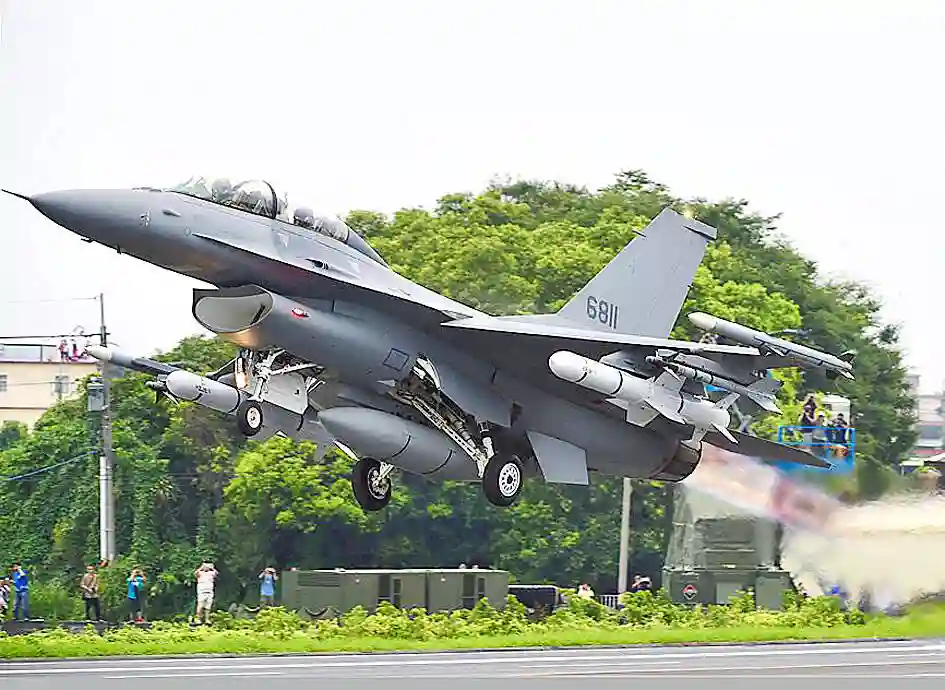
As tensions surge in the Taiwan Strait, Taiwan’s Republic of China Air Force (ROCAF) has publicly demonstrated a critical capability that could shift the tactical balance in the region. During the People’s Liberation Army’s (PLA) sweeping “Justice Mission 2025” military exercises encircling Taiwan, an upgraded U.S.-supplied F-16V (Viper) silently “locked on” to a Chinese J-16 fighter jet—a maneuver that showcases the stealth surveillance edge Taiwan maintains even amid overwhelming numerical inferiority.
PLA Launches Justice Mission-2025: A Show of Force and Strategy
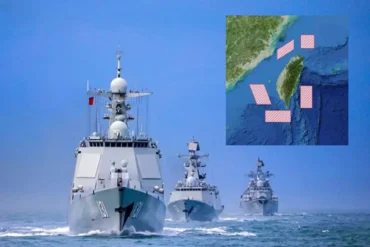
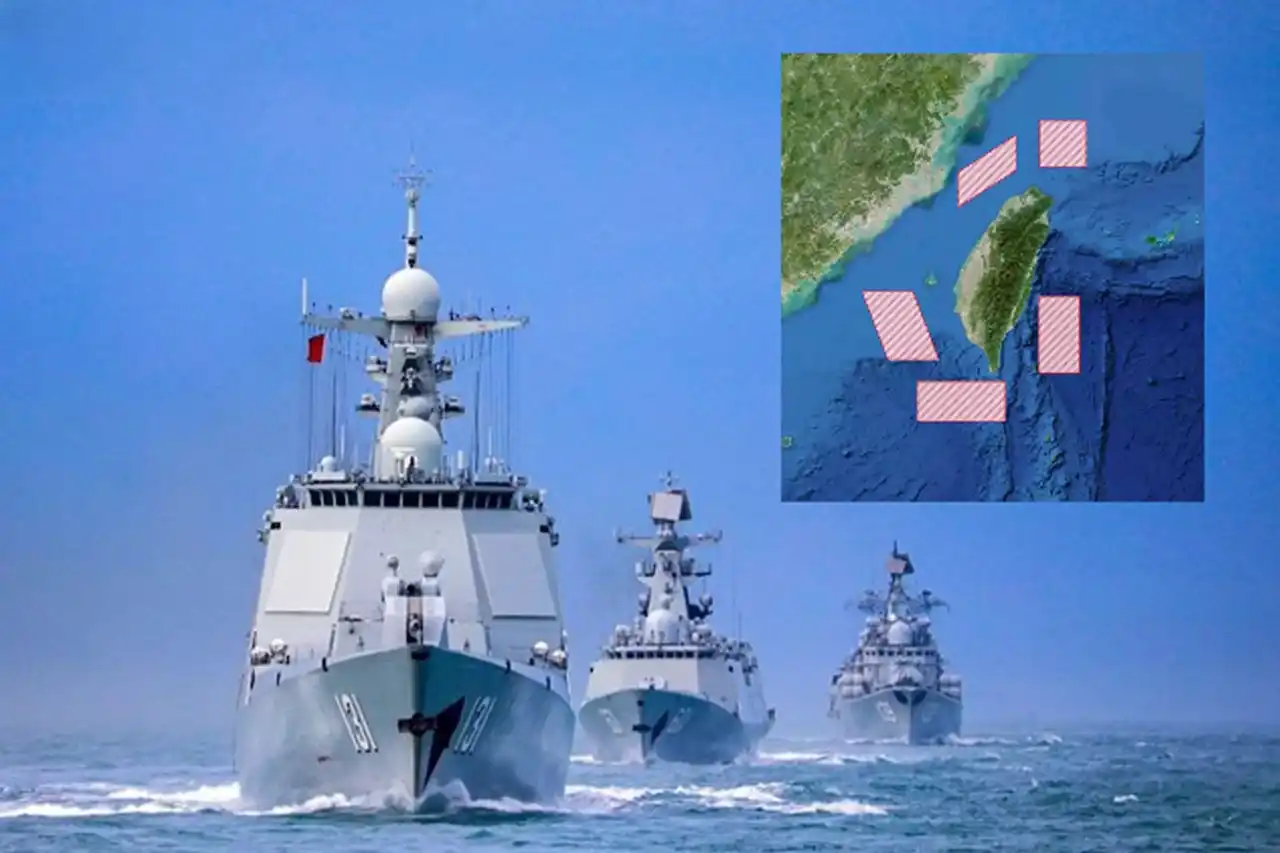
On December 29, 2025, China commenced a massive joint military drill named “Justice Mission 2025”, encircling Taiwan in what it called a simulated blockade and control operation. The PLA Eastern Theater Command mobilized live-fire exercises in five strategic maritime and aerial zones surrounding the island. These were not mere routine maneuvers—they were a loud assertion of dominance designed to signal deterrence following significant geopolitical developments.
The timing of the drills is critical. They come shortly after the U.S. approved a historic $11 billion arms sale to Taiwan and following Japanese Prime Minister Sanae Takaichi’s unprecedented declaration that any Chinese naval blockade of Taiwan could invoke Japanese military involvement under its postwar defense laws.
F-16V “Viper” vs. J-16: A Tactical Victory in Surveillance and Stealth
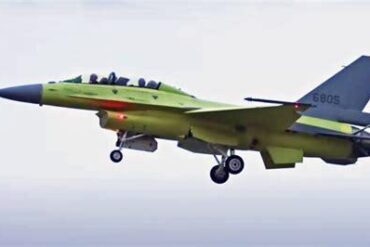
Amid the thunder of these massive Chinese drills, a ROCAF F-16V Block 20 fighter jet achieved a key tactical feat. Flying undetected, it used the AN/AAQ-33 Sniper Advanced Targeting Pod to passively track a PLA Air Force J-16, Beijing’s most advanced multirole strike fighter. The importance of this maneuver cannot be overstated—it demonstrated Taiwan’s ability to maintain situational awareness and lethal readiness without exposing its position.
The Sniper pod’s passive tracking capability allows it to silently observe targets without emitting detectable signals. According to defense analyst Shu Hsiao-huang, this kind of electro-optical surveillance offers a “silent kill” advantage, where enemy aircraft may never realize they were being tracked until it’s too late.
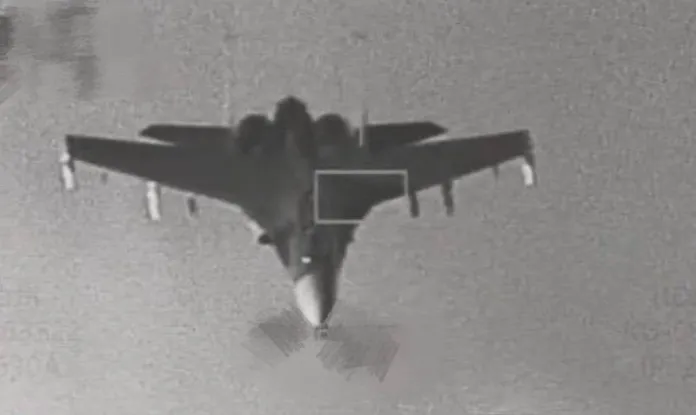
In real combat conditions, this lock-on would allow the F-16V to unleash an AIM-9X Sidewinder missile at short range, potentially neutralizing the threat with no advance warning. For Taiwan, this is a critical offset to China’s numerical and technological superiority, particularly given that the PLAAF has deployed over 300 fifth-generation J-20 stealth fighters.
Taiwan’s F-16V Modernization: Peace Phoenix Rising Program
The tactical success is rooted in Taiwan’s extensive F-16V upgrade program, launched under the Peace Phoenix Rising initiative in 2016. With an investment of approximately US$4.5 billion, Taiwan upgraded 139 legacy F-16A/B Block 20 aircraft to the F-16V configuration.
This upgrade package includes:
- AN/APG-83 AESA radar for superior detection and jamming resistance
- Helmet-Mounted Cueing System (HMCS) for rapid missile targeting
- Precision GPS Navigation and Sniper targeting pod integration
- Capability for advanced weapons including the AIM-9X and AGM-154
- Ethernet-based high-speed mission data sharing
With these enhancements, Taiwan’s F-16s rival or surpass many active-duty U.S. Air Force Vipers, establishing ROCAF as a sophisticated force capable of asymmetric warfare.
The final upgraded Viper was delivered in December 2023, and the first F-16V wing reached operational readiness by November 2021.
Awaiting Reinforcements: New-Build Block 70 Fighters On the Horizon
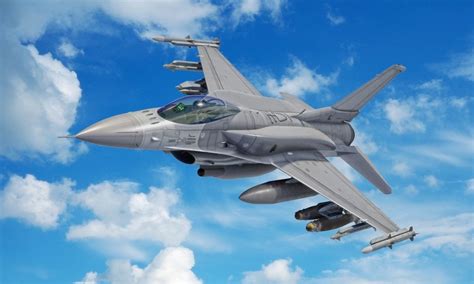
As a second pillar of its airpower revamp, Taiwan signed a deal in 2019 to acquire 66 new-build F-16 Block 70 jets from Lockheed Martin, a move valued at around US$8 billion. These aircraft—featuring the latest avionics, structural enhancements, and weapons capabilities—will eventually replace attrition losses and add teeth to Taiwan’s defensive posture.
However, as of December 2025, none of the new jets have been delivered. Once operational, they will dramatically enhance ROCAF’s deterrence abilities and long-range precision strike potential.
The J-16: China’s Heavyweight Contender in the Sky
The Chinese J-16 multirole fighter—a heavily modernized evolution of the Russian Su-27 Flanker—represents a core component of the PLA Air Force’s current air strategy. Designed as a “strike Flanker,” the J-16 combines advanced radar, EW systems, and precision weaponry into a formidable package.
It is equipped with:
- AESA radar with long-range tracking and simultaneous engagement capability
- Indigenous WS-10B engines offering greater thrust and reliability
- Radar Absorbent Material (RAM) coating for stealth enhancement
- Helmet-Mounted Display (HMD) and a digital glass cockpit
- Integrated Electronic Countermeasures (ECM) and Missile Approach Warning Systems (MAWS)
With nearly 400 units in service, the J-16 forms the backbone of PLAAF’s response to regional air threats, including potential U.S. or Japanese involvement in a Taiwan conflict.
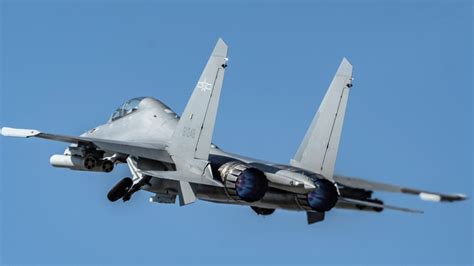
Yet, despite its advanced design, the J-16 lacks one crucial element—combat experience. While F-16s have seen extensive action across global theaters from the Middle East to the current Ukraine war, the J-16 remains untested in live conflict. This factor raises questions about its reliability under fire and pilot preparedness in high-stakes aerial engagements.
The Information War: Psychological & Cognitive Warfare Escalates
The release of the “Resilient Taiwan, Steadfast Defense” video by the Ministry of National Defense isn’t just a military statement—it’s part of a larger cognitive warfare strategy aimed at countering Chinese psychological operations. As the PLA attempts to demoralize Taiwan through intimidation drills, Taipei is replying with displays of capability, resolve, and technological parity.
The footage not only reveals Taiwan’s ability to defend its airspace but also subtly communicates that Chinese pilots could be under threat without even realizing it. This form of asymmetric deterrence shifts the mental calculus for PLA planners, reminding them that the skies over Taiwan will not be easily dominated.
Regional Implications: Japan, U.S., and the Expanding Theater
What sets Justice Mission-2025 apart from previous drills is its strategic context. This is the first Chinese joint exercise around Taiwan since Japan declared a potential blockade to be a national security threat. It’s also the first since the U.S. unveiled a major arms deal to reinforce Taiwan’s defense.
This confluence of events indicates that the Taiwan Strait is no longer just a local flashpoint—it’s now embedded in a broader regional security framework. Any misstep during these high-stakes maneuvers could draw in regional actors, triggering a multi-nation response far beyond the scope of conventional deterrence.
Conclusion: Silent Threats, Loud Messages
Taiwan’s F-16V silently locking onto a Chinese J-16 fighter during the PLA’s largest blockade simulation is more than a military anecdote—it’s a signal of strategic poise under pressure. Through technological edge, careful planning, and transparent communication, Taiwan has asserted that it will not be easily overwhelmed, nor will it cede the skies without contest.
In an era of satellite-guided missiles, AI-assisted warfare, and multi-domain conflict, electro-optical silent tracking is emerging as a pivotal tactic. The balance of power in the Taiwan Strait may hinge less on sheer numbers and more on how stealthily, and precisely, each side can deliver its message—both militarily and psychologically.